Why Companies Trust Speedway Tire and Service for Fleet Maintenance

Businesses depend on fleet vehicles to reach customers, transport equipment, and complete daily work. Unplanned downtime can disrupt schedules, increase labor costs, and affect customer service. A preventive fleet-maintenance plan helps keep vehicles safe, available, and predictable.
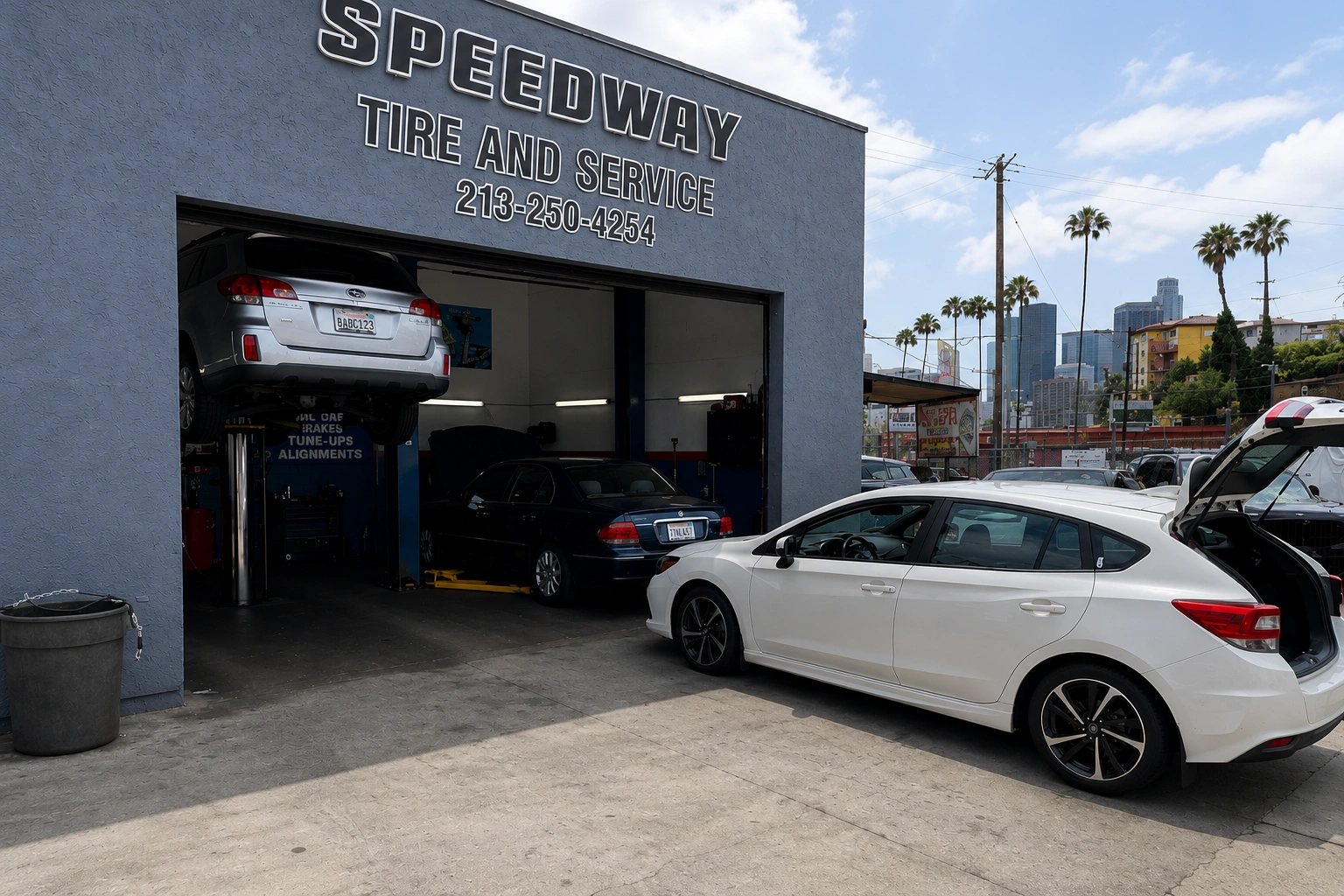
Speedway Tire and Service supports business owners with scheduled inspections, maintenance, tires, brakes, diagnostics, and repairs for a range of vehicles. A plan can be adapted to mileage, vehicle type, use, load, and operating conditions.
Why Businesses Choose Preventive Fleet Maintenance
Preventive service identifies wear before a vehicle becomes unsafe or unavailable. It also creates records that help managers budget, schedule downtime, compare vehicle performance, and plan replacements.
Maintenance should be based on the vehicle manufacturer’s schedule, inspection findings, mileage, age, operating conditions, and business needs.
Fleet Service 1 Oil Changes and Fluid Checks
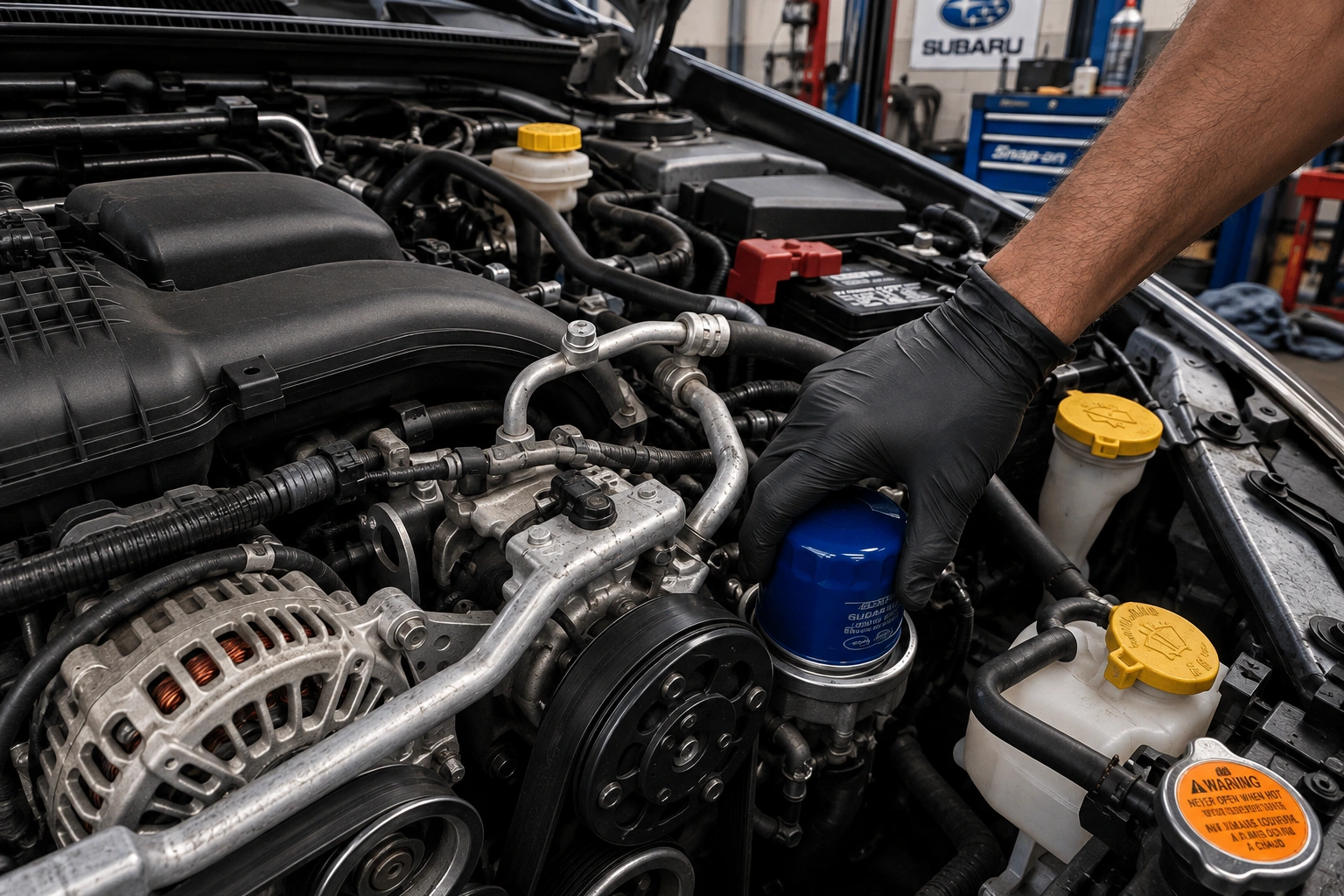
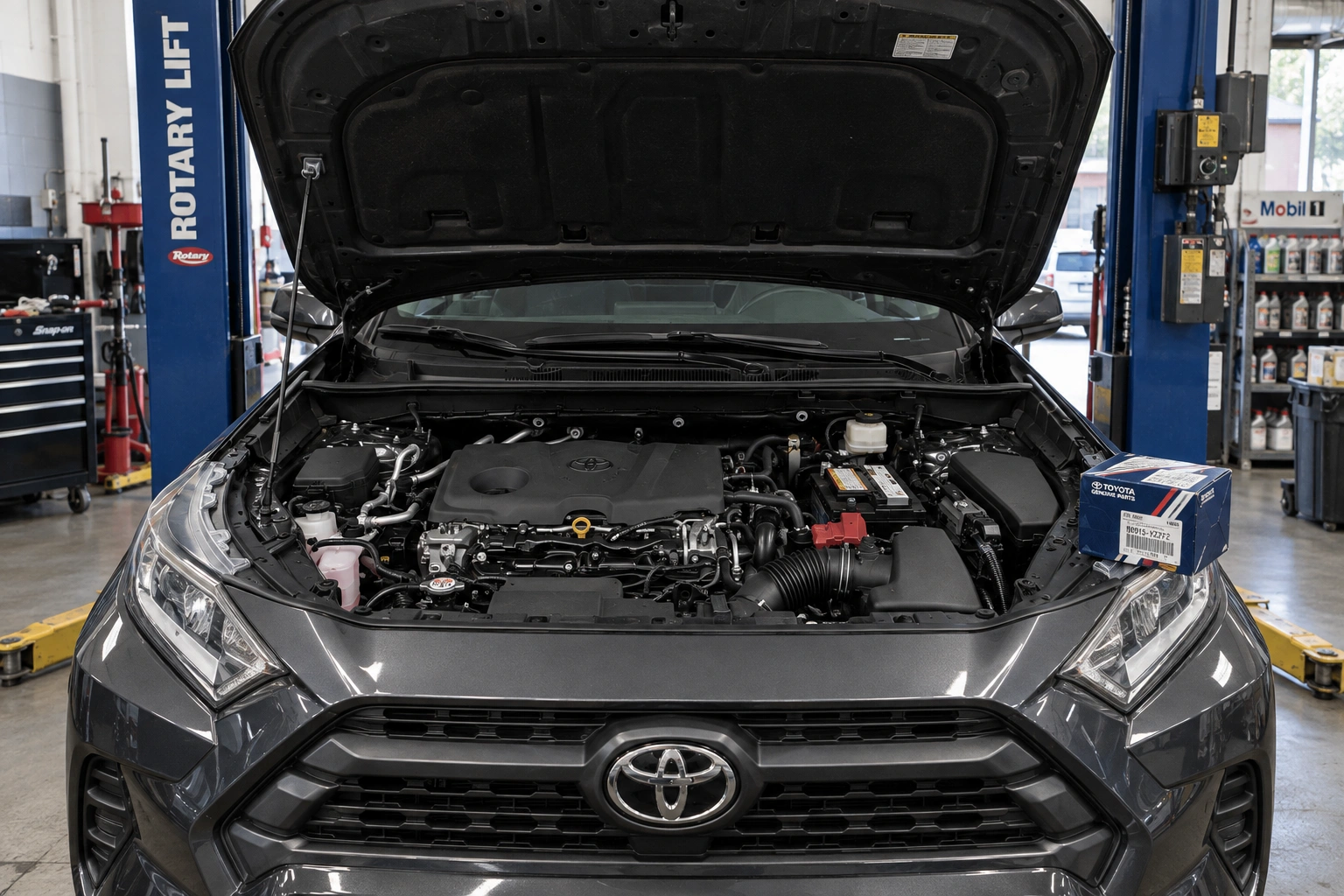
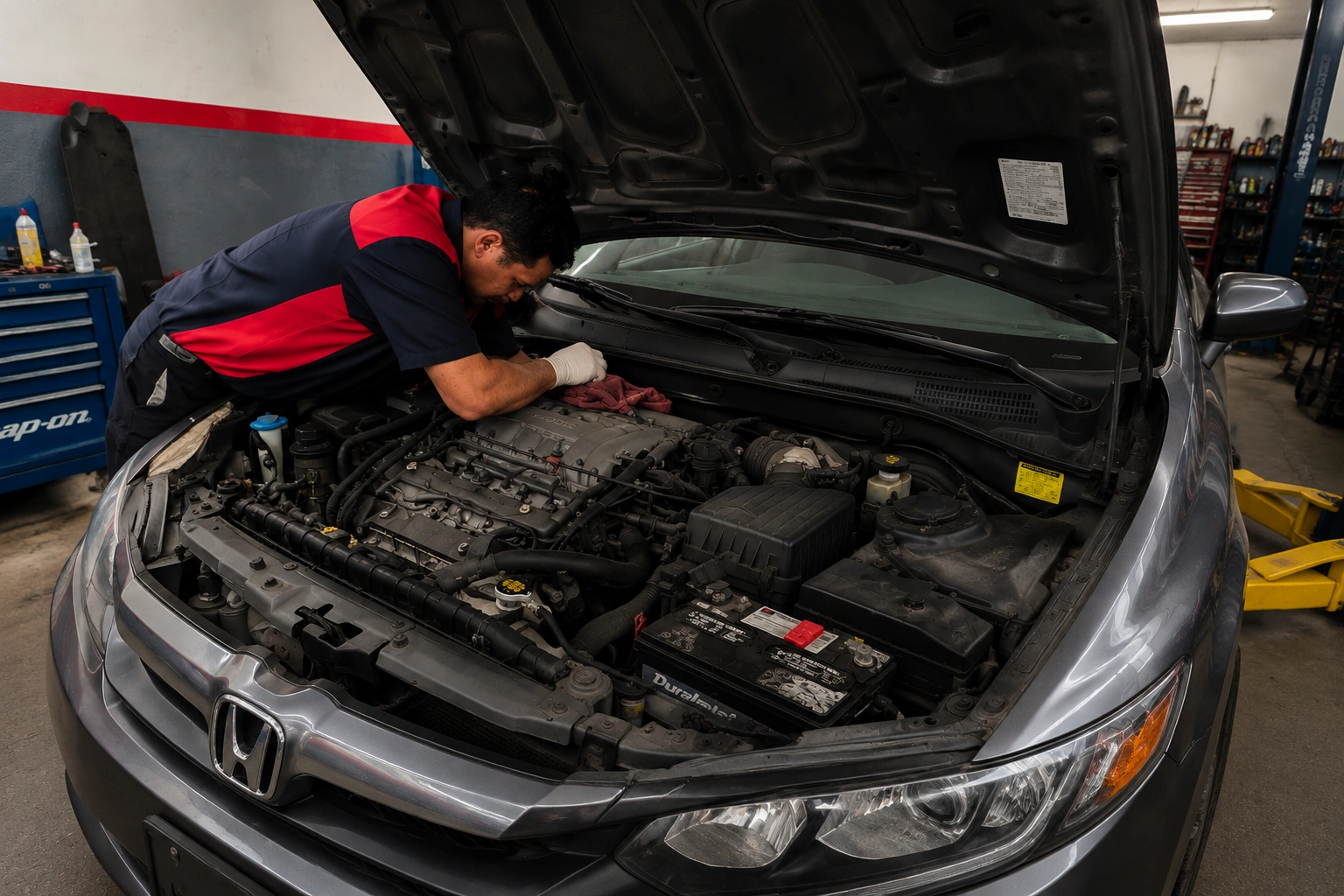
Regular oil service protects engines and provides an opportunity to check fluid levels, leaks, filters, belts, hoses, and warning lights. Fleet vehicles that idle, carry loads, make short trips, or operate in traffic may require severe-service intervals.
A scheduled fleet oil change and maintenance service can help standardize records and reduce missed service intervals.
Fleet Service 2 Tire Inspections and Rotation
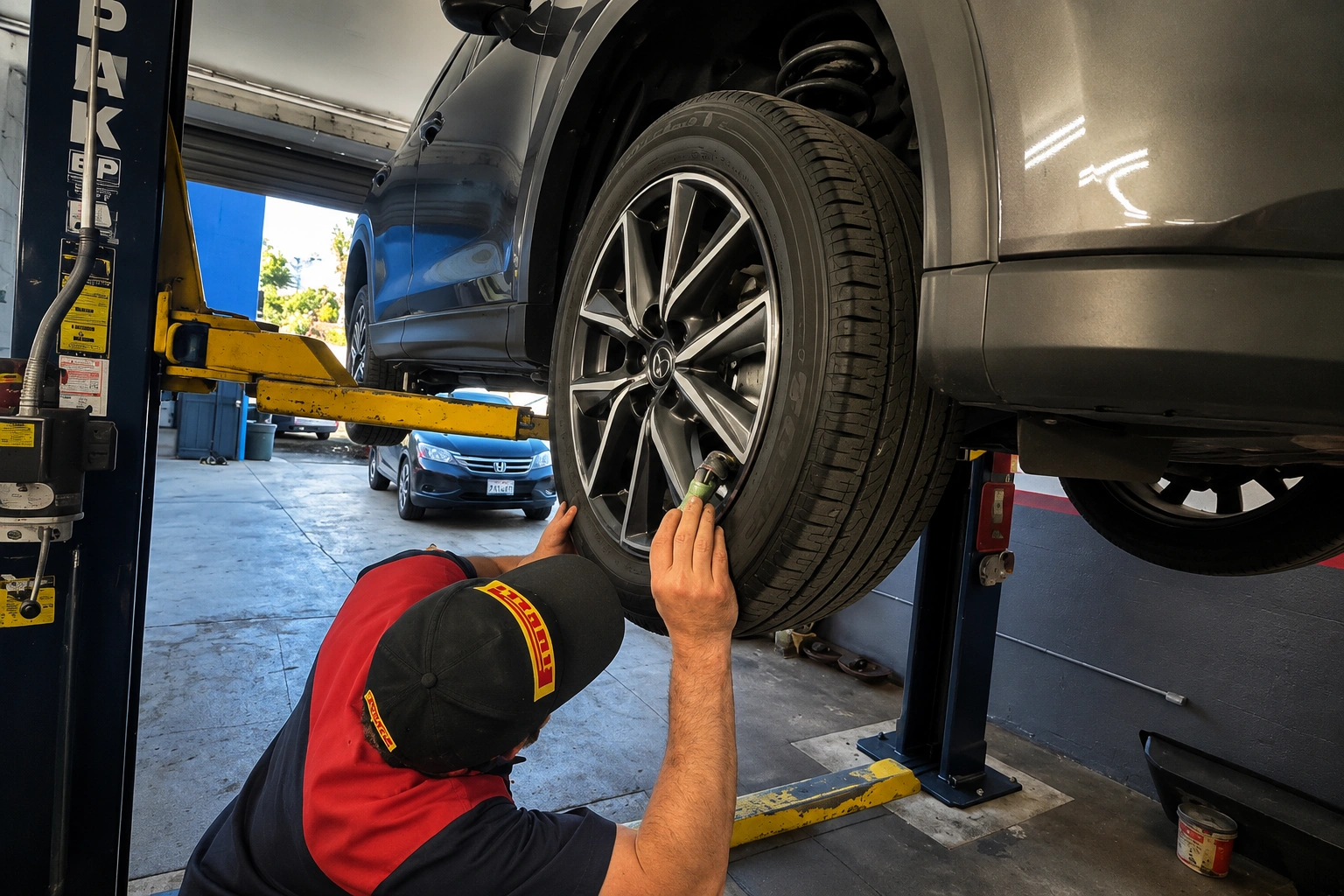
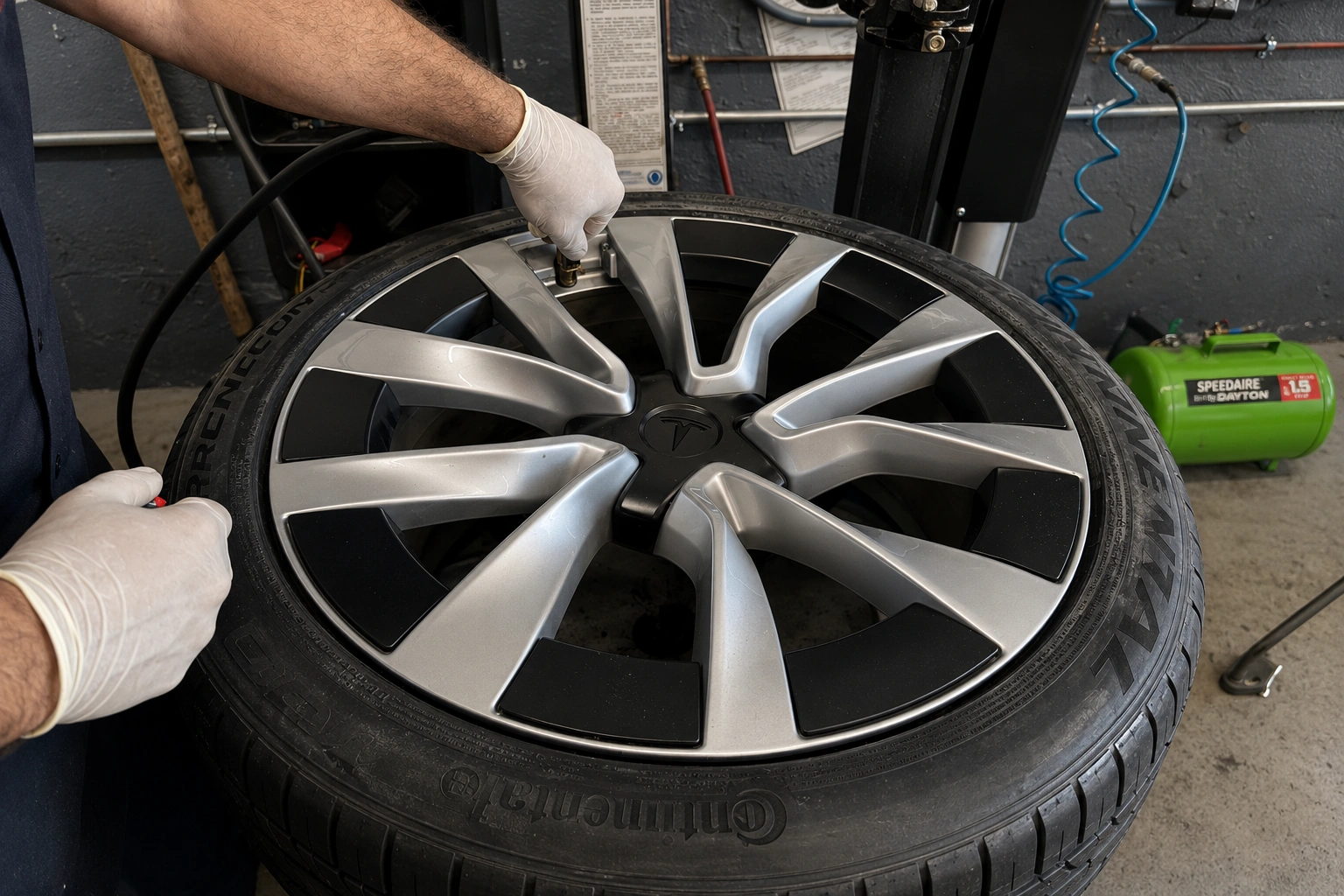
Tires affect safety, fuel efficiency, handling, and vehicle availability. Fleet inspections should check pressure, tread depth, sidewalls, punctures, wear pattern, valve condition, and wheel damage.
Rotation should follow the vehicle and tire manufacturer’s approved pattern. This guide to tire rotation in Los Angeles explains how traffic, drivetrain, mileage, and wear affect the schedule.
Use a professional fleet tire service inspection when vehicles have repeated pressure loss, uneven wear, vibration, or damage.
Fleet Service 3 Brake Inspections
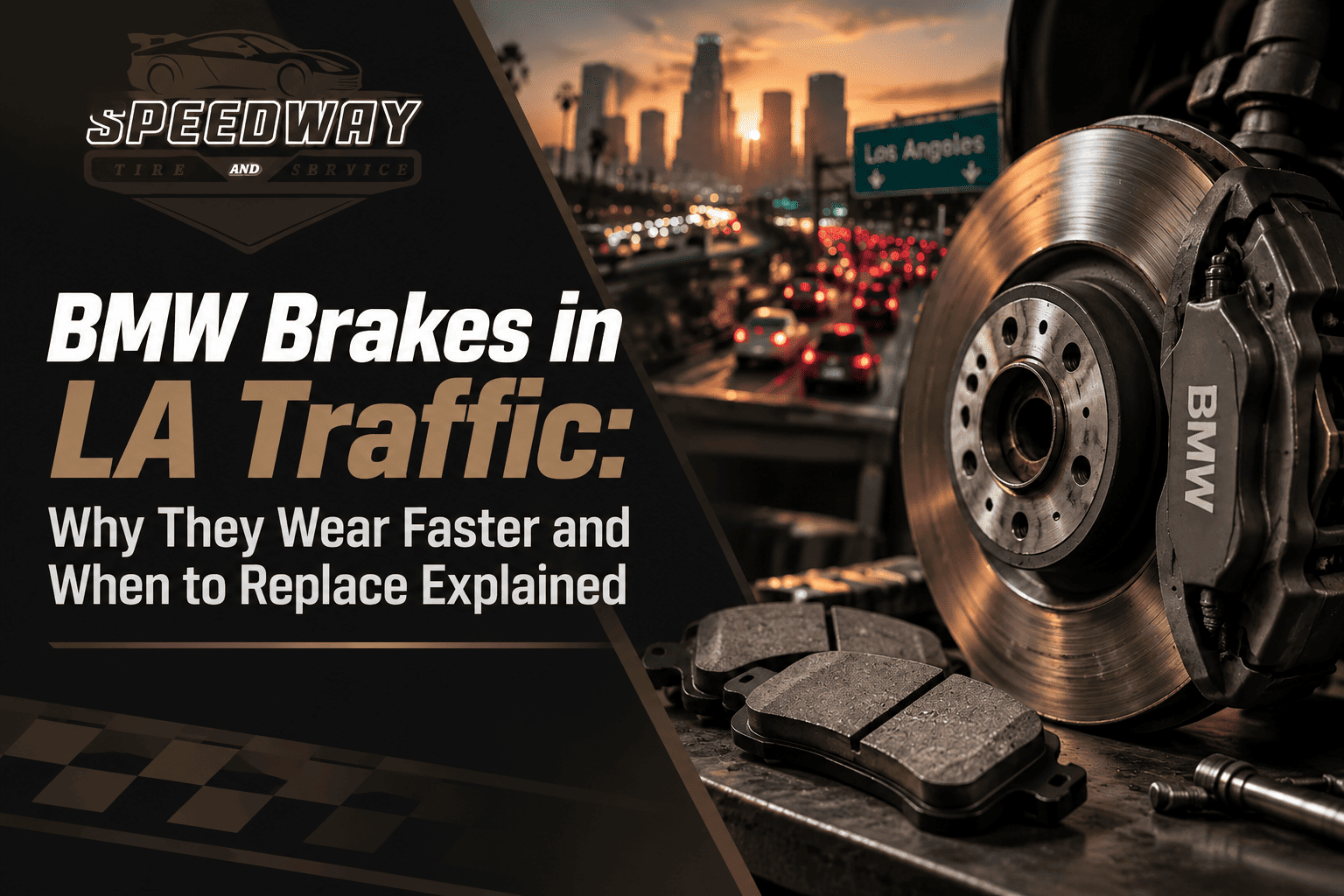
Commercial vehicles may accumulate frequent stops, heavy loads, hills, and long operating hours. Inspect pads, rotors, calipers, fluid, hoses, hardware, parking brakes, and warning lights before braking symptoms become a safety issue.
Grinding, squealing, pulling, vibration, a soft pedal, burning odor, or a longer stopping distance requires prompt fleet brake service.
Fleet Service 4 Engine Diagnostics
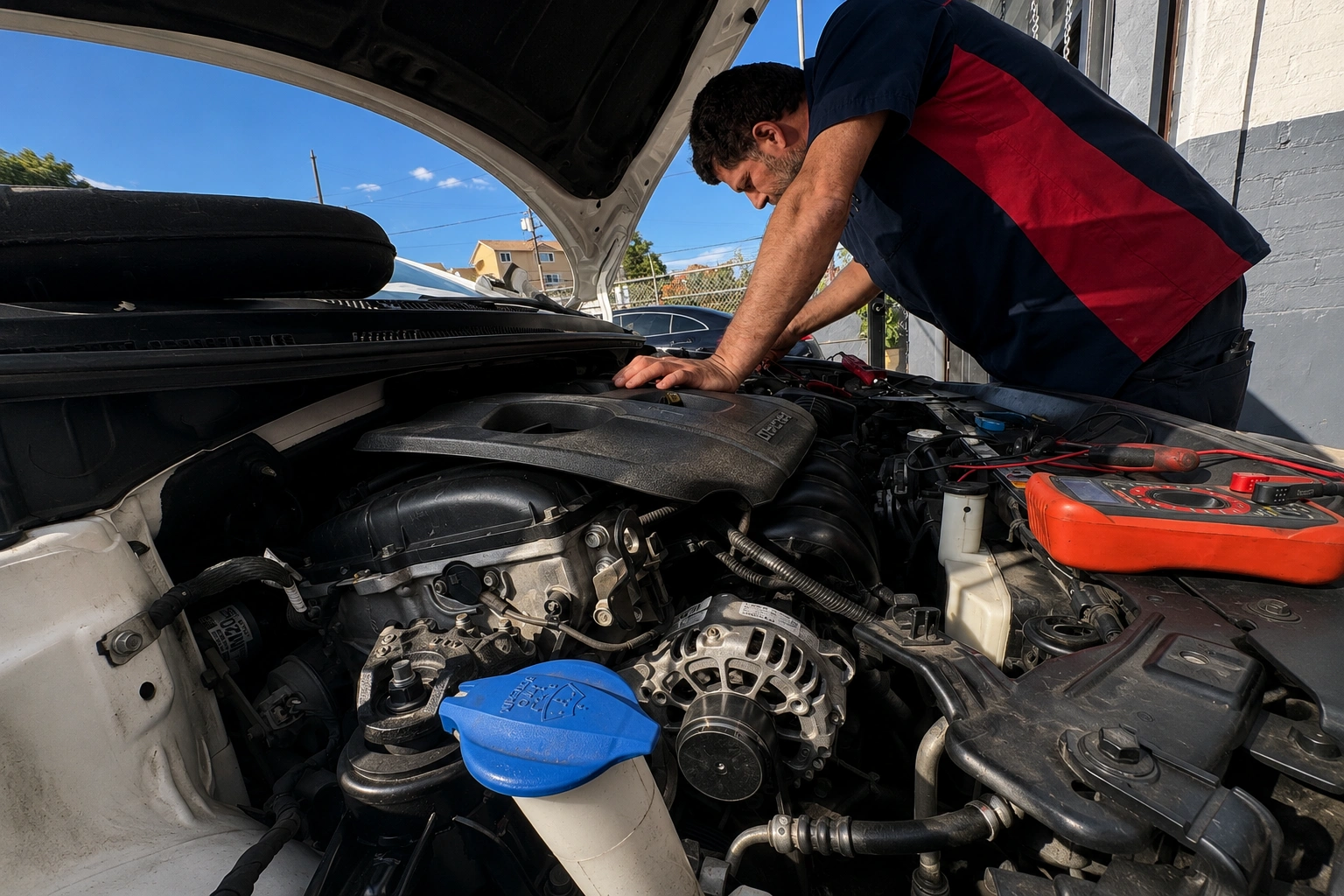
Warning lights, rough running, hard starting, stalling, misfires, reduced power, and fuel-economy changes can reduce productivity and increase operating cost. A diagnostic code is a starting point, not always the failed part.
Professional engine diagnostics can combine scan data with testing and inspection to identify the cause before unnecessary parts are replaced.
Build a Customized Fleet Maintenance Plan
A useful plan records each vehicle’s VIN, mileage, service history, tire information, warranty details, inspection findings, and next due date. It should identify routine maintenance, safety inspections, seasonal checks, and repair priorities.
- Schedule service by mileage and time.
- Group work to reduce repeated downtime when practical.
- Prioritize safety-critical repairs.
- Track recurring faults and repeat repairs.
- Standardize inspection forms and approval procedures.
- Review tire and fuel trends for signs of alignment or maintenance problems.
Reduce Fleet Downtime
Downtime can be reduced by scheduling preventive inspections, communicating symptoms early, keeping common parts available, and separating urgent work from future recommendations. A clear estimate helps managers approve repairs and plan vehicle availability.
For vehicles that operate in traffic or carry equipment, check tires and brakes more frequently when use is severe. Review this guide to tire replacement warning signs to help identify unsafe tire conditions.
Fleet Maintenance for Hybrid and Electric Vehicles
Hybrid and electric fleets have different service needs. They may require battery, charging, cooling, software, high-voltage safety, regenerative-braking, tire, and alignment inspections in addition to conventional maintenance.
Ask whether the shop has the training and equipment needed for the vehicle and requested service. This guide to hybrid maintenance explains differences from conventional gas vehicles.
Questions Fleet Managers Should Ask
- What evidence supports the recommended repair?
- Which work is required for safety and which can be scheduled later?
- What parts, labor, diagnostic charges, and warranty apply?
- What service interval fits this vehicle’s actual use?
- How will completed work and next service be documented?
- Can multiple vehicles be inspected or scheduled efficiently?
Frequently Asked Questions
How often should fleet vehicles be serviced?
Use the manufacturer’s schedule and adjust for mileage, age, load, idling, short trips, traffic, heat, towing, and inspection findings.
Why are tire inspections important for fleets?
Tire condition affects safety, handling, fuel efficiency, and availability. Pressure and wear problems can also signal alignment, suspension, or load issues.
Should fleet vehicles receive preventive brake inspections?
Yes. Frequent stops, hills, loads, and long operating hours can increase brake wear and heat.
How can a fleet reduce repair costs?
Track service, address symptoms early, prioritize safety, use correct parts and fluids, monitor recurring failures, and avoid replacing parts without diagnosis.
Can the same plan cover gas, hybrid, and electric vehicles?
The scheduling process can be shared, but inspection items, safety procedures, fluids, battery systems, and technician qualifications differ by powertrain.
Partner with Speedway for Fleet Maintenance
A preventive fleet program helps businesses control downtime, prioritize safety, manage costs, and keep vehicles ready for work. Regular oil, tire, brake, engine, and powertrain-specific service creates a more predictable maintenance process.
Managing a fleet? Speedway Tire & Service can discuss inspection, maintenance, tire, brake, and repair needs for your business vehicles.
Visit Us: 1165 West Sunset Blvd, Los Angeles, CA 90012
Call Now: (213) 250-4254
Looking for an Honest Auto Repair Shop in Los Angeles? Call Speedway Tire and Service Today
Whether you are driving through LA traffic or cruising the freeways, your car deserves expert care. Located in Los Angeles, Speedway Tire and Service offers reliable oil changes, brake repairs, tire services, and more, backed by experienced technicians and honest pricing.
Looking for an honest Auto Repair Shop in Los Angeles? Call Speedway Tire and Service Today
Whether you’re driving through LA traffic or cruising the freeways, your car deserves expert care. Located in Los Angeles, Speedway Tire and Service offers reliable oil changes, brake repairs, tire services, and more—all backed by experienced technicians and honest pricing.