Vibrations at 60 MPH on LA Freeways? It’s Not Always Wheel Balance

A car vibration that appears around 60 mph can be unsettling, especially on Los Angeles freeways where traffic moves quickly and road conditions change frequently. Although wheel imbalance is one possible cause, highway-speed vibration can also come from tire wear, a bent wheel, alignment instability, wheel-bearing wear, or suspension problems.
The speed at which the vibration appears can provide a useful clue. A professional inspection can determine whether the cause is related to the tires, wheels, steering, alignment, wheel hubs, or suspension system.
Why Vibration Appears at Highway Speed
At higher speeds, the wheels and tires rotate rapidly. Small imperfections that may not be noticeable around town can become much more obvious at freeway speed. A slight imbalance, uneven tread, bent rim, or worn component can create a vibration through the steering wheel, seat, or vehicle floor.
Los Angeles drivers may encounter potholes, rough pavement, freeway seams, road debris, and repeated stop-and-go conditions. These impacts and driving conditions can affect wheels, tires, alignment, and suspension components.
Common Causes of Car Vibration at 60 MPH
1. Tire Imbalance
Uneven weight distribution around a wheel and tire assembly can cause vibration at a particular speed range. A wheel-balance service may correct the problem when imbalance is the primary cause.
2. Uneven Tire Wear or Cupping
Tire cupping creates alternating high and low spots around the tread. These irregular surfaces can feel like a bouncing or humming vibration at freeway speed, even when the wheel is balanced. Reviewing these tire wear patterns can help you understand what the tread may reveal.
3. Bent Wheel or Rim
A pothole or rough road edge can bend a wheel enough to cause vibration, steering wobble, or slow air loss. A bent wheel may not always be obvious by visual inspection, so the wheel should be checked for runout and damage.
4. Wheel Alignment Problems
Misalignment changes how the tire meets the road. At high speeds, alignment instability can feel similar to tire imbalance and may be accompanied by pulling, an off-center steering wheel, or uneven tread wear. A professional wheel alignment inspection can identify whether the angles require adjustment.
5. Wheel Bearing or Hub Wear
A worn wheel bearing or hub may produce vibration, humming, or a droning sound that increases with speed. The sound may change slightly while turning. Read about wheel-bearing noise and failure signs when vibration is accompanied by a humming sound.
6. Suspension or Steering Wear
Worn suspension and steering components can allow unwanted movement and make the vehicle feel unstable. Ball joints, bushings, tie-rod ends, shocks, and struts may contribute to vibration, clunking, uneven wear, or loose steering. A suspension inspection can help identify worn or damaged components.
Symptoms That Help Narrow Down the Cause
- Vibration through the steering wheel: The issue may involve the front tires, wheels, alignment, or steering components.
- Vibration through the seat or floor: The concern may involve the rear tires, wheels, or other rotating components.
- Humming that increases with speed: A wheel bearing, tire, or tread-wear issue may be involved.
- Vibration after hitting a pothole: Inspect the tire, wheel, alignment, and suspension for impact damage.
- Vibration during braking: Brake rotors or other brake components may require inspection.
- Clunking over bumps: Suspension or steering components may be worn or loose.
If the vibration began after a road impact, review this guide to pothole-related tire, wheel, and suspension damage.
Can Wheel Balancing Fix Vibration at Highway Speed?
Wheel balancing can correct vibration caused by uneven weight distribution, but it will not solve tire cupping, a bent wheel, alignment problems, wheel-bearing wear, or loose suspension parts. If balancing did not fix the vibration, the cause may be somewhere else.
Alignment and balancing address different conditions. This guide to wheel alignment and balancing explains why a vehicle may need one service, the other, or both.
How a Professional Inspection Works
1. Review the Symptoms
The technician will ask when the vibration begins, where you feel it, whether it changes while braking or turning, and whether it started after an impact or tire service.
2. Inspect the Tires and Wheels
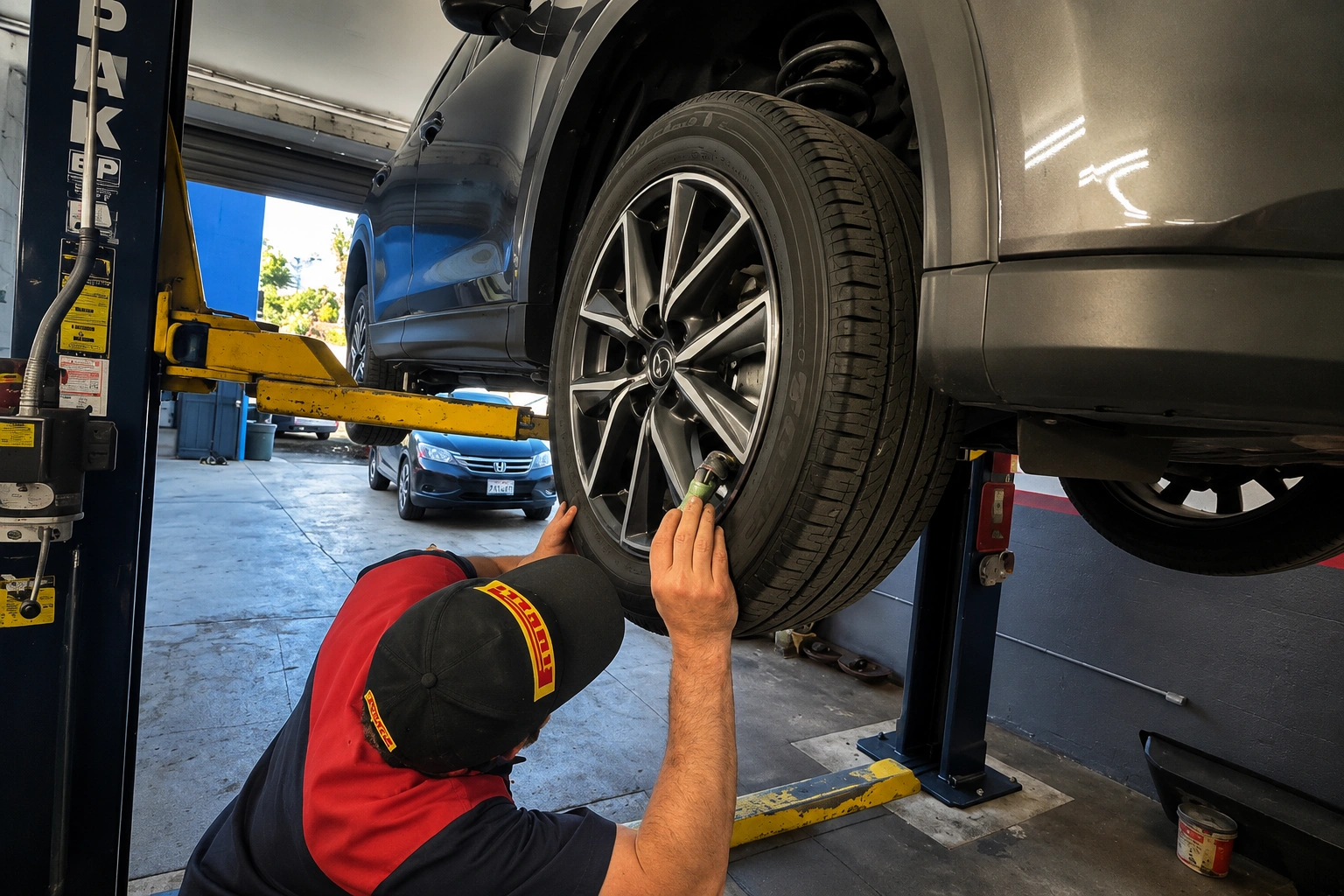
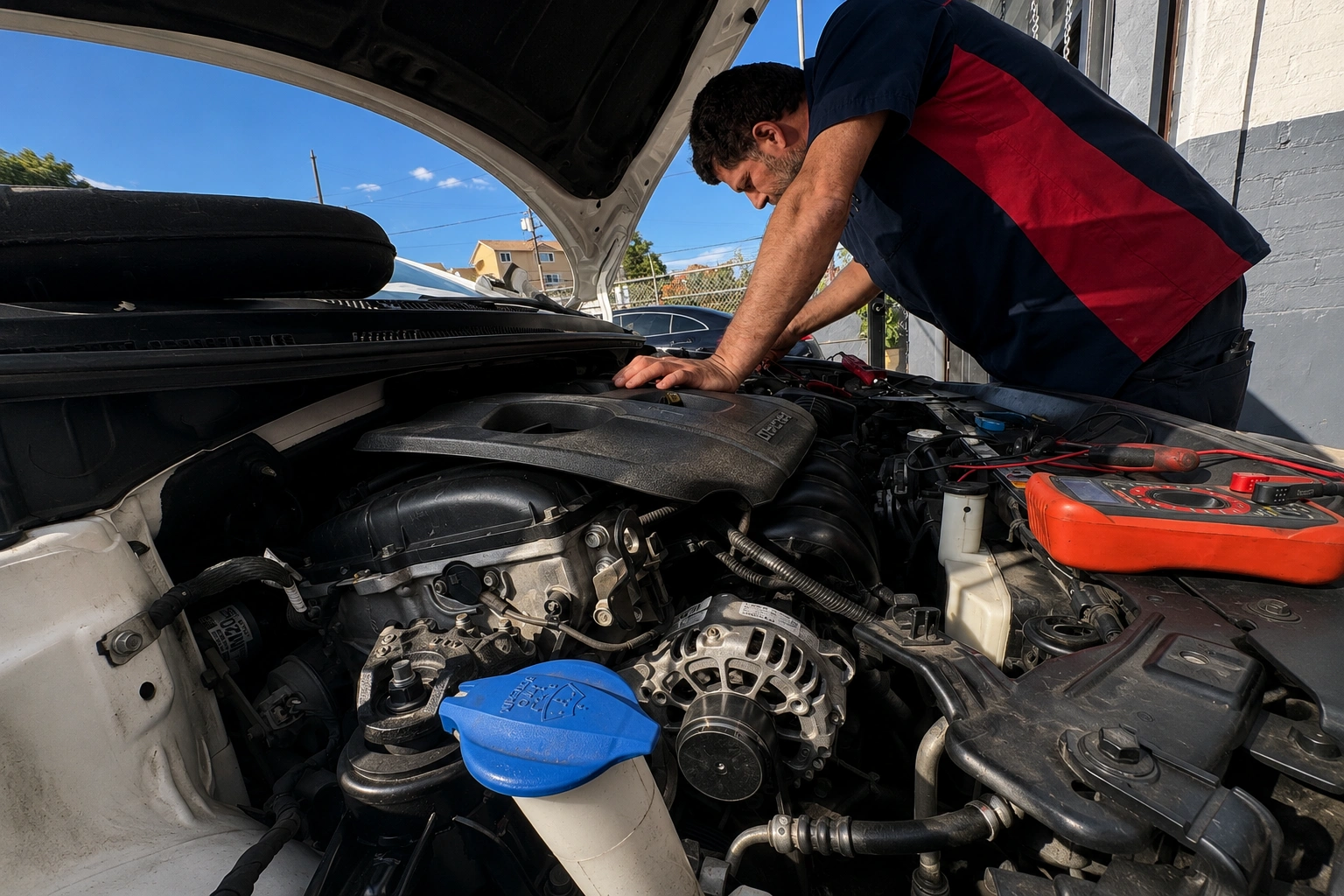
The inspection may include tire pressure, tread condition, cupping, sidewall damage, wheel runout, missing weights, and signs of a bent rim.
3. Check Alignment and Suspension
If the tires and wheels do not explain the symptom, the technician may inspect alignment angles, wheel bearings, hubs, steering parts, and suspension components.
4. Verify the Repair
After the recommended repair, the vehicle should be checked again to confirm that the vibration has improved and that the tires, wheels, and related systems are operating properly.
Is It Safe to Keep Driving with Vibration at Freeway Speeds?
It is not recommended to ignore a vibration that appears at freeway speed. Continued driving may worsen tire wear, damage suspension or steering components, or increase the risk of a tire or wheel problem. If the vibration is severe, suddenly worsens, or occurs with a tire-pressure warning, pulling, noise, smoke, or handling changes, slow down safely and arrange an inspection.
What to Check If Balancing Did Not Fix the Vibration
A follow-up inspection should consider:
- Tire wear patterns and cupping.
- Wheel or rim runout.
- Alignment geometry.
- Wheel hub and bearing condition.
- Suspension and steering tightness.
- Brake components if vibration occurs during braking.
For broader tire-related concerns, a professional tire inspection and service can help determine whether the tires are contributing to the vibration.
Frequently Asked Questions
Why does my car vibrate only at 60 mph?
Specific-speed vibration is often associated with tire imbalance, uneven tread wear, a bent wheel, alignment instability, or an early wheel-bearing concern. The speed range helps guide the inspection but does not identify the cause by itself.
What is tire cupping?
Tire cupping is an uneven wear pattern that creates high and low spots around the tread. It can be related to tire balance, alignment, worn suspension components, or inadequate tire maintenance.
How do I know if a bent rim is causing the vibration?
A bent wheel may cause vibration at a particular speed, steering wobble, or slow air loss. A technician can measure wheel runout and inspect the wheel and tire for damage.
Can bad alignment cause vibration at 60 mph?
Yes. Misalignment can change how the tire contacts the road and may produce instability, irregular wear, pulling, or vibration at higher speeds.
Schedule a Professional Inspection
Do not let a highway-speed vibration continue without diagnosis. A careful inspection of the tires, wheels, alignment, wheel bearings, steering, and suspension can identify the source and help restore a smoother, safer ride.
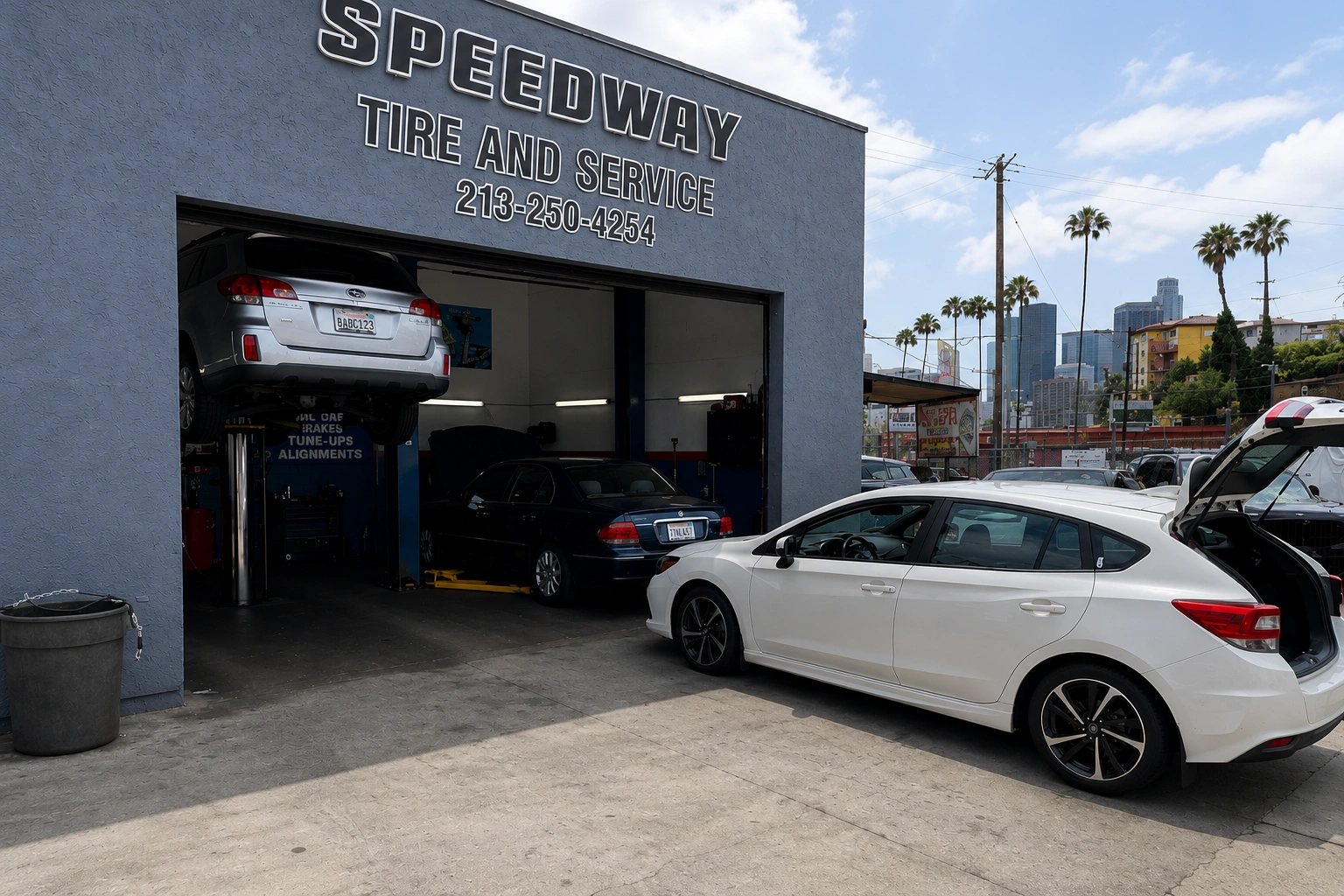
Noticing vibration at 60 mph? Speedway Tire & Service can inspect the related components and explain the recommended next step.
Visit Us: 1165 West Sunset Blvd, Los Angeles, CA 90012
Call Now: (213) 250-4254
Looking for an Honest Auto Repair Shop in Los Angeles? Call Speedway Tire and Service Today
Whether you are driving through LA traffic or cruising the freeways, your car deserves expert care. Located in Los Angeles, Speedway Tire and Service offers reliable oil changes, brake repairs, tire services, and more, backed by experienced technicians and honest pricing.
Looking for an honest Auto Repair Shop in Los Angeles? Call Speedway Tire and Service Today
Whether you’re driving through LA traffic or cruising the freeways, your car deserves expert care. Located in Los Angeles, Speedway Tire and Service offers reliable oil changes, brake repairs, tire services, and more—all backed by experienced technicians and honest pricing.