Car Still Pulls After an Alignment? Bent Parts, Tire Pull, or Suspension Damage
If your car pulls after alignment, the alignment measurement is only one part of the diagnosis. A vehicle can continue drifting because of tire pull, incorrect tire pressure, a sticking brake, worn or bent suspension and steering parts, wheel or tire damage, road crown, uneven loading, or a structural condition that prevents the alignment from staying within specification.
An alignment adjusts selected wheel angles; it does not automatically repair a bent control arm, worn tie rod, damaged wheel, defective tire, seized caliper, worn bushing, or altered subframe. Firestone lists tire pressure, wheel alignment, brake problems, suspension or steering wear, road or load imbalance, and other wheel-end issues among possible causes of a vehicle pulling to one side.
The safest next step is to document when the pull happens and have the tires, brakes, steering, suspension, wheels, and alignment results evaluated together. Do not release the steering wheel in traffic to test the drift. If the vehicle pulls strongly, the steering feels unstable, a tire or wheel is damaged, a brake is dragging, or the car has severe vibration, stop driving and arrange professional assistance.
Why does a car still pull after an alignment?
The most common explanations are that the tires are creating a pull, the tire pressures differ, an alignment-related part is worn or bent, a brake is applying unevenly, the road is sloped or crowned, or the alignment could not fully correct a structural or ride-height problem. A steering wheel that is off-center may also indicate an alignment or steering issue, but it does not by itself identify the cause.
Before returning to the shop, note whether the pull is constant, whether it changes with road direction, whether it occurs only during braking or acceleration, and whether the steering wheel remains centered. This pattern helps a technician distinguish a tire pull from a brake, suspension, steering, alignment, or road-condition concern.
|
What you notice |
Possible causes |
Recommended next step |
|
Pull is present on several reasonably level roads |
Tire pull, pressure difference, alignment, suspension, steering, brake drag, or structural issue |
Request a full tire, brake, steering, suspension, and alignment review. |
|
Pull changes when the tires are repositioned or tested |
Tire conicity, radial pull, uneven wear, or tire construction issue |
Have a tire professional confirm whether the tire is suitable for the vehicle. |
|
Vehicle pulls only when braking |
Sticking caliper, uneven pad friction, hydraulic issue, tire, suspension, or alignment condition |
Schedule a brake and chassis inspection promptly. |
|
Vehicle pulls mainly under acceleration |
Torque steer, driveline behavior, tire grip difference, mount, or suspension issue |
Have the drivetrain and front suspension evaluated if the change is strong or new. |
|
Steering wheel is off-center after the alignment |
Alignment adjustment, steering linkage, sensor calibration, or road test issue |
Return for an alignment-result review and steering-angle check when applicable. |
|
Pull appears after a pothole or curb impact |
Bent wheel, tire damage, control arm, tie rod, strut, bushing, or subframe issue |
Avoid continued driving if damage or instability is visible; arrange inspection. |
|
Pull comes with vibration, noise, or rapid tire wear |
Wheel or tire damage, worn suspension, bearing, brake, or alignment issue |
Stop if severe and request a complete wheel-end and suspension diagnosis. |
This table is a screening guide, not a diagnosis. Several problems can occur at the same time.
What an alignment can—and cannot—fix
Wheel alignment sets adjustable wheel and suspension angles to the vehicle’s intended range. Depending on the vehicle, the technician may evaluate toe, camber, caster, thrust angle, steering-wheel center, ride height, and related measurements. Not every angle is adjustable on every vehicle, and the available range differs by design.
An alignment cannot restore a bent wheel, straighten a damaged control arm, replace a worn bushing, repair a torn tie-rod end, free a sticking brake, correct a defective tire, or repair a damaged unibody. If a worn or bent component is left in place, the vehicle may pull even when the alignment printout shows some values within range.
Ask for the before-and-after alignment readings and whether any measurements were outside the manufacturer’s range or could not be adjusted. A reading that is “green” on a generic machine does not eliminate the need to inspect parts, tires, brakes, ride height, and steering operation when the symptom continues.
Tire pull versus alignment problems
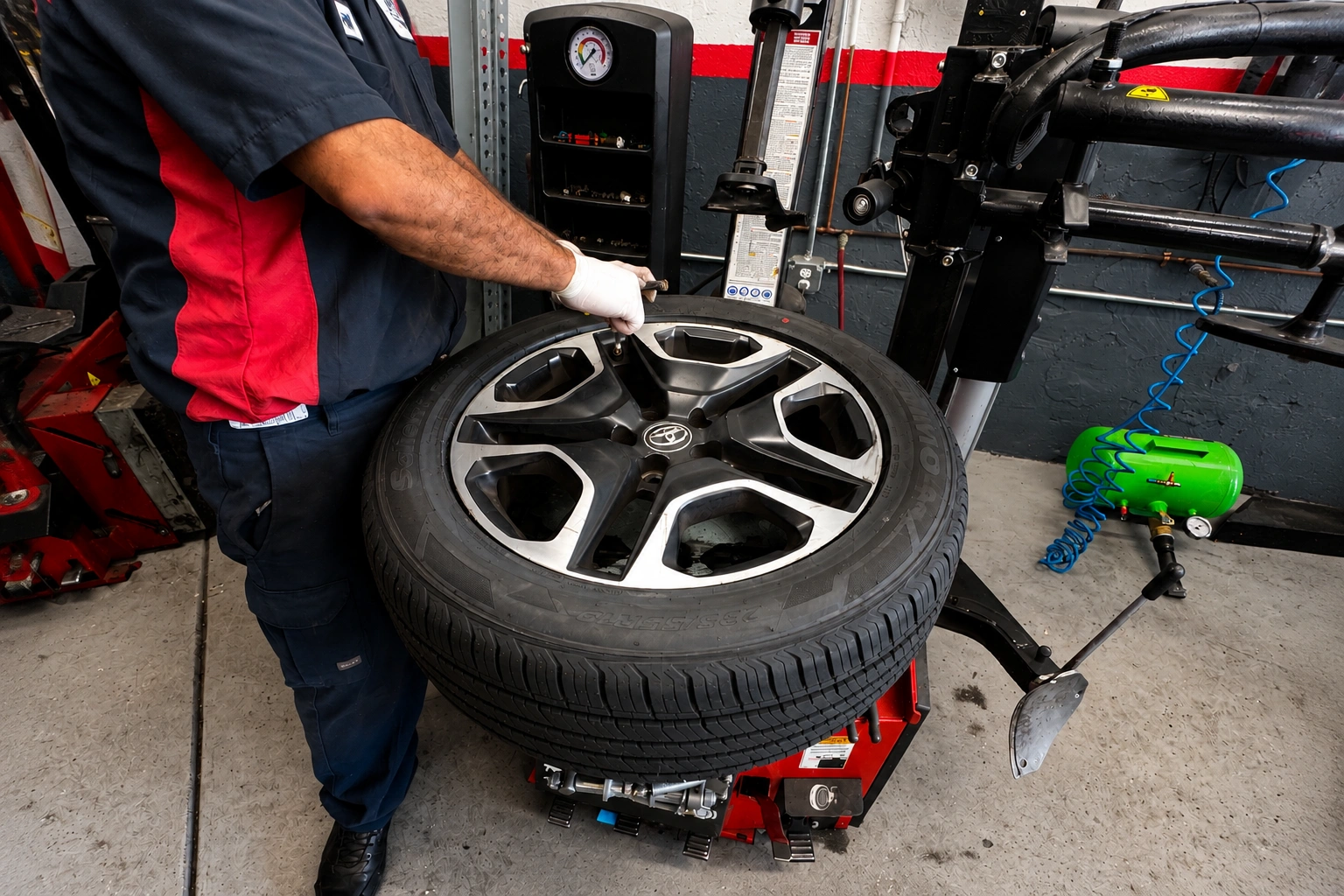
A tire can create a pulling sensation even when the wheel angles are correct. Differences in pressure, tread wear, tire construction, size, model, or internal condition can change the rolling force from one side to the other. A tire pull may change when the vehicle is tested on a different road direction or when the tires are inspected and repositioned using an approved procedure.
Check tire pressures when the tires are cold and set them to the vehicle manufacturer’s door-jamb label or owner’s manual specification. Do not use the maximum pressure printed on the tire sidewall as the vehicle setting. Inspect for uneven wear, shoulder wear, cupping, bulges, cuts, exposed cords, mismatched sizes, and a tire that is substantially different from the one on the opposite side of the axle.
Do not swap tires across axles or change their direction of rotation without following the tire manufacturer’s and vehicle manufacturer’s requirements. A tire professional can determine whether a tire-pull test, position change, repair, or replacement is appropriate.
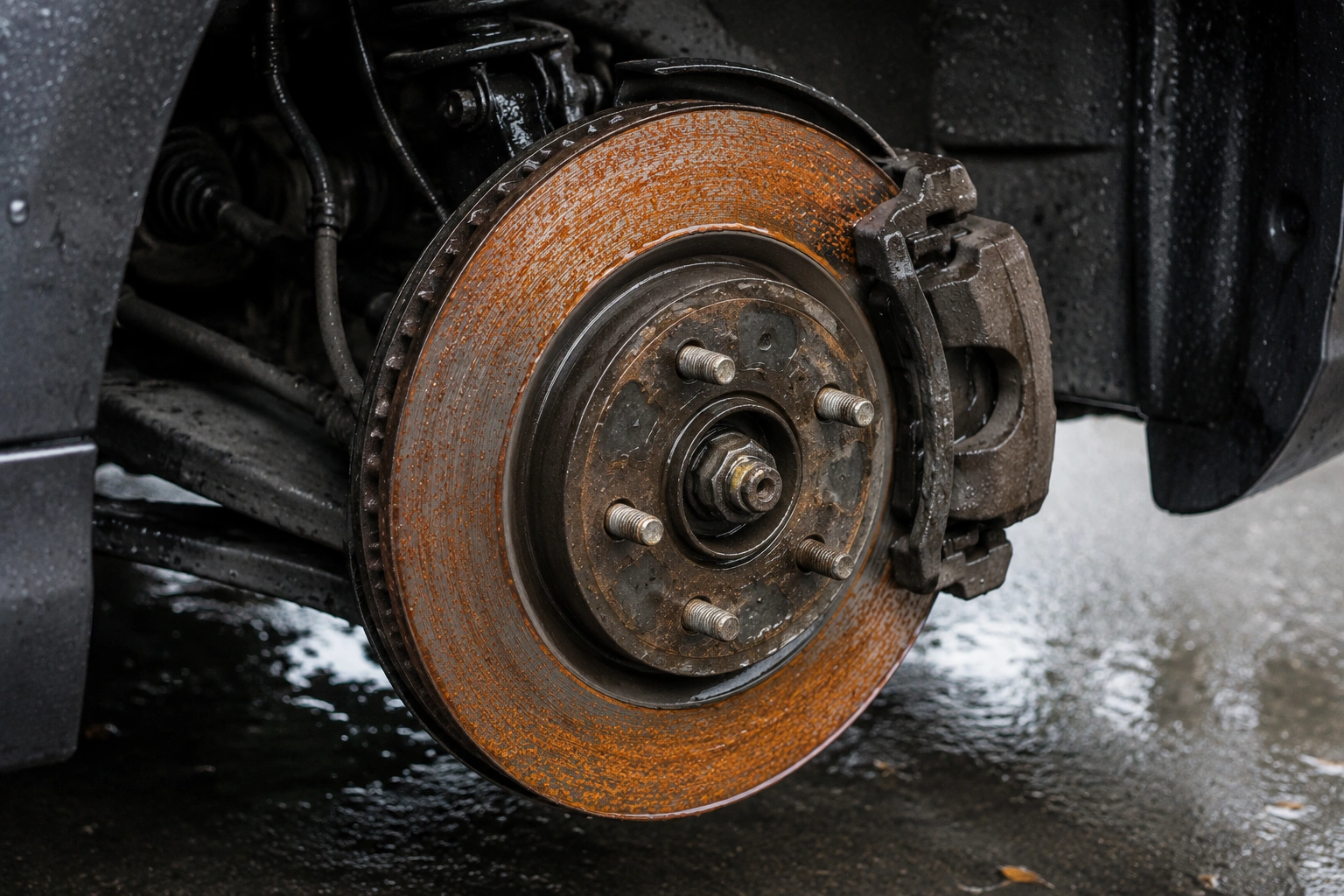
Brake pull - when the vehicle drifts only during braking
If the car pulls mainly when you press the brake pedal, the cause may be uneven brake friction rather than alignment. A sticking caliper, restricted brake hose, uneven pad condition, contaminated friction surface, or hydraulic problem can cause one side to slow more strongly than the other. Tire condition, suspension, and alignment can still contribute.
A brake pull should not be tested through repeated hard stops on public roads. If the vehicle pulls sharply, the pedal feels soft, braking is weak, one wheel becomes unusually hot, or a burning smell appears, stop when safe and arrange inspection or towing. The brake system should be diagnosed before further alignment work is authorized.
Worn or bent suspension and steering parts
Control arms, ball joints, tie rods, steering links, struts, shocks, bushings, knuckles, wheel bearings, and subframe mounting points can affect wheel control and alignment stability. Wear may allow angles to change under braking, acceleration, cornering, or bumps. Impact damage can physically bend a component or wheel.
Possible clues include a pull that started after a pothole or curb strike, uneven tire wear, a crooked steering wheel, clunks over bumps, steering looseness, vibration, or an alignment reading that cannot be brought into the specified range. These signs overlap, so a bent strut should not be diagnosed from pulling alone.
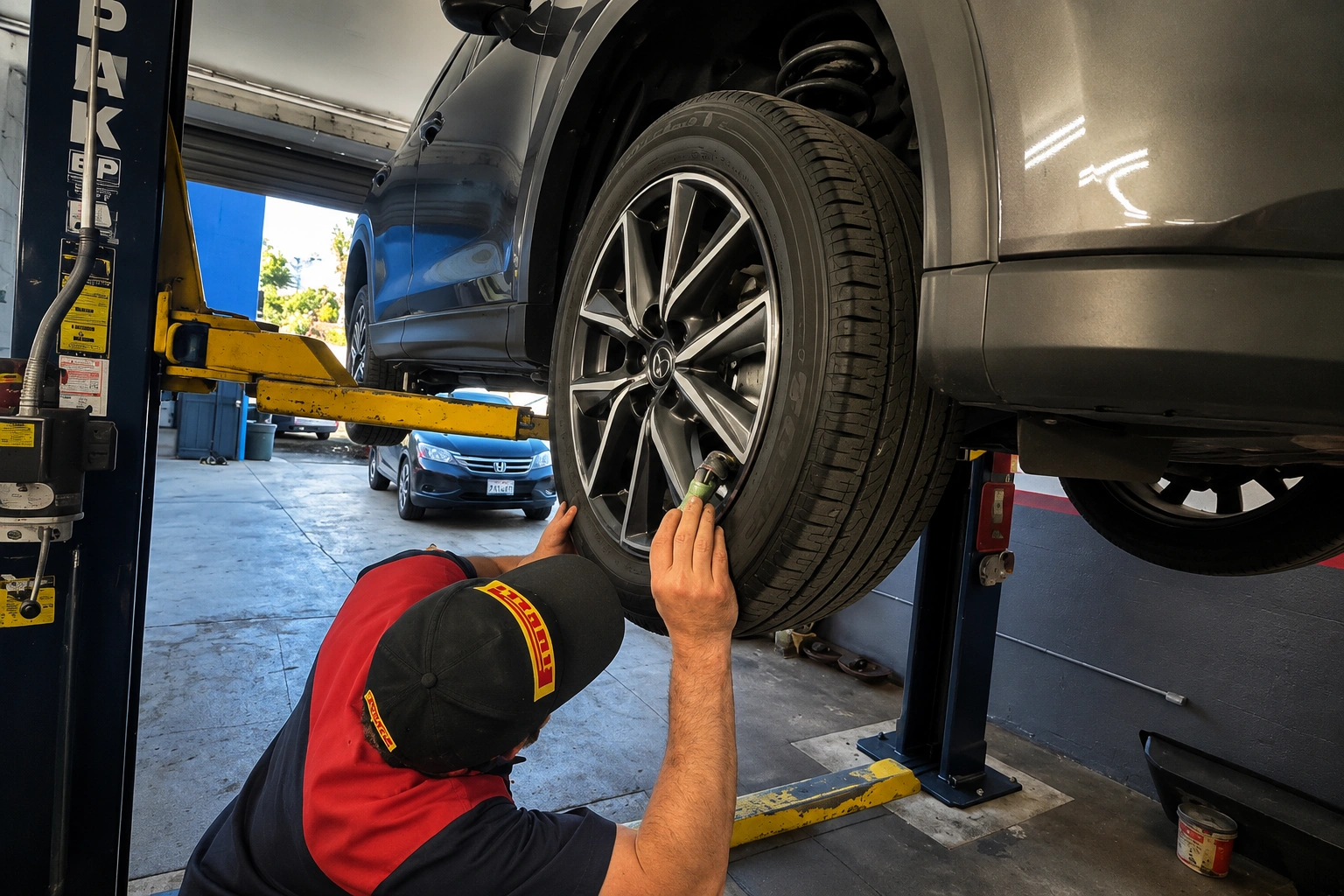
Do not place hands near suspension components under load or use an unsupported vehicle for inspection. A technician should safely lift and support the vehicle, check play and damage, verify wheel and tire condition, and compare measurements with manufacturer information.
Bent strut symptoms and other impact damage
A bent strut or strut-related component may alter steering geometry and produce a pull, uneven wear, vibration, or a change in ride height. However, similar symptoms can result from a bent wheel, tire damage, control-arm deformation, tie-rod damage, bushing wear, brake drag, or subframe movement.
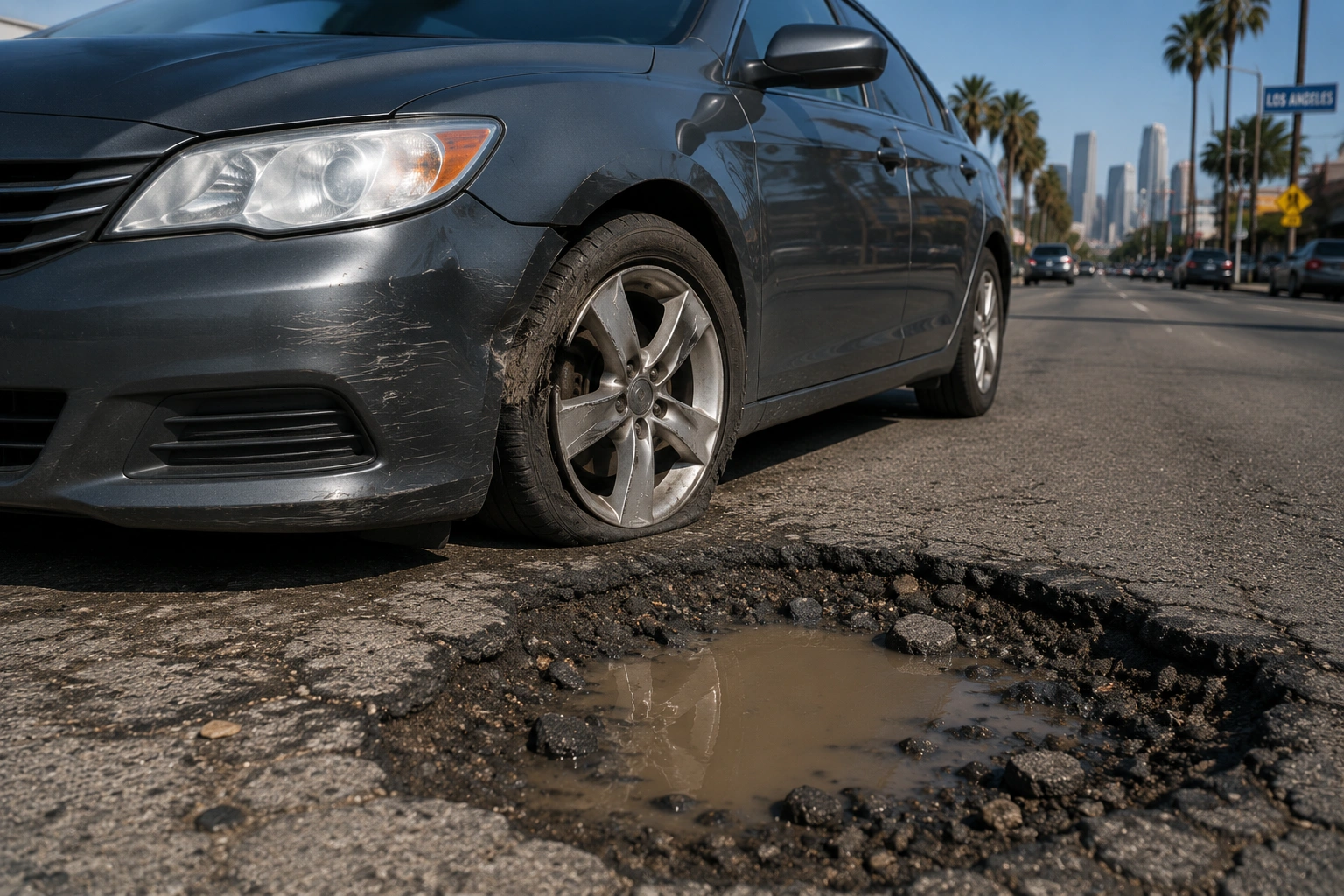
After hitting a severe pothole or curb, look for low tire pressure, a sidewall bulge, wheel damage, fluid leakage from a strut, unusual ride height, and new noises. Do not continue driving at normal speed if the vehicle is unstable or the tire or wheel appears damaged. A post-impact inspection should examine the whole wheel corner rather than treating the alignment as the only repair.
Road crown, slope, and load imbalance
Roads are often crowned or sloped to move water toward drainage areas. A vehicle may drift slightly on a crowned road, and the direction or degree of the drift can change depending on the lane. Uneven cargo or passenger weight can also affect how the vehicle feels.
Road crown should not be used to dismiss a strong or new pull. Have the vehicle evaluated on a reasonably level, safe road when possible, and compare its behavior in both directions. Do not test by taking your hands off the wheel, crossing lanes, or driving aggressively.
Why a car may pull again after an alignment
A vehicle may pull again when a worn part moves under load, a tire develops a new problem, pressure changes, a wheel is damaged, a brake begins to drag, or the alignment was performed before the underlying component was repaired. A steering-angle sensor or electronic stability-control calibration may also be relevant on some vehicles, particularly after steering or suspension work.
Return to the shop that performed the alignment and describe the exact symptom. Ask whether the technician checked the alignment readings, tire pressure, tire pull, steering-wheel center, brake drag, ride height, and suspension play. If the vehicle was recently hit, mention the impact and provide any previous inspection or alignment printout.
Safe checks when a car pulls after alignment
Park safely and check cold tire pressures using the vehicle placard or owner’s manual. Inspect the tires and wheels for visible damage and look for uneven tread wear. Note whether the vehicle pulls on level roads, during braking, during acceleration, or only on one route. Keep both hands on the wheel during any observation and do not intentionally release it.
Do not crawl under the vehicle without proper support, do not use a jack as the sole support, and do not attempt to bend or adjust suspension parts. Do not continue testing if the vehicle has a damaged tire, severe vibration, unstable steering, a hot wheel, a burning smell, a warning light, or weak braking.
When should you stop driving?
Stop driving and arrange professional assistance when the vehicle pulls sharply, changes direction unexpectedly, has loose or unstable steering, shows a tire bulge or exposed cord, has a cracked or bent wheel, vibrates severely, or pulls while braking. A soft brake pedal, brake warning light, grinding, smoke, or burning smell also requires prompt attention.
A mild drift on a crowned road may be less urgent, but a new, worsening, or unexplained pull should still be inspected. If the pull began after a pothole or curb impact, avoid high speeds and freeway driving until the tires, wheels, brakes, steering, suspension, and alignment have been checked.
How a technician diagnoses persistent pulling
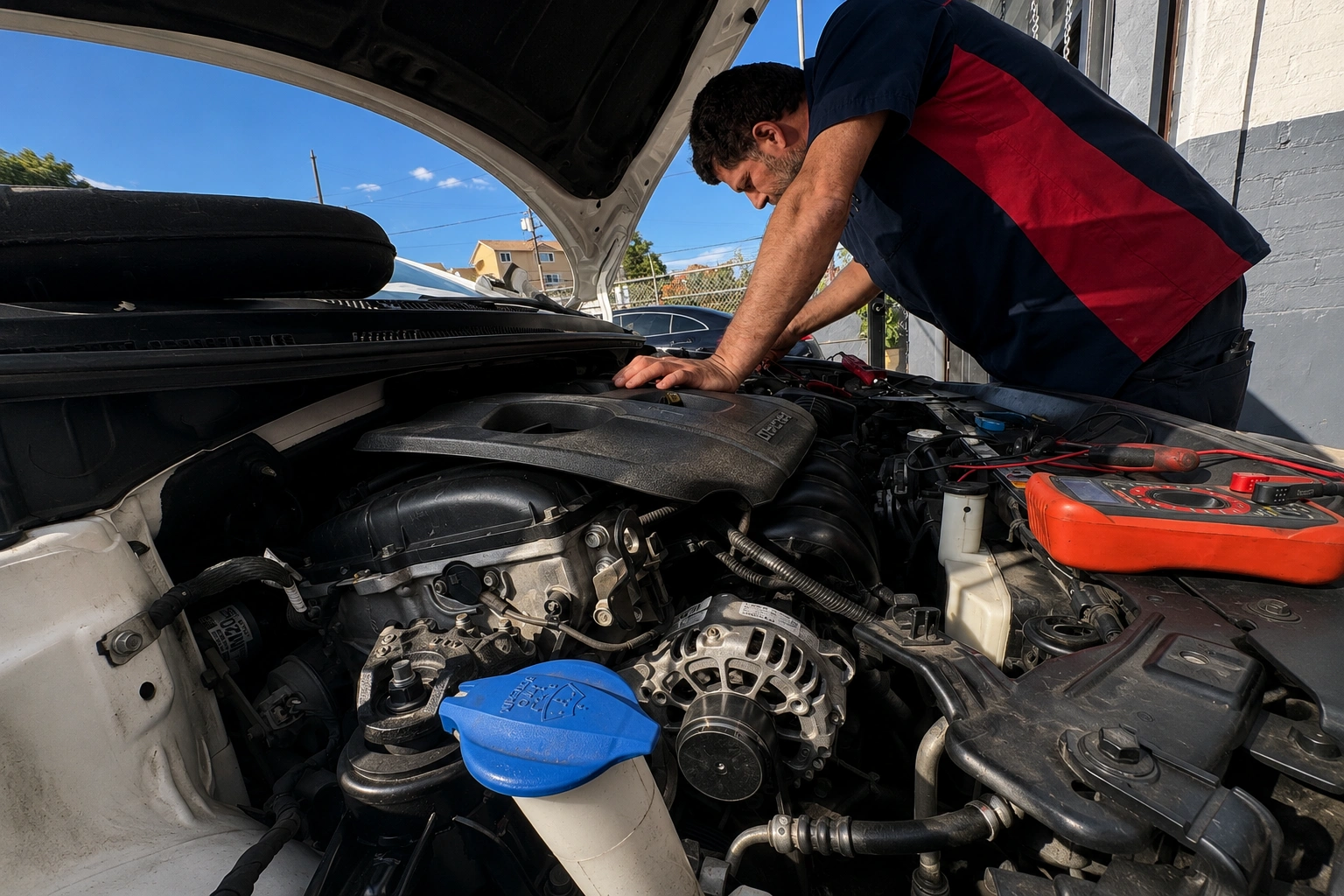
A complete diagnosis begins with a controlled road test when safe. The technician records whether the pull is constant, changes with braking or acceleration, changes with road direction, and occurs with the steering wheel centered. The shop then checks tire pressures, tread and tire construction, wheel condition, brakes, bearings, steering, suspension, ride height, and underbody or impact damage.
The technician may review alignment readings, measure ride height, inspect for play or bent parts, evaluate tire pull using an approved method, check brake temperatures and hydraulic operation, and scan electronic systems when steering-angle or stability-control calibration is relevant. If structural damage is suspected, a qualified collision or structural specialist may need to inspect the vehicle.
The repair may involve correcting tire pressure, repairing or replacing a tire or wheel, servicing a brake, replacing a worn suspension or steering component, addressing structural damage, recalibrating a system, or performing a new alignment after the underlying problem is corrected. Alignment alone is not always the complete repair.
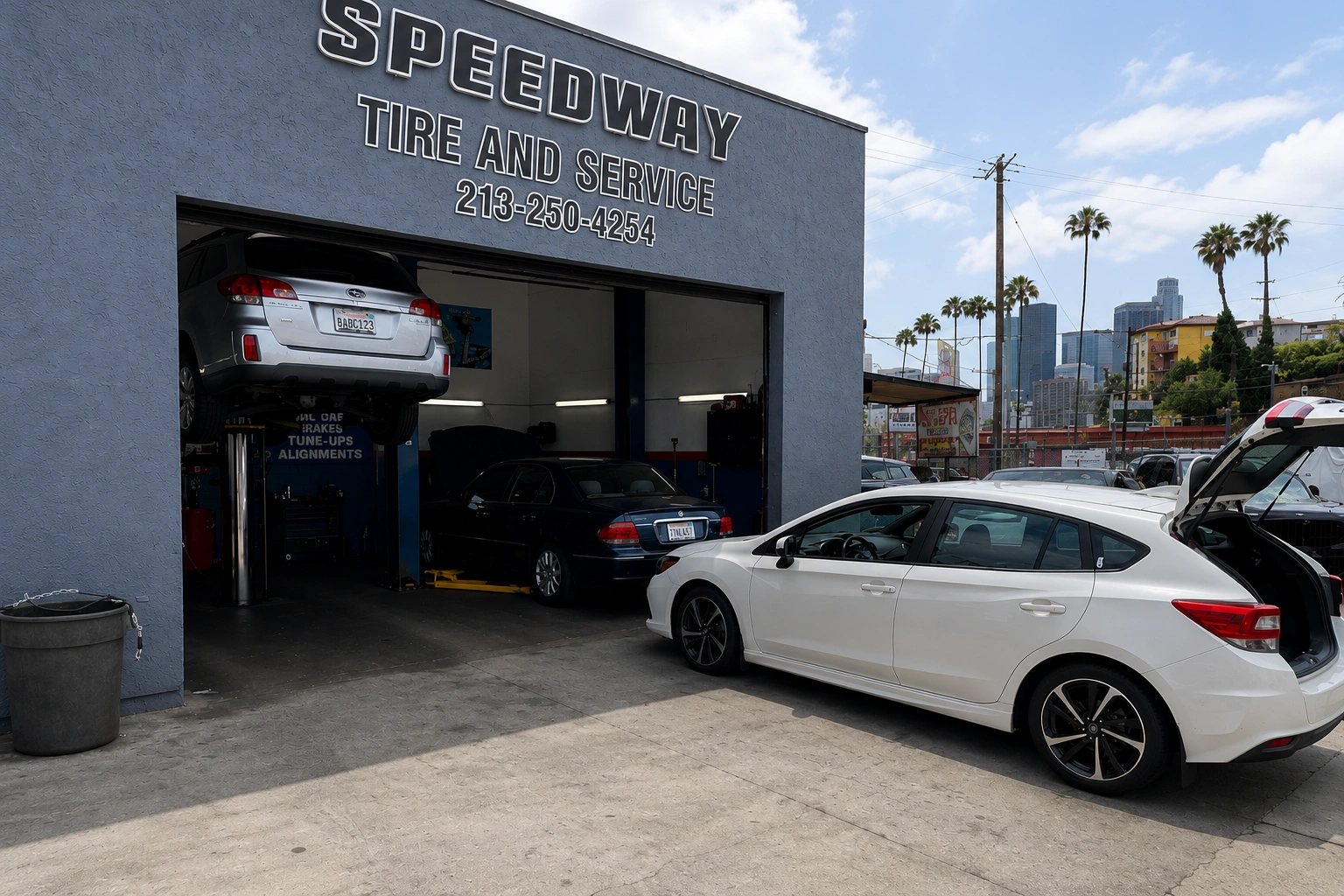
For Los Angeles drivers, contact Speedway Tire & Service to ask about current alignment, tire, brake, steering, suspension, and diagnostic availability. The shop’s auto repair services page provides additional service information. Confirm current capabilities before driving a vehicle with strong pull, unstable steering, severe vibration, or braking changes.
Frequently asked questions
Why does my car pull after alignment?
The cause may be tire pull, incorrect pressure, road crown, brake drag, worn or bent steering and suspension parts, wheel damage, ride-height differences, or a structural issue. An alignment changes selected wheel angles but does not automatically repair every part that can affect handling.
Can a tire make a car pull after an alignment?
Yes. Tire pressure, uneven wear, tire construction, size differences, internal damage, and a tire-pull condition can create drift even when the alignment angles are within range. A tire professional can inspect the tires and perform an approved diagnostic position test when appropriate.
How can I tell if the problem is tire pull or alignment?
Look for pressure differences, uneven wear, mismatched tires, and a pull that changes with road direction or an approved tire-position test. Alignment concerns may also involve an off-center steering wheel or uneven angles. Because symptoms overlap, a technician should evaluate both tires and alignment readings.
Can a bent strut cause a vehicle to pull?
It can alter wheel geometry and contribute to pulling, uneven wear, vibration, or ride-height changes. A bent strut is not the only possibility; a bent wheel, tire, control arm, tie rod, bushing, knuckle, brake, or subframe can produce similar symptoms. Inspection is needed before replacing a strut.
Why does my car pull only when braking?
A pull during braking may involve a sticking caliper, uneven pad friction, a brake hose or hydraulic issue, tire condition, suspension, or alignment. Because braking is safety-critical, do not keep driving if the pull is strong, the pedal is soft, the car stops unevenly, or a wheel becomes hot.
Why does my car pull only when accelerating?
Depending on the vehicle, a change under acceleration may involve torque steer, driveline behavior, tire grip differences, engine or transmission mounts, or suspension movement. A strong or new pull should be evaluated, especially if it occurs with vibration, clunking, or steering looseness.
Can road crown make a car seem misaligned?
Yes. A crowned or sloped road can cause a vehicle to drift slightly toward the lower side, and the effect can change between lanes or directions. Road crown should not be used to explain away a strong, constant, or worsening pull on reasonably level roads.
Should I get another alignment if the car still pulls?
First identify why it pulls. Ask the shop to review the alignment readings and inspect tires, brakes, wheels, steering, suspension, ride height, and impact damage. Repeating an alignment without correcting a bent or worn part, tire issue, or brake problem may not solve the symptom.
Is it safe to drive if the car pulls after alignment?
A mild drift on a crowned road may not be an emergency, but a strong, new, or worsening pull can reduce control and accelerate tire wear. Do not drive if the vehicle has unstable steering, severe vibration, tire or wheel damage, weak braking, a soft pedal, a hot wheel, or a warning light. Arrange professional assistance instead.
Conclusion
When your car pulls after alignment, the alignment may not be the complete diagnosis. Tire pressure, tire pull, road crown, brake drag, bent wheels, worn or damaged steering and suspension parts, ride-height changes, sensor calibration, and structural damage can all affect the way a vehicle tracks.
Keep both hands on the wheel, avoid unsafe testing, and check only the simple items that can be inspected safely. If the vehicle pulls strongly, vibrates, brakes unevenly, or shows visible tire, wheel, steering, or suspension damage, stop driving and arrange an inspection or tow. A complete tire, brake, steering, suspension, and alignment evaluation can identify the actual cause and help restore predictable handling on Los Angeles roads.
Looking for an honest Auto Repair Shop in Los Angeles? Call Speedway Tire and Service Today
Whether you’re driving through LA traffic or cruising the freeways, your car deserves expert care. Located in Los Angeles, Speedway Tire and Service offers reliable oil changes, brake repairs, tire services, and more—all backed by experienced technicians and honest pricing.