Rotten Egg Smell While Driving - Catalytic Converter, Fuel Mixture, or Battery?

A persistent rotten egg smell car owners notice while driving usually deserves attention. A sulfur-like odor may come from the exhaust and emissions system, a fuel-control problem, a leaking gear-oil or other fluid, or an overheating or damaged battery. The smell alone cannot identify the failed component, but it can be an early clue that the vehicle needs inspection.
Firestone notes that a rotten-egg odor from the car or vents can indicate a malfunctioning fuel-system or emissions component, including the catalytic converter, fuel injectors, fuel filter, or fuel-pressure sensor. A strong smell inside the cabin, visible smoke, a glowing exhaust component, fuel odor, severe engine performance, or a battery that is leaking or swollen increases the urgency.
Los Angeles traffic, warm temperatures, and long periods of idling can make an existing fuel-control, exhaust, or battery problem more noticeable. They do not prove the cause. The safest response is to identify where the smell is strongest, observe related symptoms from a safe distance, and arrange professional diagnosis instead of replacing parts based on odor alone.
What does a rotten egg smell in a car mean?
A sulfur or rotten-egg smell often means sulfur-containing compounds are leaving the fuel or exhaust system without being handled normally. Possible causes include a catalyst or oxygen-sensor problem, an engine running too rich, a misfire that sends unburned fuel into the exhaust, fuel-system faults, an exhaust leak, a leaking sulfur-smelling gear oil, or a battery or charging-system problem.
If the odor is strong, persistent, enters the cabin, or appears with a warning light, poor acceleration, stalling, smoke, heat, fuel odor, or a swollen or leaking battery, stop when safe and arrange prompt inspection. Do not sniff hot parts, open a battery, crawl under the car on the roadside, or continue driving just because the check-engine light is not on.
|
Where or when you notice the odor |
Possible areas to inspect |
Safer response |
|
At the tailpipe or under the vehicle |
Catalytic converter, engine fuel control, oxygen sensors, misfire, exhaust leak, or sulfur-containing exhaust compounds |
Avoid prolonged driving and schedule emissions diagnosis, especially if the odor persists. |
|
Through the vents or inside the cabin |
Exhaust leak, fuel-system vapor, or odor entering through the HVAC intake |
Open the windows, move to fresh air when safe, and stop driving if the odor is strong or causes symptoms. |
|
Near the battery or under the hood |
Battery overheating, overcharging, electrolyte leakage, or charging-system fault |
Switch off the engine, avoid sparks and battery contact, and arrange battery and charging-system inspection. |
|
After acceleration or under load |
Rich operation, misfire, catalyst stress, or fuel-control issue |
Avoid hard acceleration and request prompt diagnosis. |
|
Near the differential or drivetrain |
Gear-oil leak or overheated lubricant that can smell sulfur-like |
Have the leak and fluid identified; do not assume the catalytic converter is at fault. |
|
With a check-engine light or poor running |
Emissions, fuel, ignition, sensor, or catalyst problem |
Scan and diagnose the vehicle; avoid driving if the light flashes or the engine runs severely. |
This table is a screening guide, not a diagnosis. More than one problem can produce an odor.
Why a catalytic converter can smell like rotten eggs?
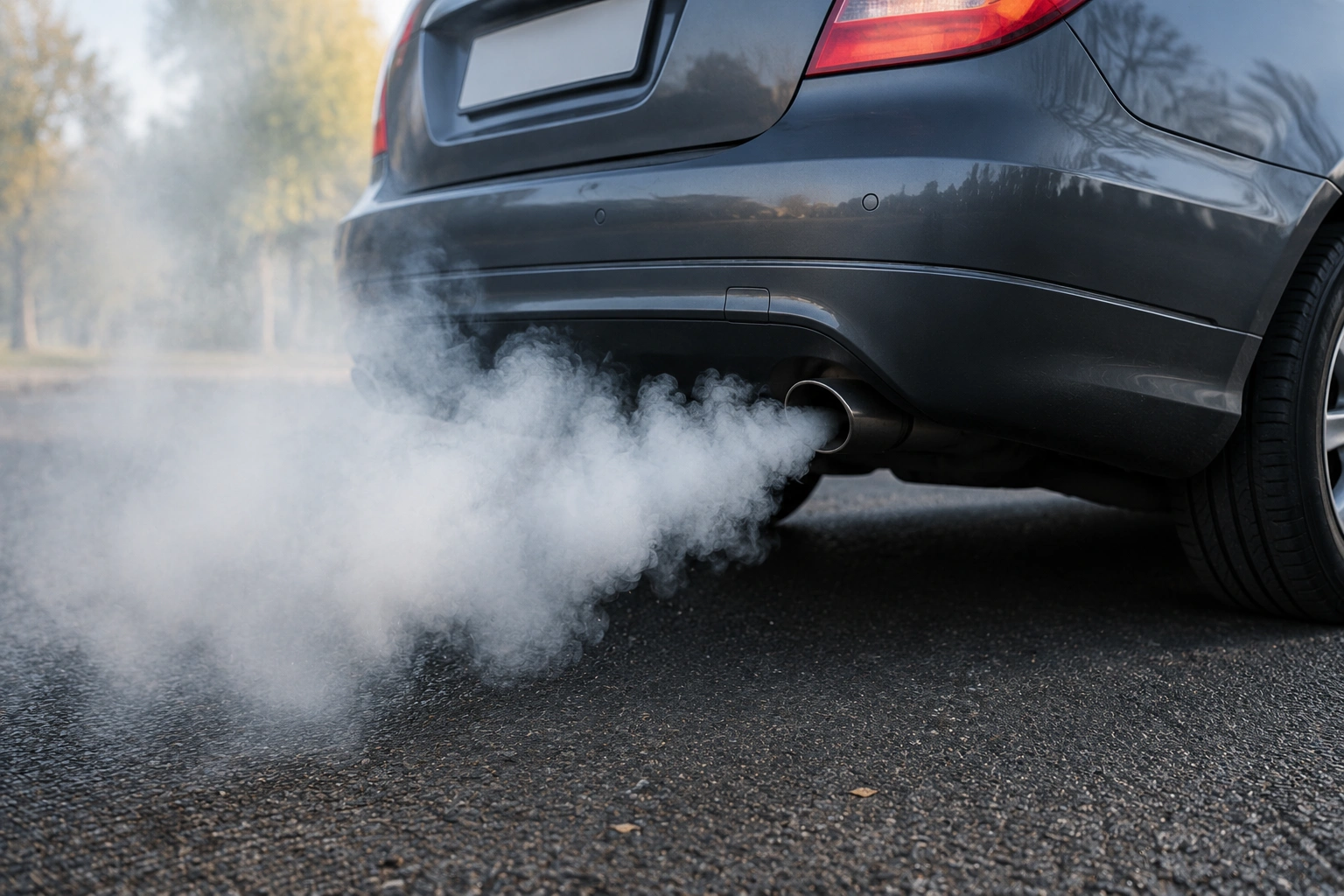
The catalytic converter processes exhaust gases before they leave the tailpipe. If the engine is misfiring, running too rich, or sending abnormal exhaust into the converter, the emissions system can be overloaded or damaged. Sulfur-containing compounds in the exhaust may then produce the familiar rotten-egg smell.
A converter that smells does not automatically need replacement. The technician should determine whether the underlying cause is a fuel-control fault, oxygen-sensor issue, ignition misfire, injector problem, exhaust leak, catalyst deterioration, or another engine condition. Replacing the converter without correcting a rich mixture or misfire can lead to repeat failure.
Other clues may include a check-engine light, poor acceleration, reduced fuel economy, hesitation, unusual exhaust noise, excessive heat under the vehicle, or a loss of power. A catalytic converter can also fail without producing a strong sulfur odor, so the absence of smell does not rule out a problem.
Fuel-mixture, injector, and oxygen-sensor problems
An engine-control problem can change the air-fuel mixture and send more unburned fuel into the exhaust than the emissions system is designed to handle. Possible contributors include an oxygen sensor, fuel injector, fuel-pressure problem, air-intake issue, ignition misfire, sensor circuit, or engine-control fault.
The odor does not prove that the mixture is rich, and an oxygen sensor should not be replaced solely because the car smells like sulfur. A technician may scan for current, pending, and permanent codes; inspect fuel trims and sensor data; test ignition and injector operation; check fuel pressure; and look for exhaust leaks or other enabling faults.
Avoid repeatedly revving the engine to reproduce the smell. Hard acceleration can increase heat and load on the engine and exhaust system, especially when a misfire or fuel-control issue is present. If the check-engine light flashes, reduce load, stop as soon as safe, and follow the owner’s manual or request professional assistance.
Battery sulfur smell - a different source under the hood
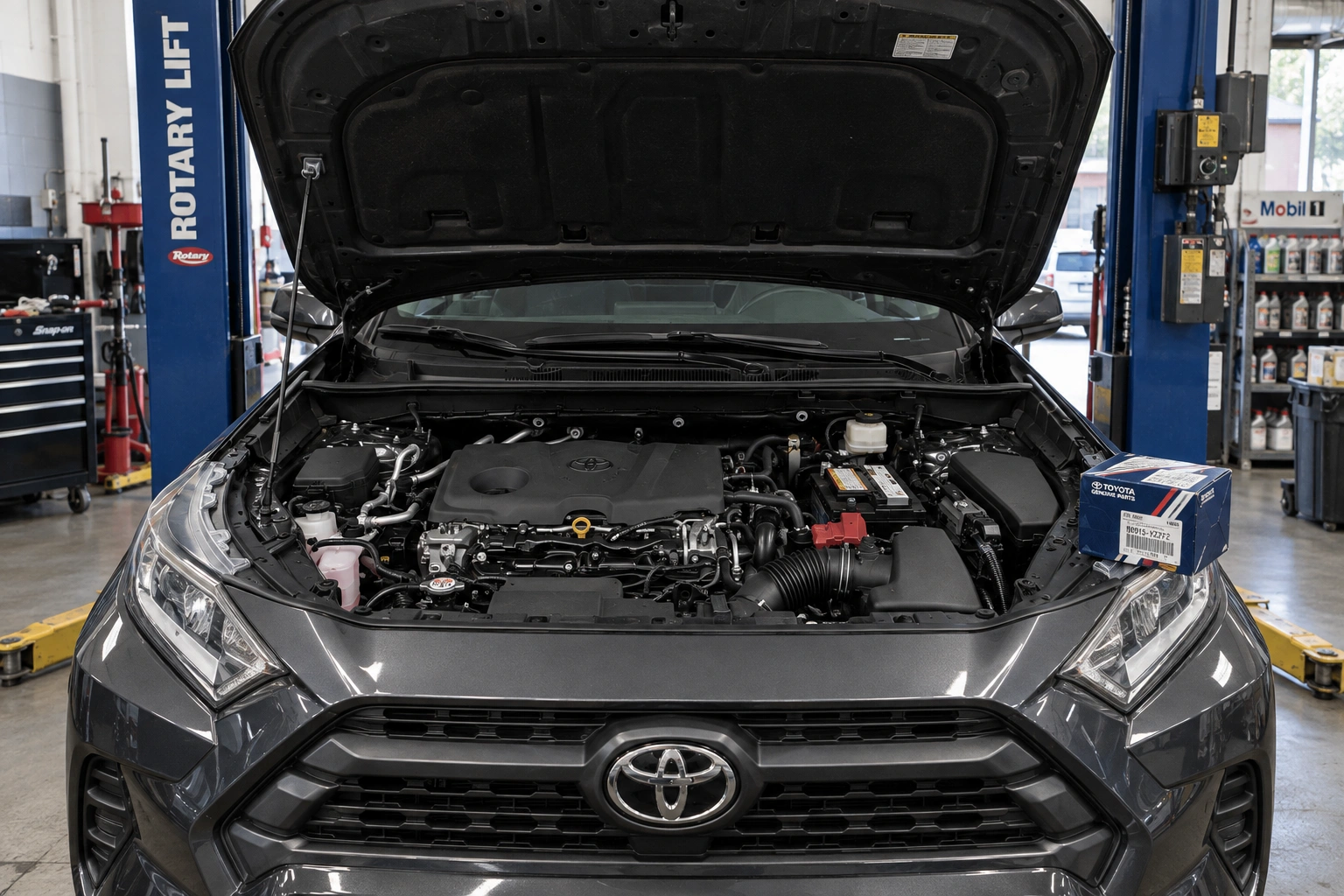
A sulfur-like odor near the battery may indicate abnormal charging, overheating, electrolyte leakage, a damaged battery, or another charging-system concern. The exact gas and hazard depend on the battery type and failure mode, so do not assume that every odor is hydrogen sulfide or sulfur dioxide.
Do not open, puncture, shake, or lean over a hot, swollen, cracked, or leaking battery. Keep flames, cigarettes, sparks, and metal tools away from the battery area. If the case is swollen, the battery is hot, liquid is leaking, or the smell is strong, switch off the vehicle when safe and arrange professional battery and charging-system service.
A battery replacement may be necessary, but the charging system should also be tested. An alternator or voltage-regulation problem can damage a replacement battery if the underlying cause is not corrected. Do not use the battery odor as a reason to ignore a simultaneous exhaust or fuel-system smell.
Could the smell be gear oil or another fluid?
Some gear oils and lubricants have a strong sulfur-like odor. A differential, transaxle, transfer case, or manual-transmission leak may therefore be mistaken for a catalytic-converter problem. The odor location, fluid appearance, drivetrain noise, and presence of a leak can help a technician narrow the source.
Do not identify a fluid by color alone or touch an unknown fluid. Park safely, look for fresh spots from a distance, and have the source inspected. Low drivetrain fluid can contribute to component wear, while an oil leak near a hot exhaust component can create smoke or a separate fire risk.
How to identify where the sulfur smell is coming from
First note whether the odor is strongest at the tailpipe, under the hood, near the battery, around the drivetrain, or inside the cabin. Record whether it appears during startup, acceleration, idling, braking, hot operation, or after parking. Also note any check-engine light, battery light, misfire, hesitation, stalling, overheating, smoke, unusual exhaust noise, fluid spot, or change in fuel economy.
Do not stand behind a running vehicle, place your face near the tailpipe, touch hot exhaust parts, or crawl under an unsupported car. If the odor is inside the cabin, move to fresh air as soon as it is safe. Exhaust gases can be dangerous, and odor does not reliably indicate the concentration or safety of the air.
A brief odor after a particular fuel purchase may reflect fuel composition, but a persistent or recurring odor still deserves inspection. Do not assume that buying a different fuel brand will fix a misfire, rich mixture, exhaust leak, battery fault, or failed catalyst.
When should you stop driving?
Stop driving and arrange professional assistance if the odor is strong or enters the cabin, the check-engine light flashes, the engine misfires or loses power, visible smoke appears, the catalytic-converter area glows or becomes excessively hot, fuel is leaking, the battery is swollen or leaking, or the vehicle is overheating.
If you feel dizzy, nauseated, short of breath, or otherwise unwell while inside the vehicle, get to fresh air and seek appropriate medical help. Do not continue driving to “burn off” the smell. If the odor is mild and the vehicle operates normally, schedule diagnosis promptly and avoid hard acceleration or long trips until the cause is known.
How a technician diagnoses a rotten-egg odor
Diagnosis begins with a history of when and where the smell occurs. The technician may scan the engine and emissions systems, check current and pending codes, examine fuel trims and oxygen-sensor data, inspect ignition and injector operation, verify fuel pressure, test the battery and charging system, and inspect the catalyst and exhaust for damage, heat, or leaks.
The shop may also inspect gear-oil and other fluid levels, look for leaks, check underbody heat shields, evaluate engine performance, and test the vehicle under controlled conditions. A proper diagnosis separates an odor produced by the exhaust from an odor caused by a battery, fuel vapor, gear oil, or another component.
The repair could involve correcting a misfire or fuel-control problem, replacing a failed sensor or injector, repairing an exhaust or fluid leak, servicing the battery or charging system, or replacing a damaged emissions component after the underlying cause is addressed. The odor itself is not enough to justify a catalytic-converter replacement.
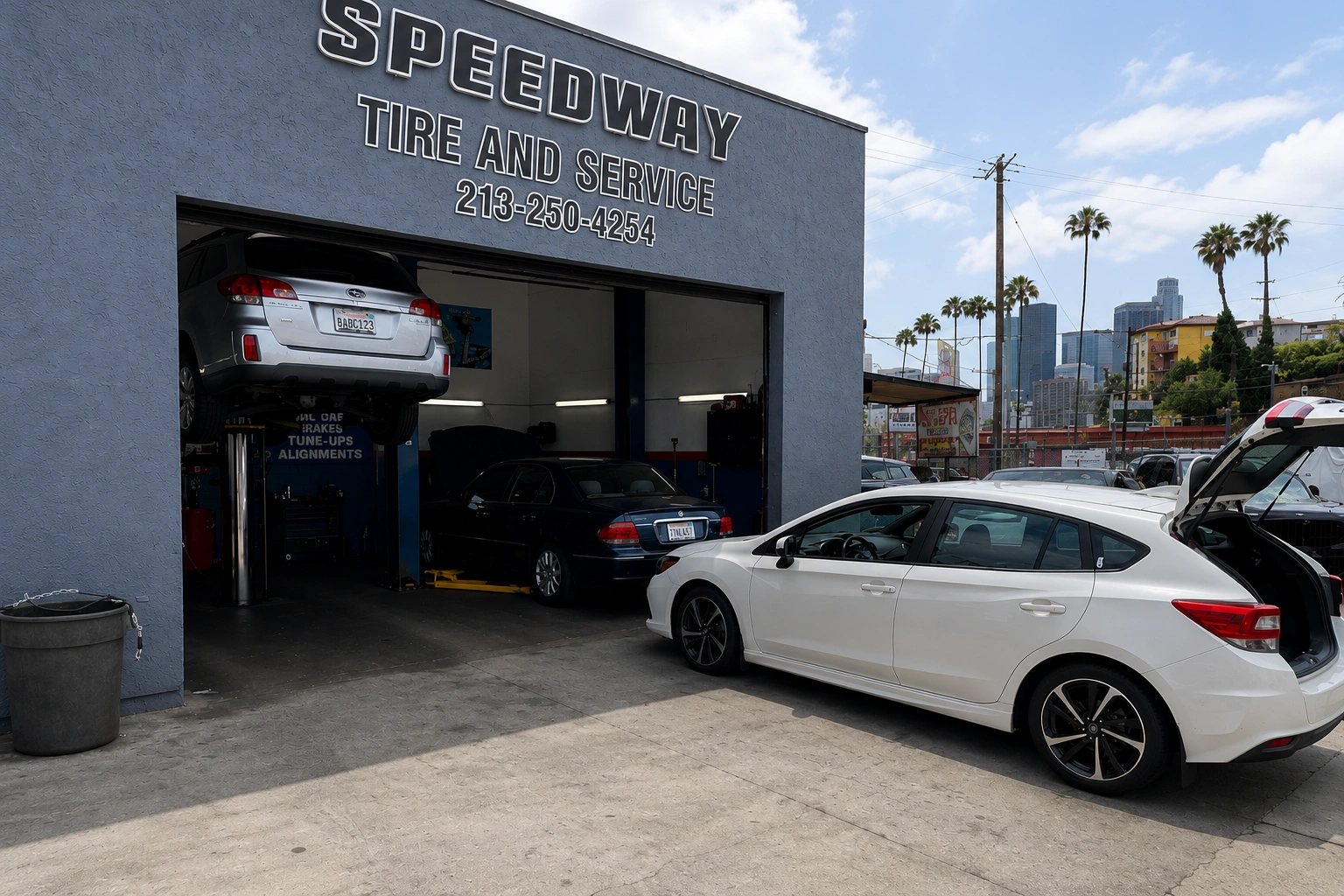
For Los Angeles drivers, contact Speedway Tire & Service to ask about current engine, emissions, exhaust, battery, and diagnostic availability. The shop’s auto repair services page provides additional service information. Confirm current capabilities before driving a vehicle with a strong odor, flashing warning light, severe misfire, smoke, or fuel leak.
How to prevent sulfur odors and related damage?
Follow the vehicle manufacturer’s maintenance schedule and use the specified fuel and fluids. Address check-engine lights, misfires, rough running, fuel odors, battery warnings, and fluid leaks promptly. Correcting a fuel-control or ignition fault early can help reduce the risk of overheating or damaging emissions components.
Do not treat fuel-system cleaning, premium fuel, an oxygen-sensor replacement, or a catalytic-converter replacement as a universal solution. The right repair depends on test results. Keep records of warning lights, fuel purchases, maintenance, and when the odor appears so the technician can reproduce the condition more efficiently.
Frequently asked questions
What does a rotten egg smell in a car usually mean?
It often points to a fuel, exhaust, or emissions-system concern, such as a rich-running engine, misfire, catalyst problem, injector or sensor issue, or exhaust leak. A sulfur-like gear-oil leak or battery and charging-system problem can smell similar. The location and related symptoms help guide diagnosis.
Can a bad catalytic converter cause a rotten egg smell?
Yes, a catalyst or the exhaust conditions feeding it can be associated with sulfur odor. However, the odor does not prove the converter has failed. A rich mixture, misfire, injector, oxygen-sensor, exhaust, or engine-control problem may be the underlying cause and should be addressed before replacing the converter.
Is a rotten egg smell from a car dangerous?
It can signal a safety or emissions problem, especially if the odor is strong, enters the cabin, appears with smoke or heat, or comes from a leaking or swollen battery. Move to fresh air when safe, avoid ignition sources around fuel or battery problems, and arrange prompt inspection. Seek appropriate medical help if you feel unwell.
Can a bad oxygen sensor cause a sulfur smell?
An oxygen-sensor or related fuel-control problem can contribute to an incorrect mixture and excess fuel reaching the exhaust. The sensor should be tested with codes and live data rather than replaced based only on odor.
Can a fuel injector cause a rotten egg smell?
A faulty injector or fuel-control problem may cause an overly rich condition, misfire, poor fuel economy, or sulfur odor from the exhaust. Proper diagnosis should confirm injector operation and evaluate the entire fuel, ignition, and emissions system.
Why does my car smell like rotten eggs only when accelerating?
Acceleration increases engine load and exhaust flow, which can make a fuel-control, misfire, catalyst, or exhaust problem more noticeable. Avoid hard acceleration and request diagnosis if the smell repeats or occurs with hesitation, a warning light, smoke, or loss of power.
Why does my battery smell like rotten eggs?
A sulfur-like odor near the battery may indicate overheating, overcharging, electrolyte leakage, a damaged battery, or a charging-system fault. Do not open or touch a hot, swollen, or leaking battery. Switch off the vehicle safely and arrange professional testing.
Can bad fuel cause a sulfur smell?
Fuel composition can influence exhaust odor, but a persistent smell should not be blamed on fuel alone. A misfire, rich mixture, injector, sensor, catalyst, exhaust, or battery issue may be involved. Do not keep changing fuel or adding products instead of diagnosing the vehicle.
How urgent is a rotten egg smell car drivers notice while driving?
A persistent odor should be inspected promptly. Stop driving if it is strong, enters the cabin, comes with a flashing check-engine light, severe misfire, smoke, overheating, a glowing exhaust component, fuel leak, or battery damage. A mild odor with normal operation still deserves timely diagnosis.
Where can I get this problem checked in Los Angeles?
Choose a repair shop that can diagnose emissions, engine performance, exhaust, battery, charging, and fuel-system problems instead of replacing a part based only on smell. Confirm current services and appointment availability before visiting.
Conclusion
A rotten egg smell car owners notice is a useful warning that should not be ignored. The source may be a catalytic converter or the fuel-control problem feeding it, but it can also be an injector, oxygen sensor, exhaust leak, sulfur-smelling gear oil, battery, or charging-system fault.
Do not sniff hot components, open a damaged battery, use hard acceleration to reproduce the odor, or replace a catalytic converter without diagnosis. If the smell is strong, enters the cabin, or appears with smoke, heat, fuel odor, a flashing warning light, severe misfire, or loss of power, stop when safe and arrange professional assistance. A complete engine, emissions, exhaust, battery, and fluid inspection can identify the cause and help protect both the vehicle and its occupants.
Looking for an honest Auto Repair Shop in Los Angeles? Call Speedway Tire and Service Today
Whether you’re driving through LA traffic or cruising the freeways, your car deserves expert care. Located in Los Angeles, Speedway Tire and Service offers reliable oil changes, brake repairs, tire services, and more—all backed by experienced technicians and honest pricing.