Oil Pressure Warning Light in LA Traffic - Stop Driving or Add Oil?
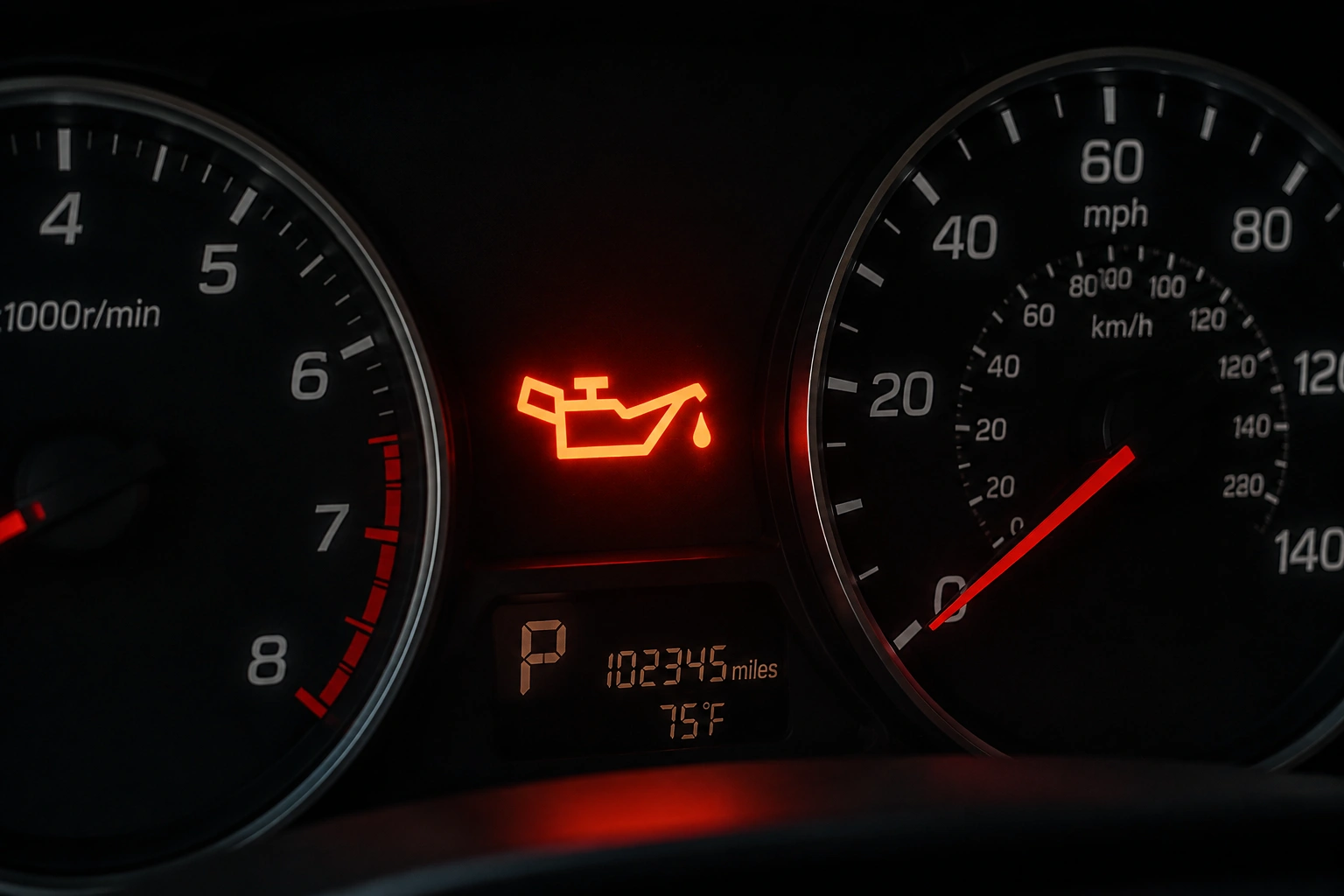
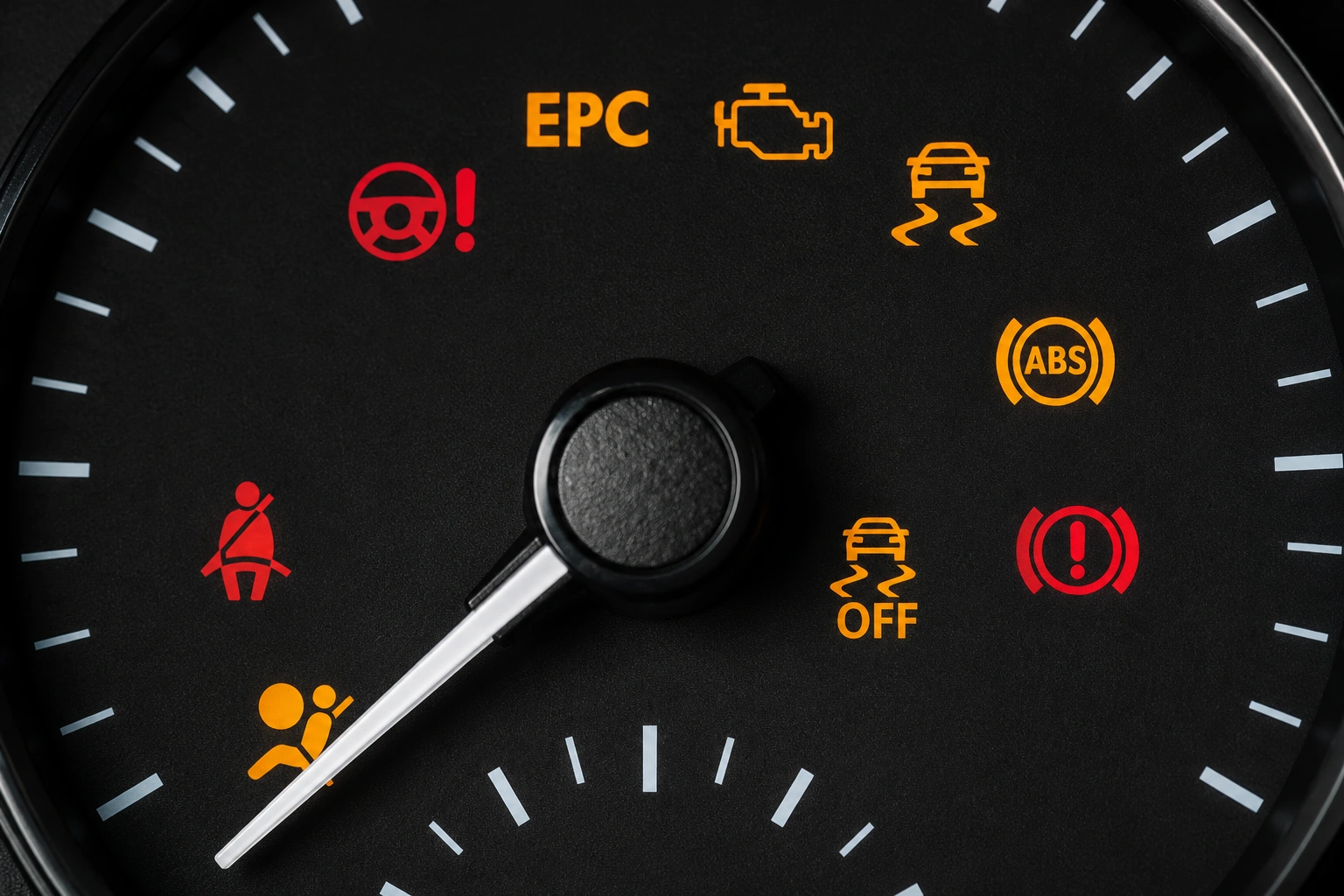
If your oil pressure warning light comes on while you are driving, treat it as an urgent warning rather than a routine oil-change reminder. The light generally indicates that the engine’s oil-pressure signal is below the vehicle’s expected threshold. Low oil level is one possible cause, but the warning can also involve a leak, incorrect oil viscosity, a blocked pickup or passage, a failing oil pump, worn internal components, a pressure sensor, or wiring.
The safest first response is to pull over as soon as traffic and road conditions allow, switch off the engine, and follow the vehicle owner’s manual. Toyota identifies its low engine oil pressure warning as indicating that engine oil pressure is too low, while noting that drivers should use vehicle-specific instructions for warning lights. Firestone also advises prompt attention to low-oil-pressure symptoms because continued operation can cause serious engine damage.
What should you do when the oil-pressure light comes on?
Keep the vehicle under control, move to a safe location, and turn the engine off as soon as practical. Do not keep driving through Los Angeles traffic to see whether the light disappears. Once safely parked and after allowing the engine and oil to settle and hot components to cool, check the oil level only if the owner’s manual provides a safe procedure.
If the level is below the specified range, add the correct oil gradually and avoid overfilling. If the oil level is normal, the warning remains on, the light returns after startup, or the engine makes unusual noise, do not drive the vehicle. Arrange professional diagnosis or towing. Adding oil cannot repair a failed pump, blocked pickup, worn bearings, a pressure-sensor circuit, or another mechanical problem.
|
Situation |
What it may mean |
Safer response |
|
Red oil-pressure warning stays on while the engine runs |
Low pressure, low oil, leak, sensor, pump, restriction, or internal wear |
Pull over safely, switch off the engine, and arrange diagnosis. |
|
Oil level is below the marked range |
Low oil quantity may be contributing to the warning |
Add the specified oil carefully if safe, then recheck; do not overfill or assume the problem is solved. |
|
Oil level is full but the warning remains on |
A pressure, circulation, sensor, wiring, pump, restriction, or internal-engine issue may exist |
Do not continue driving; request professional testing or towing. |
|
Light flickers at hot idle |
Pressure may be marginal, oil may be incorrect, or the sensor/circuit may be faulty |
Shut down safely and have the condition diagnosed rather than dismissing it as traffic-related. |
|
Light appears briefly at startup and goes out |
Some vehicles briefly display warning lights during the normal startup check |
Follow the owner’s manual; investigate if the light stays on, returns, or behaves differently. |
|
Light appears with ticking, knocking, overheating, or burning smell |
Possible lubrication or engine problem with increased damage risk |
Stop as soon as safe and arrange towing or urgent professional assistance. |
The symbol, color, wording, and startup behavior vary by vehicle. Always use the owner’s manual for model-specific instructions.
What does the oil pressure warning light mean?
Engine oil forms a lubricating film between moving components and helps carry heat away from internal parts. An oil-pressure warning indicates that the vehicle’s monitoring system has detected pressure below its expected range or has detected a related fault. It does not directly tell you how much oil is in the crankcase.
A low oil level can reduce the supply available to the pump, especially during braking, cornering, acceleration, or steep grades. However, a full dipstick reading does not prove that the engine has safe oil pressure. The pump, pickup screen, filter, passages, relief valve, bearings, pressure switch, sensor, wiring, and oil specification can all affect the reading or the actual pressure.
Some vehicles have separate messages for oil level, oil life, and oil pressure. The symbols can look similar, and the wording differs by manufacturer. Do not rely on color or memory alone; identify the exact warning in the owner’s manual.
Oil pressure versus oil level - why the difference matters
Oil level is the quantity of oil in the engine. Oil pressure is the force or pressure generated as the lubrication system moves oil through the engine. The two are related but not interchangeable.
A low-level warning may tell you that the engine needs oil. An oil pressure warning light may indicate that oil is not circulating at the required pressure, even if the level is full. Adding oil is therefore a limited check, not a universal repair. If the warning stays on, the engine should be shut off and tested.
A digital oil-level display, dipstick, or oil-life reminder may also have its own operating conditions. Follow the manual for parking position, waiting time, oil temperature, and measurement procedure. Never overfill because the warning light is on.
What causes low oil pressure?
Low engine-oil level or an external leak
A leak from a filter, drain plug, gasket, seal, oil pan, cooler, or another location can gradually lower the oil level. Look for fresh oil around the vehicle only when it is safely parked, and do not crawl underneath an unsupported car. A leak may be small, hidden, or located where it does not leave an obvious puddle.
If the level is low, find out why. Topping off may prevent immediate loss of oil, but it does not fix the leak or establish that pressure is safe. If the engine is making noise or the warning remains on, do not restart it merely to drive to a shop.
Incorrect oil viscosity or oil specification
Oil viscosity affects flow and pressure characteristics across different temperatures. Using a viscosity or specification that does not match the manufacturer’s requirements can affect lubrication and engine operation. Firestone lists incorrect viscosity as one possible low-pressure cause and advises consulting the owner’s manual.
Do not switch to a thicker oil, additive, or “high-mileage” product solely to make the light go out. The correct oil depends on the engine, climate, design, service bulletin, and manufacturer specification. A temporary change in noise or warning behavior is not proof that the underlying issue is repaired.
Oil pump, pickup, filter, or passage problem
The oil pump supplies oil to the engine’s lubrication circuit. A worn pump, blocked pickup screen, restricted passage, clogged filter, stuck pressure-relief valve, sludge, or damaged seal can reduce flow or pressure. The technician may need to inspect the lubrication system and measure pressure rather than guessing from the warning light alone.
An oil-system flush is not a universal solution. Sludge and restrictions require diagnosis, and aggressive cleaning may be inappropriate for some engines. Ask what evidence supports the recommended service and whether the procedure is approved for the vehicle.
Worn engine bearings or internal damage
Wear in bearings and other internal clearances can allow oil pressure to escape more quickly than the system can maintain it, especially when the oil is hot and the engine is idling. A ticking, tapping, knocking, loss of performance, or rising temperature can add urgency, but sound alone cannot identify the failed component.
If the light appears with a deep knock or the engine loses power, shut it off as soon as safe and arrange a tow. Continuing to operate an engine with inadequate lubrication can turn a repairable lubrication problem into major internal damage.
Faulty pressure switch, sensor, or wiring
The warning may be triggered by a pressure switch, sensor, connector, ground, wiring, or instrument fault rather than actual low pressure. That possibility does not make the warning safe to ignore. A technician should verify actual oil pressure with an appropriate mechanical test or manufacturer-approved diagnostic method before condemning the sensor or continuing to drive.
Replacing the sensor without testing can leave a genuine low-pressure condition unresolved. Conversely, replacing an oil pump without confirming the reading can lead to unnecessary expense.
Why Los Angeles traffic can make the warning more noticeable
Stop-and-go traffic, long periods at hot idle, high ambient temperatures, and frequent acceleration or braking can make an existing lubrication problem more noticeable. A warning that appears only after the engine is hot or while idling may still be serious; it should not be dismissed as a normal effect of Los Angeles traffic.
Traffic conditions do not by themselves prove that the oil is old, the pump has failed, or the engine is damaged. The vehicle’s oil level, pressure measurement, temperature, warning behavior, maintenance history, and diagnostic data must be evaluated together.
What to do when the red oil-pressure light appears in traffic
First, maintain control and signal or move to a safe location without accelerating unnecessarily. If stopping in traffic creates immediate danger, move only far enough to reach a safer position. Switch the engine off as soon as you can safely do so.
After parking, read the owner’s manual before checking the oil. If the procedure allows a dipstick check, wait as directed and keep hands, clothing, and tools away from hot or moving components. If the oil is low, add only the specified oil and only enough to reach the marked range. Do not overfill.
If the level is normal, the warning does not go out, the engine is noisy, the vehicle overheated, or the light returns, do not restart the engine for a test drive. Contact roadside assistance or a repair shop and explain that the warning may indicate low oil pressure. Towing is safer than risking internal engine damage.
When an oil-pressure light means stop driving
Stop driving and request professional assistance if the warning remains on with the engine running, appears repeatedly, returns after adding oil, or occurs with ticking, tapping, knocking, overheating, smoke, a burning smell, loss of power, or unusual vibration. A flashing or severe warning display should be treated according to the owner’s manual and with maximum urgency.
Do not drive to a repair shop simply because it is nearby. Do not assume that a full oil level makes continued driving safe, and do not let the warning disappear temporarily convince you that the issue is fixed. If the vehicle is in a hazardous location, prioritize personal safety and move only as necessary to get out of immediate danger.
How a technician diagnoses low oil pressure
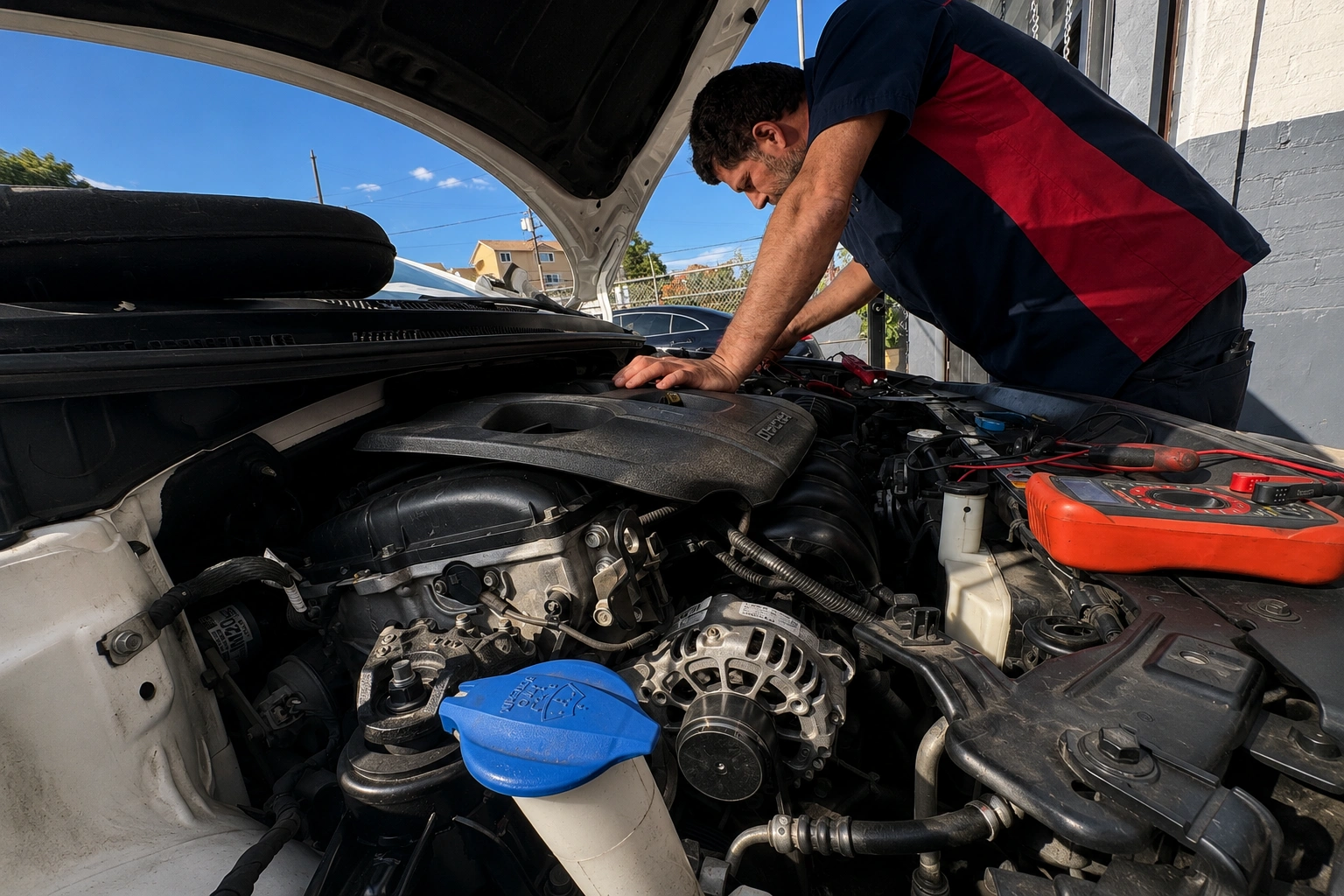
A technician begins by confirming the vehicle’s warning behavior, oil level, oil specification, maintenance history, leaks, engine temperature, and related symptoms. The shop may scan the vehicle for codes, inspect the pressure sensor and wiring, examine the oil filter and drain oil, and look for evidence of sludge, contamination, or metal.
When appropriate, the technician verifies actual pressure with a mechanical gauge or another manufacturer-approved test at specified temperatures and engine speeds. The results help separate a sensor or circuit fault from a genuine lubrication problem. Additional diagnosis may involve the oil pump, pickup, passages, relief valve, bearings, cooling system, or other engine components.
The correct repair may be a leak repair, specified oil and filter service, sensor or wiring repair, pump or pickup service, restriction repair, or internal engine work. A shop should explain the evidence and the risks before recommending a major repair.
For Los Angeles drivers, contact Speedway Tire & Service to ask about current oil-pressure diagnostics and engine-service availability. The shop’s auto repair services page provides additional service information. Confirm current capabilities and towing arrangements before attempting to drive a vehicle with an active oil-pressure warning.
How to prevent oil-pressure problems
Follow the manufacturer’s oil type, viscosity, capacity, and service interval. Check the level according to the owner’s manual, especially before long trips or when the vehicle uses oil between services. Address leaks, new engine noises, overheating, and oil-level changes promptly.
Routine maintenance cannot prevent every sensor, pump, passage, bearing, or wiring failure. It can help identify low oil, leaks, incorrect service, and abnormal engine behavior before the vehicle reaches a severe lubrication event. Keep service records and tell the technician when the warning first appeared and under what driving conditions.
Frequently asked questions
What should I do when the oil pressure warning light comes on?
Pull over safely, switch off the engine as soon as practical, and follow the owner’s manual. If it is safe to do so, check the oil level after the engine and oil have had time to settle and cool according to the manual. Add oil only if the level is actually low and use the specified product. If the light remains on, returns, or appears with noise or overheating, do not drive; arrange diagnosis or towing.
Can I drive with the oil pressure warning light on?
Driving with a persistent warning is unsafe because the engine may not be receiving adequate lubrication. Stop as soon as safe, switch off the engine, and request professional assistance. A brief startup display that goes out normally may be part of the vehicle’s self-check, but unusual or repeated behavior should be investigated.
The oil light is on but the oil is full. What does that mean?
A full oil level does not rule out low actual pressure. Possible causes include a pump, pickup, filter, passage, relief valve, worn internal component, pressure sensor, wiring, or incorrect oil specification. Do not keep driving to test the vehicle; have actual pressure and the warning circuit checked.
Can I add oil when the oil pressure light is on?
Check the level only after safely parking and following the owner’s manual. If the level is below the specified range, adding the correct oil may address low quantity, but it does not prove that pressure is safe or fix a leak, pump, restriction, sensor, or internal problem. Never overfill.
Is the oil pressure warning light the same as the oil-change light?
Not necessarily. Some vehicles use separate messages for oil pressure, oil level, oil life, or service intervals. The symbols and wording vary. An oil-change reminder is not the same as an active low-pressure warning; use the owner’s manual to identify the message.
What causes low oil pressure besides low oil?
Possible causes include incorrect viscosity, an oil leak, a blocked pickup or passage, a clogged filter, a failing pump, a stuck relief valve, worn bearings, sludge, a pressure-sensor fault, or wiring. Testing is required because the warning light alone cannot identify the cause.
Can old oil cause an oil-pressure warning?
Degraded or incorrect oil may contribute to lubrication or pressure problems, but an oil change is not a guaranteed solution. If the warning is active, shut the engine off and have the cause diagnosed before relying on a routine service.
Can Los Angeles traffic cause the oil-pressure light to come on?
Traffic may make an existing problem more noticeable because the engine spends time hot and idling, but traffic alone does not establish the cause. A pressure measurement, oil-level check, sensor test, and broader engine inspection may be needed.
Where can I get oil-pressure diagnostics in Los Angeles?
Choose a repair shop that can verify the oil level and specification, inspect for leaks, scan the vehicle, test the pressure-sensor circuit, and measure actual oil pressure when appropriate. Confirm current capabilities and towing options before driving a vehicle with an active warning.
Conclusion
The oil pressure warning light is different from a routine oil-change reminder. It can indicate low oil, but it can also signal a leak, incorrect viscosity, restricted oil flow, pump trouble, worn engine components, or a sensor and wiring fault. A full dipstick reading does not prove that oil pressure is safe.
Pull over safely, switch off the engine, and follow the owner’s manual. Check and add oil only when the level is genuinely low and the procedure is safe. If the warning remains, returns, or appears with engine noise, overheating, a burning smell, or loss of power, do not drive to the shop. Professional testing or towing can help protect the engine from avoidable damage.
Looking for an honest Auto Repair Shop in Los Angeles? Call Speedway Tire and Service Today
Whether you’re driving through LA traffic or cruising the freeways, your car deserves expert care. Located in Los Angeles, Speedway Tire and Service offers reliable oil changes, brake repairs, tire services, and more—all backed by experienced technicians and honest pricing.