Dodge Charger/Challenger Brake Shudder — Warped Rotors and LA Stop-and-Go
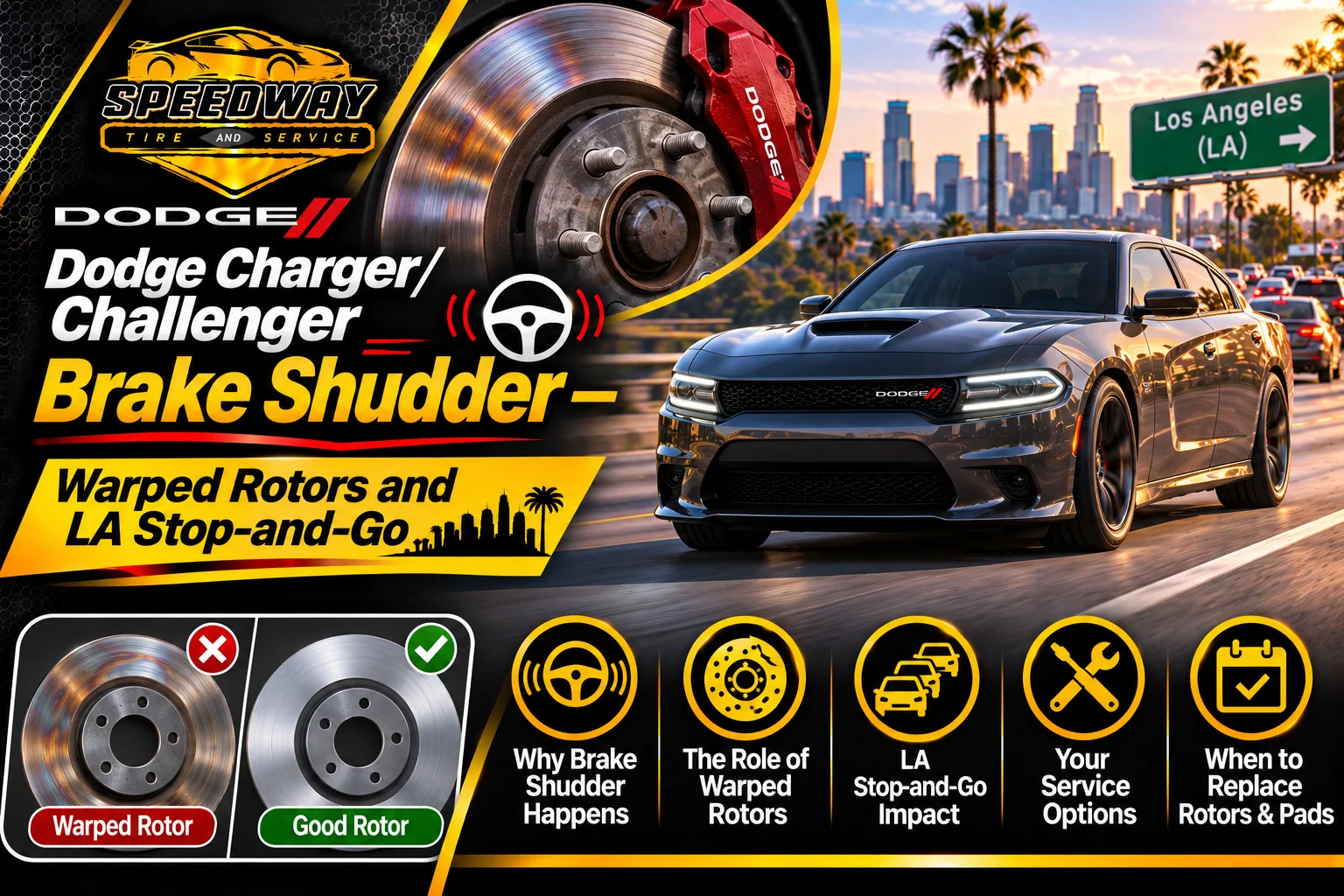
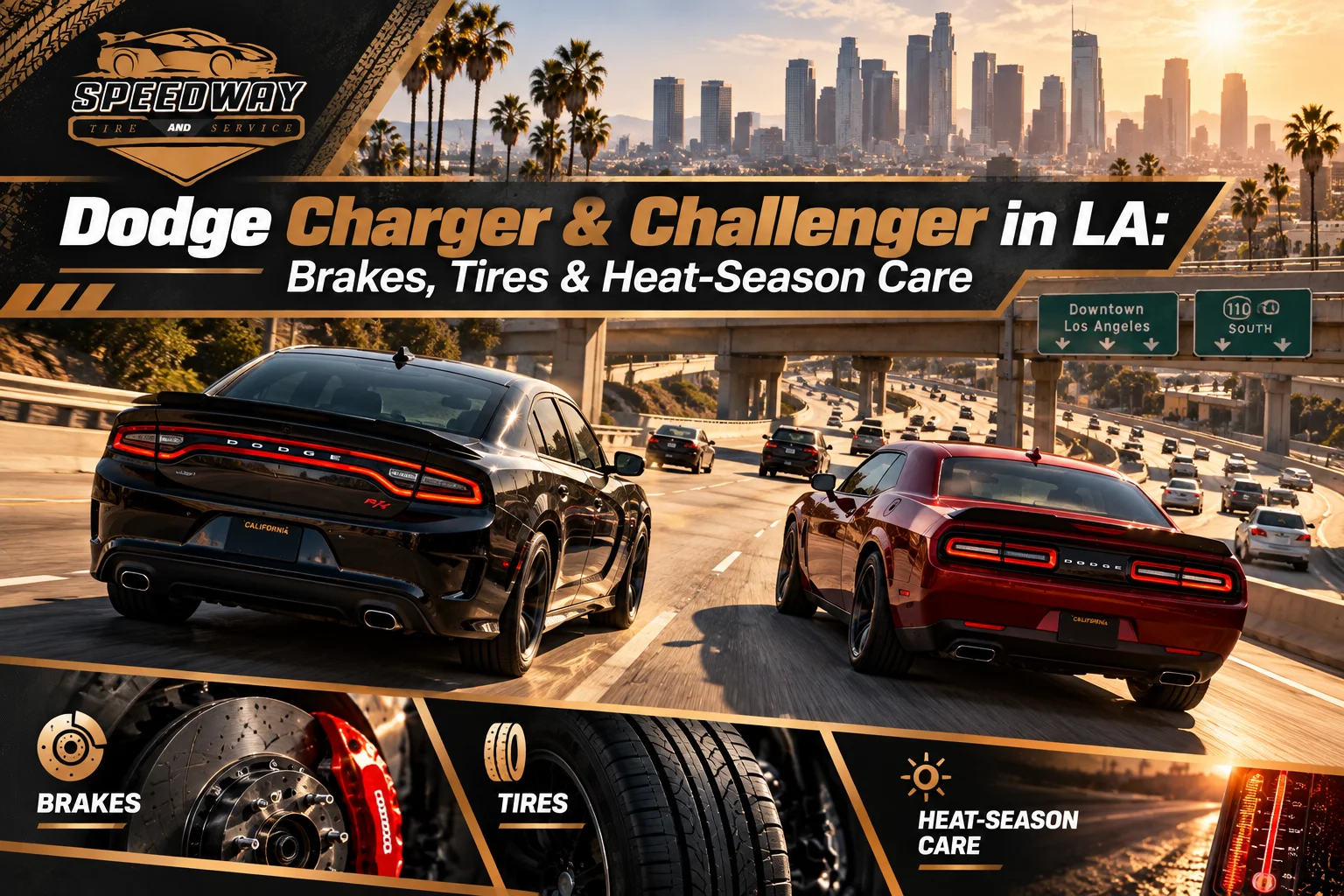
If your Dodge Charger or Challenger shudders or pulses when you brake, it is one of the most common complaints on these heavy, powerful cars — and LA stop-and-go traffic makes it worse. The cause is usually uneven rotors from heat. Here is how to read the symptoms and decide, honestly, whether to resurface or replace.
Why do Charger and Challenger brakes shudder the way they do?
A shudder felt through the pedal or steering wheel during braking points to uneven rotor thickness or runout, usually driven by heat. The Charger and Challenger are heavy cars, so every stop converts a lot of energy into heat at the brakes. Repeated heating and cooling, especially in traffic, leads to the thickness variation drivers call warping.
A shudder is a symptom, not a full diagnosis. The job is to measure the rotors and inspect the pads and calipers, then decide whether a resurface will restore a smooth surface or whether replacement is the safer call. For related guidance, see our guide to Dodge Charger and Challenger service in LA.
Quick answer — when should you have the brakes checked?
Have your Charger or Challenger brakes inspected when:
- You feel a shudder or pulsing through the pedal or wheel when braking.
- Braking takes longer than it used to, especially from speed.
- You hear grinding, squealing, or a scraping noise.
- There is a burning smell after heavy braking or a descent.
- The shudder is getting stronger over time.
A strong pulsation, longer stopping, or a burning smell is a reason to have the brakes looked at promptly.
What signs point to which brake problem?
The pattern helps narrow the cause:
- Pulsing through the pedal and wheel — often uneven rotor thickness from heat.
- Shudder with a burning smell — can point to a dragging or stuck caliper.
- Grinding or scraping — pads may be worn to metal, which scores rotors.
- Squeal that comes and goes — often a wear indicator or pad glazing.
- Pulling to one side when braking — can be a caliper or uneven wear issue.
Charger and Challenger brake symptoms and what they mean
This table summarizes the common symptoms and the usual next step.
|
Symptom |
Likely cause |
What to do next |
Why it matters |
|
Pulsing when braking |
Uneven rotor thickness |
Measure the rotors |
Decides resurface vs replace |
|
Shudder with burning smell |
Dragging or stuck caliper |
Inspect the caliper |
Can overheat the brakes |
|
Grinding or scraping |
Pads worn to metal |
Inspect now |
Scores rotors, raises cost |
|
Squeal on and off |
Wear indicator or glazing |
Inspect pads |
Early warning of wear |
|
Pulling when braking |
Caliper or uneven wear |
Inspect both sides |
Affects control |
Because a warped rotor and a dragging caliper can both cause a shudder and heat, measuring and inspecting first keeps the diagnosis honest. See also brake rotors in stop-and-go — resurface or replace for what to expect.
Why LA stop-and-go is hard on heavy-car brakes
Every stop on the 101 or through Downtown turns the car's motion into heat at the brakes, and a heavy Charger or Challenger makes a lot of it. In stop-and-go traffic that heat does not get a chance to shed, so it builds up and stresses the rotors. Add hill descents around Echo Park and Silver Lake and the braking load climbs further.
That constant heat is why these cars see brake shudder more often in LA, and why quality pads and proper service make a real difference here.
What can happen if you delay brake service?
- A shudder from uneven rotors tends to get worse, not better.
- Worn-to-metal pads score the rotors, turning a pad job into a bigger bill.
- A dragging caliper can overheat the brakes and warp rotors further.
- Longer stopping distances reduce safety on a heavy car.
- Delaying a brake job usually makes the eventual repair larger.
What should you check before bringing your car in?
A few notes help the shop assess the brakes quickly:
- When you feel the shudder — light braking, hard braking, or from speed.
- Any grinding, squealing, or burning smell.
- Whether the car pulls to one side when braking.
- When the pads or rotors were last serviced.
- Your model and mileage, and how much stop-and-go you drive.
How do you choose a trustworthy shop for Charger brake service?
Good brake service measures before it recommends. Things to look for in a shop near Silver Lake or Echo Park:
- Measurement of rotor thickness to decide resurface versus replace.
- A check of pads, calipers, and brake hardware.
- Quality pads and rotors suited to a heavy car.
- A clear explanation of what is worn and why.
- A written estimate before the work begins.
- Honesty about what is safe to resurface versus what should be replaced.
How does Speedway Tire & Service help?
Speedway Tire & Service is a local tire and auto repair shop at 1165 West Sunset Blvd in Los Angeles, serving Dodge owners across Echo Park, Silver Lake, and Downtown. Brake pad, rotor, and caliper service for Chargers and Challengers is routine work the team handles, measuring the rotors to recommend resurfacing or replacement honestly, usually for less than the dealer. For the bigger picture, read a stuck brake caliper in LA.
We keep it straight. If the rotors still have enough material and are sound, we will say so rather than sell new ones; if they are past their minimum or cracked, we will explain why replacement is the safer call. On a heavy, fast car, we treat brakes as the safety item they are.
Steps to get service from Speedway Tire & Service
- Call the shop at (213) 250-4254 and describe the shudder and when you feel it.
- Mention any grinding, pulling, or burning smell.
- Confirm a brake inspection for your Charger or Challenger.
- Bring the car in so rotors, pads, and calipers can be measured and checked.
- Review whether to resurface or replace, and the written estimate, before work.
- Complete the brake service and confirm the shudder is gone.
Frequently Asked Questions about Charger and Challenger brakes
Why does my Dodge Charger shudder when braking?
A shudder or pulsing through the pedal and steering wheel when braking usually means the brake rotors have uneven thickness or runout, often from heat — commonly called warped rotors. Heavy cars like the Charger and Challenger generate a lot of heat under braking, and LA stop-and-go traffic makes it worse, so this is a frequent complaint on these models.
What causes warped rotors on a Charger or Challenger?
Repeated hard stops and stop-and-go heat cause the rotors to heat and cool unevenly, which leads to thickness variation or distortion you feel as a shudder. The weight of these cars adds to the braking load. Riding the brakes downhill, aggressive stops, and worn pads can all speed it along.
Should warped rotors be resurfaced or replaced?
It depends on rotor thickness and condition. If there is enough material left and the rotor is otherwise sound, resurfacing can restore a smooth surface. If the rotor is below its minimum thickness, badly worn, or cracked, replacement is safer. A shop measures the rotors and advises which is correct rather than guessing.
Is it safe to drive with a brake shudder?
A mild shudder is usually safe short-term but should be checked soon, because it means the braking surface is uneven and can worsen. A strong pulsation, longer stopping, or a burning smell means you should have it looked at promptly, since brakes are safety-critical on a heavy car.
Why do heavy cars like the Charger go through brakes faster?
More weight means more energy to convert to heat every time you stop. In stop-and-go LA traffic that heat builds up, which wears pads and stresses rotors faster than on a lighter car. It is a normal trade-off of a big, powerful car, and it is why brake service deserves attention on these models.
Can a local shop fix Charger or Challenger brakes, or do I need the dealer?
Brake pad, rotor, and caliper service is routine work a well-equipped local shop handles, usually for less than the dealer. The dealer is mainly needed for warranty coverage or specialized performance-brake systems. For most Chargers and Challengers, a local shop can diagnose the shudder and service the brakes correctly.
Does LA stop-and-go traffic cause brake shudder?
It contributes. Constant stopping on the 101 and city streets keeps the brakes hot, and heat is the main driver of rotor thickness variation on heavy cars. Quality pads, proper service, and not riding the brakes help, but stop-and-go heat is why Charger and Challenger owners in LA see shudder more often.
Call Speedway Tire & Service Today
If your Charger or Challenger shudders when braking, have the rotors measured before worn pads score them. Speedway Tire & Service is at 1165 West Sunset Blvd, Los Angeles — call (213) 250-4254 for a brake inspection and a written estimate.
Information reflects current service positioning as of November 2026. Repair scope, timing, and cost are confirmed after the vehicle is inspected.
Looking for an honest Auto Repair Shop in Los Angeles? Call Speedway Tire and Service Today
Whether you’re driving through LA traffic or cruising the freeways, your car deserves expert care. Located in Los Angeles, Speedway Tire and Service offers reliable oil changes, brake repairs, tire services, and more—all backed by experienced technicians and honest pricing.