Hit a Pothole in LA? How to Check for Bent Rims, Hidden Suspension Damage, and Alignment Issues
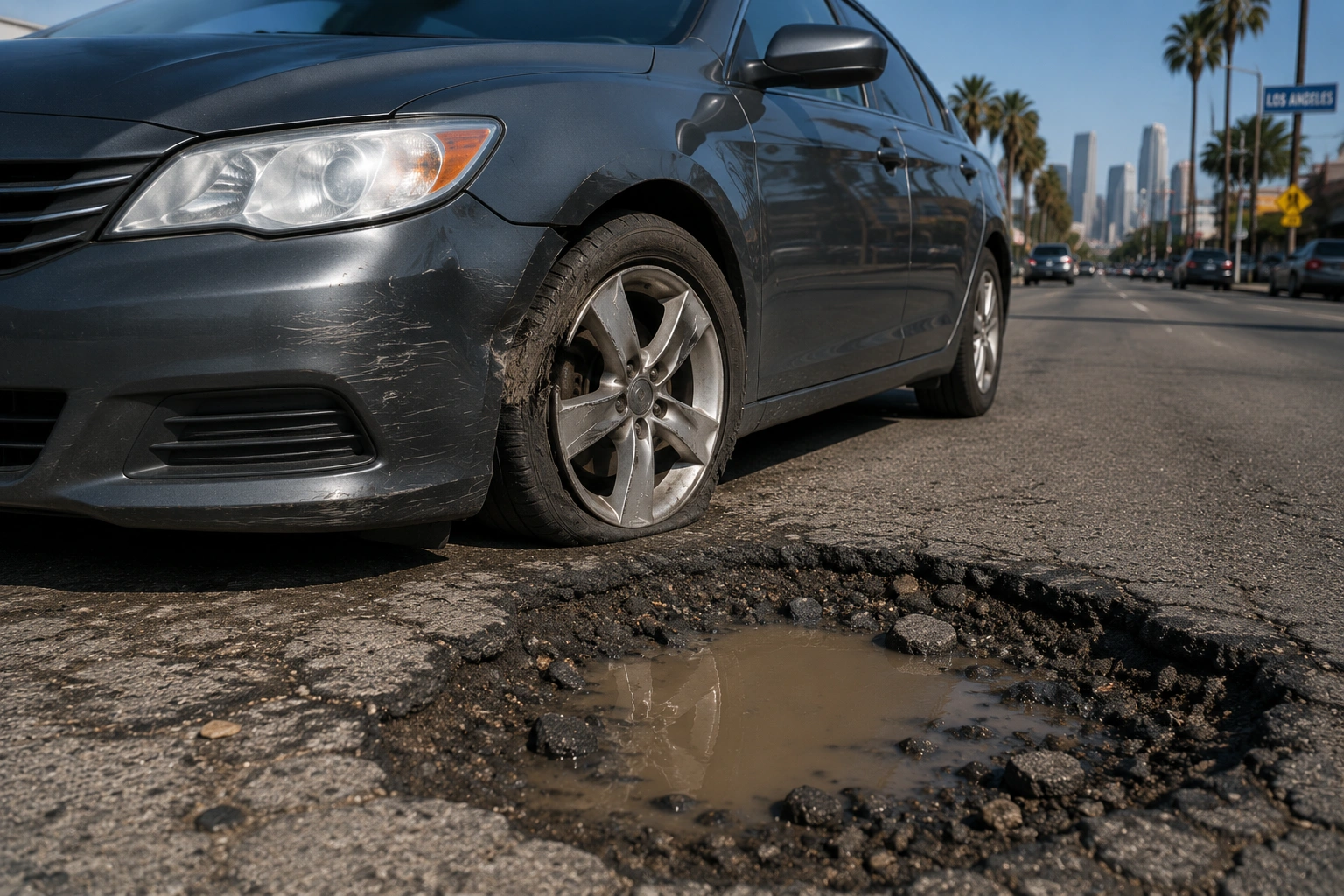
Los Angeles drivers can encounter potholes after seasonal rain, road repairs, construction, and normal pavement wear. If you are searching for “pothole damage car Los Angeles” after a hard impact, inspect the tires and wheels first, then pay attention to steering, vibration, ride height, and unusual suspension noises. A pothole can damage more than the visible wheel: it may also affect the tire’s internal structure, wheel balance, suspension components, or alignment.
Some damage is obvious immediately, while other problems develop over the next several drives. A slow leak, sidewall bulge, crooked steering wheel, or new vibration should not be ignored. Early inspection can help prevent a damaged tire or suspension part from creating a larger handling or safety problem.
What can a pothole damage on a car?
A severe pothole impact can damage or deform a tire, wheel or rim, wheel weight, control arm, tie rod, ball joint, shock absorber, strut, or other suspension component. It can also knock the alignment out of specification. AAA advises checking alignment when a vehicle pulls left or right and having the suspension inspected when new noises or vibrations appear after an impact.
The symptom does not always identify the damaged part. For example, vibration may come from a bent wheel, tire damage, a dislodged wheel weight, an out-of-balance assembly, or suspension damage. A professional inspection is the only reliable way to determine whether the problem is limited to alignment or involves a damaged tire or component.
|
What you notice after the impact |
Possible cause |
Recommended response |
|
Tire pressure drops or the TPMS warning appears |
Puncture, bead leak, or wheel damage |
Stop safely and check the tire; do not continue driving if it is losing air. |
|
Sidewall bulge, cut, exposed cord, or tread separation |
Internal or structural tire damage |
Do not drive on the tire; arrange replacement or professional inspection. |
|
Steering wheel is off-center or the car pulls |
Alignment change or bent/damaged steering or suspension part |
Schedule an alignment and suspension inspection. |
|
Vibration through the steering wheel or seat |
Bent wheel, tire damage, balance issue, wheel weight loss, or suspension problem |
Have the tire and wheel assembly and suspension checked. |
|
Clunking, rattling, or knocking over bumps |
Loose, bent, or damaged suspension component |
Avoid high-speed driving and arrange a prompt inspection. |
|
Vehicle sits lower on one side or handling feels unstable |
Spring, strut, control-arm, or other suspension damage |
Stop driving if stability is affected and request professional assistance. |
This table is a symptom guide, not a diagnosis. A vehicle can have hidden damage even when the wheel looks normal from the outside.
How to check for a bent rim after hitting a pothole
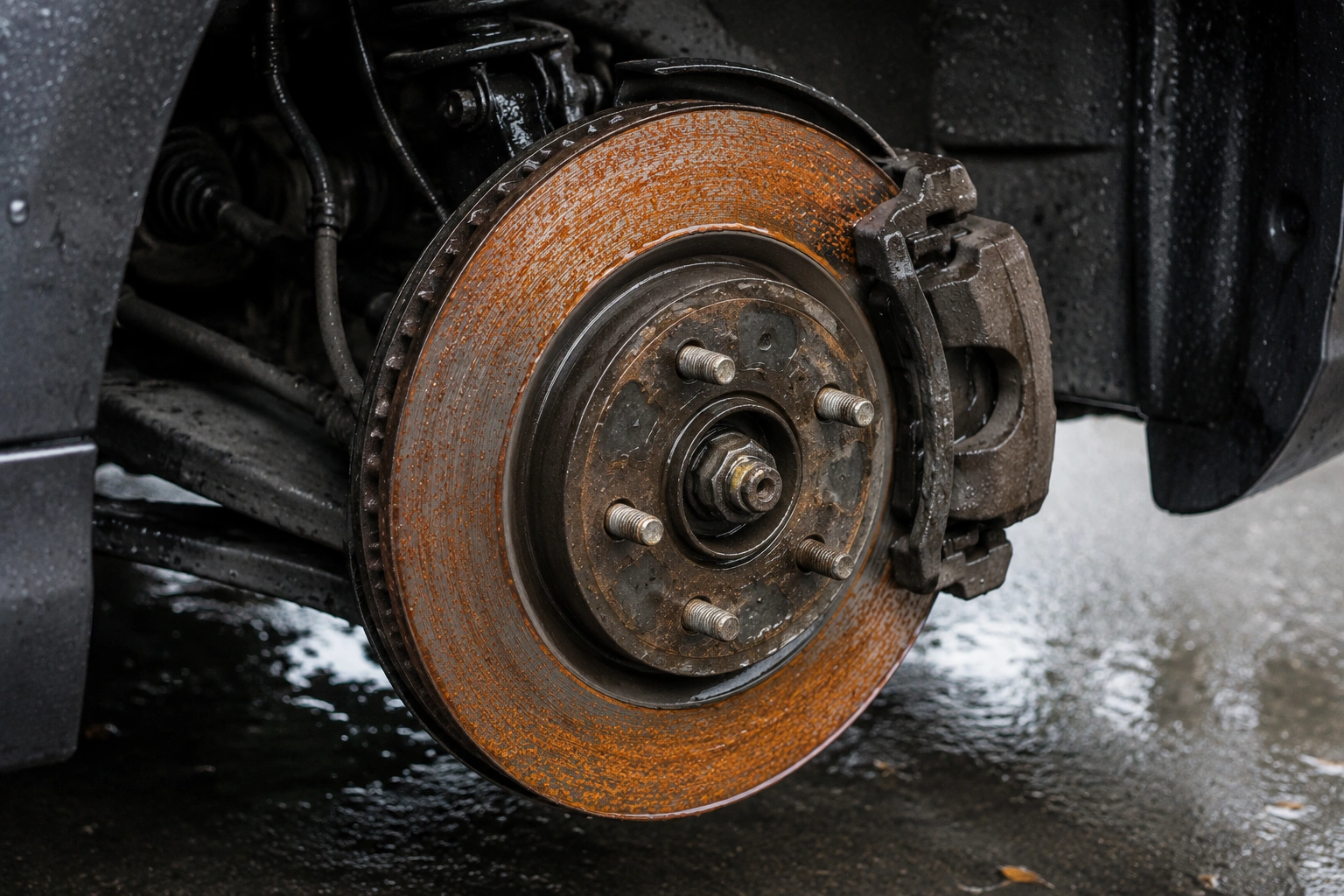
A “rim” is commonly called a wheel in automotive service. A hard impact can bend the wheel lip, distort the bead seating area, crack the wheel, or create runout. Damage may be easier to see on a clean wheel, but not every bent wheel has an obvious dent.
With the vehicle parked safely, look for a visible bend, crack, fresh scrape, or tire bead that does not appear evenly seated. Check whether the tire is losing pressure and note any new vibration that changes with vehicle speed. Do not crawl under the car or remove a wheel on the roadside without proper equipment and a safe work area.
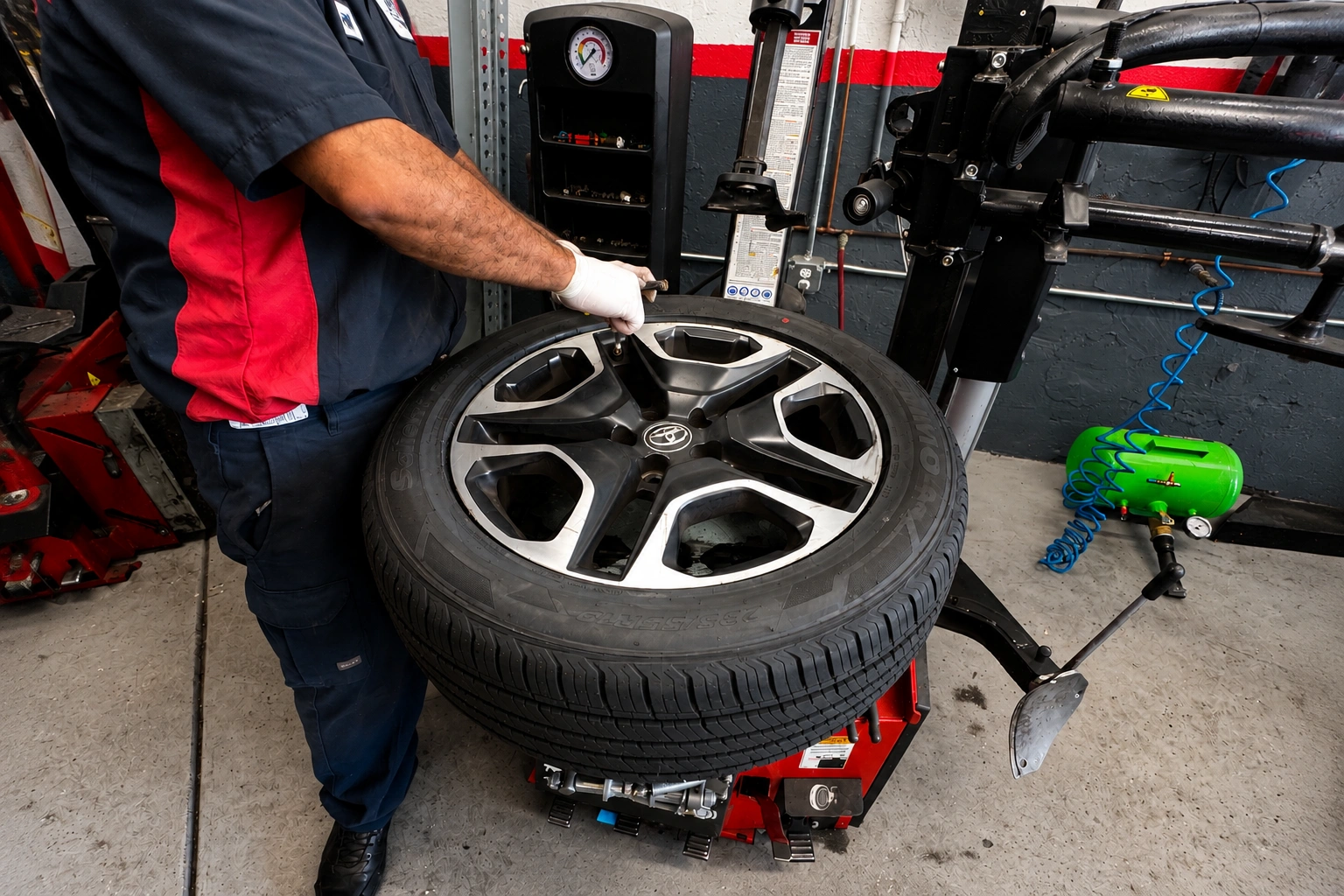
A professional shop can check wheel runout, the tire bead, balance, and the tire’s condition. A wheel that is cracked or severely deformed may require replacement rather than straightening. The correct decision depends on the wheel material, location and severity of the damage, manufacturer guidance, and the technician’s inspection.
Tire damage after a pothole can be hidden
The tire often takes the first impact. A pothole can cause a sidewall bulge, cut, puncture, bead damage, internal belt separation, or a temporary loss of pressure. Some internal damage is not visible from the outside, particularly when the impact affects the tire’s cords or belts.
Inspect the tread and both visible sidewalls for cuts, bulges, exposed cord, embedded objects, or a change in shape. Check pressure with a reliable gauge when safe and compare it with the vehicle manufacturer’s recommended cold pressure, usually found on the driver’s door-jamb label or in the owner’s manual. AAA specifically warns drivers not to use the maximum pressure molded into the tire sidewall as the vehicle’s normal inflation target.
Do not drive on a tire with a sidewall bulge, exposed cord, rapid pressure loss, or suspected structural damage. A tire can fail without giving the driver much warning. If the vehicle has a spare and you know how to install it safely, follow the owner’s manual; otherwise, call roadside assistance.
Hidden suspension damage from a pothole
Pothole impacts can transfer force through the wheel hub into the suspension and steering system. Depending on the vehicle and impact, components such as tie rods, control arms, ball joints, stabilizer links, shocks, struts, springs, or bushings may be bent, cracked, loosened, or worn further.
Suspension damage may not be visible during a quick look. Watch for a new clunk, knock, creak, or rattle; a change in ride height; excessive bouncing; steering that feels loose; unusual tire wear; or a vehicle that no longer tracks straight. If the car feels unstable, the steering response changes, or a wheel appears out of position, reduce speed safely and arrange an inspection rather than testing it at highway speed.
A suspension inspection should include the affected wheel area and related steering components. Replacing only the visibly damaged part may not solve the problem if another component was also bent or loosened in the same impact.
Pothole alignment damage and steering symptoms
A pothole can change wheel-alignment angles or damage a component that holds those angles. Common clues include an off-center steering wheel while traveling straight, a vehicle pulling or drifting, uneven tread wear, or steering that feels different from before the impact.
An alignment reading can show whether the angles are outside specification, but an alignment adjustment should not be used to hide a bent or loose component. The technician should inspect the wheel, tire, steering, and suspension first. If the underlying part is damaged, the correct repair may involve replacing it before performing a final alignment.
A misalignment can accelerate uneven tire wear and affect handling. Correcting it is important for safe, predictable steering and tire life; do not assume that an alignment issue is primarily a fuel-economy problem or that a simple adjustment will fix every pothole symptom.
What to do immediately after hitting a pothole in Los Angeles
After a hard impact, keep both hands on the steering wheel and avoid sudden swerving. Check your surroundings before slowing or changing lanes, then pull over in a safe location when possible. If the tire is flat, the vehicle is pulling sharply, the steering feels loose, or the car is unstable, do not continue driving to a repair shop.
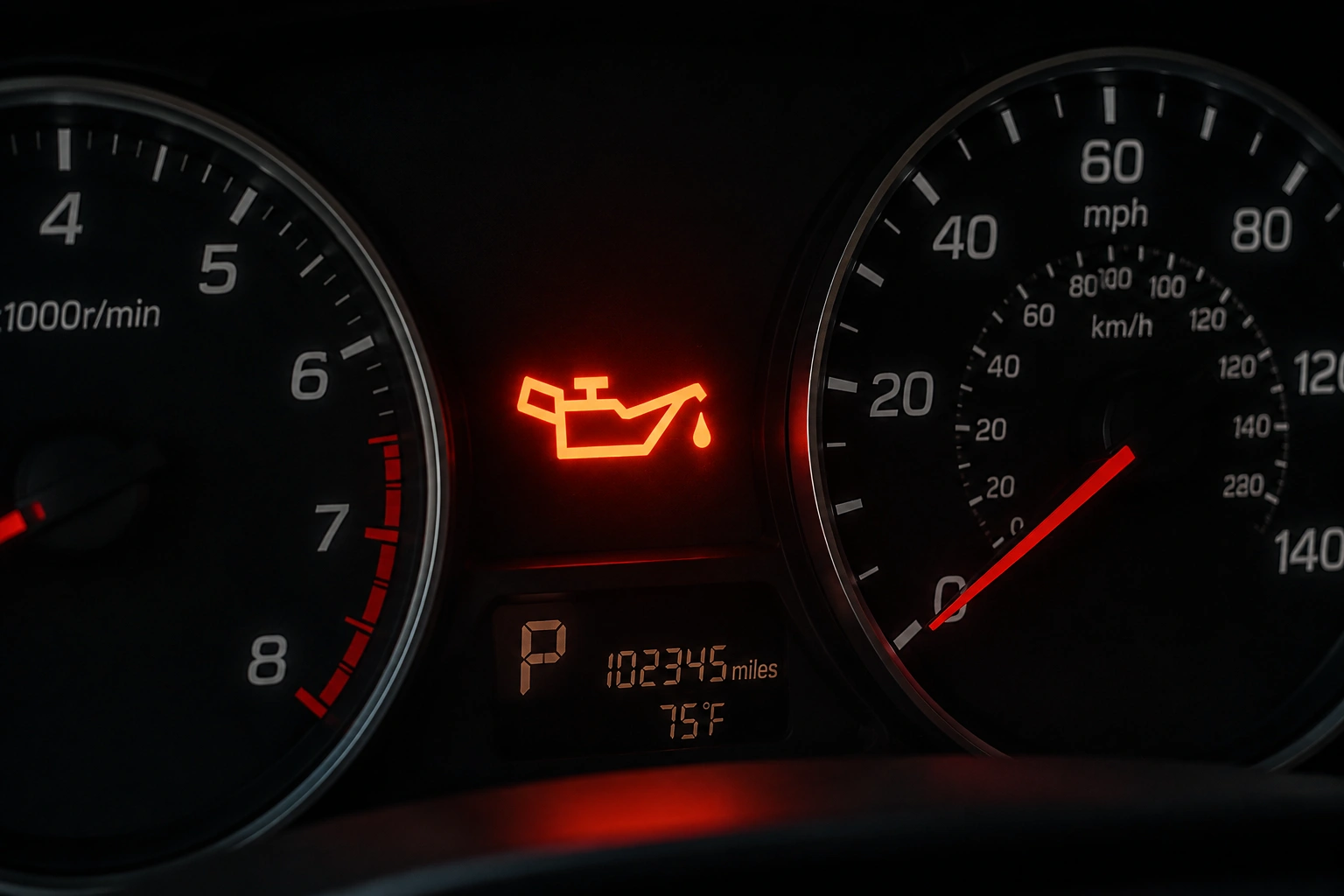
Once parked, look for a flat tire, sidewall bulge, visible wheel damage, fluid leaking from the vehicle, or a warning light. Use the TPMS reading and a tire gauge if available, but do not rely on the dashboard warning alone because some systems alert only after pressure has fallen substantially. Note the approximate location of the impact and any symptoms that began afterward.
If the vehicle appears safe to move only a short distance, drive slowly and avoid highway speeds until it can be inspected. If you are uncertain, call roadside assistance or a tow provider. A short drive on a damaged tire, wheel, or suspension part can increase the damage and reduce control.
How a professional shop diagnoses pothole damage
A proper inspection starts with the customer’s description of the impact and the symptoms that followed. The technician may inspect tire pressure, tread, sidewalls, wheel condition, bead seating, wheel balance, runout, steering and suspension components, and visible fluid or brake damage. If the vehicle pulls or the steering wheel is off-center, an alignment check can compare the measured angles with the manufacturer’s specifications.
Diagnostic findings should be interpreted together. Vibration may require tire-and-wheel balancing or may indicate a bent wheel, tire damage, or suspension issue. A car can show acceptable alignment readings while still having a tire or wheel problem, and a vehicle with a bent suspension part may not be corrected safely by alignment adjustment alone.
For Los Angeles drivers, contact Speedway Tire & Service to ask about current tire, wheel, alignment, and suspension inspection availability. The shop’s auto repair services page provides additional service information. Confirm the shop’s current capabilities before driving a vehicle that has a flat tire, unstable handling, or visible structural damage.
When should you take your car to a mechanic after a pothole?
Arrange a prompt inspection if you notice persistent vibration, a steering wheel that is no longer centered, pulling, new suspension noises, rapid or uneven tire wear, a TPMS warning, or visible tire or wheel damage. Stop driving and request assistance if a tire is losing air, a sidewall has a bulge or cut, steering is difficult, the vehicle is unstable, or a wheel appears cracked or badly bent.
Even when the vehicle seems to drive normally, a severe impact can cause damage that is not immediately obvious. If the pothole was deep, the impact was at higher speed, or the tire struck the edge sharply, a professional tire-and-wheel inspection can provide useful reassurance and establish a baseline for alignment or suspension checks.
How to reduce pothole damage
Keep tires inflated to the vehicle manufacturer’s recommended cold pressure and inspect them regularly for cuts, bulges, and uneven wear. Maintain shocks, struts, and other suspension parts because worn components may reduce the vehicle’s ability to control wheel movement over rough pavement. Replace damaged tires rather than relying on appearance alone.
Stay alert for potholes and slow down safely when one cannot be avoided. Check traffic and pedestrians before changing direction, and be cautious around puddles because they may conceal the depth of a pothole. Do not brake abruptly or make a sudden lane change without checking the surrounding traffic.
Frequently asked questions
What is the most common pothole damage to a car?
Tire and wheel damage are common because they take the initial impact. A pothole can also cause a wheel-weight or balance problem, alignment change, steering damage, or suspension damage. The severity depends on the pothole, impact speed, tire and wheel design, vehicle weight, and the condition of the road and vehicle.
How do I know if my rim is bent after hitting a pothole?
Possible clues include a new vibration, visible wheel deformation, a tire that loses air, or a bead leak. A wheel can look normal and still have runout or a related tire problem, so a shop should inspect the wheel and tire assembly if symptoms begin after an impact.
Can a pothole make my car pull to one side?
Yes. A pothole can change alignment or bend a steering or suspension component, which may cause pulling or drifting. Have the wheel, tire, steering, and suspension inspected before assuming that an alignment adjustment alone is the solution.
Is vibration after hitting a pothole always caused by a bent rim?
No. Vibration can also result from tire damage, a lost wheel weight, an out-of-balance assembly, alignment-related problems, or suspension damage. The speed at which the vibration appears and whether it is felt through the steering wheel or seat can help a technician narrow the possibilities, but testing is still required.
Can I drive after hitting a pothole if the tire is not flat?
Possibly, but use caution. Do not drive if the tire has a bulge, cut, exposed cord, rapid pressure loss, severe vibration, unstable handling, or a visibly damaged wheel. If the car seems normal but the impact was severe, drive slowly only as needed to reach a safe inspection point or arrange a tow.
How long can I wait to check for pothole damage?
Check the vehicle as soon as it is safely parked. Some damage, such as a slow leak or uneven tire wear, may become more apparent over the next several drives, but waiting can allow a damaged tire or alignment problem to worsen. Prompt inspection is especially important when a warning light, vibration, or handling change appears.
Conclusion
Pothole damage car Los Angeles drivers experience can involve more than a visible dent in a wheel. A hard impact may affect the tire, wheel balance, alignment, steering, or suspension, and some structural tire damage cannot be confirmed by a quick visual inspection.
After hitting a pothole, check for pressure loss, bulges, cuts, vibration, pulling, an off-center steering wheel, and new suspension noises. Do not drive on a damaged or unstable vehicle. A professional inspection can identify whether the repair requires a tire or wheel replacement, balancing, alignment, suspension work, or additional diagnosis.
Looking for an honest Auto Repair Shop in Los Angeles? Call Speedway Tire and Service Today
Whether you’re driving through LA traffic or cruising the freeways, your car deserves expert care. Located in Los Angeles, Speedway Tire and Service offers reliable oil changes, brake repairs, tire services, and more—all backed by experienced technicians and honest pricing.