Car Jerks When Shifting From Park to Drive? Mounts, Fluid, or Transmission Trouble
If your car jerks when shifting from park to drive, the movement may be caused by a powertrain mount, transmission-fluid or hydraulic issue, engine-idle problem, gear-selector concern, or internal transmission fault. A small, brief bump can be normal on some vehicles, but a hard lurch, repeated slam, delayed engagement, or sudden surge deserves attention.
Keep the brake pedal firmly pressed whenever you select Drive or Reverse. Do not apply the accelerator while shifting, and do not continue driving if the vehicle surges, loses a gear, leaks fluid, or becomes difficult to control. Los Angeles stop-and-go traffic and frequent parking maneuvers can make harsh engagement more noticeable, but traffic alone does not identify the cause.
Why does a car jerk when shifting from Park to Drive?
A vehicle can jerk during engagement when the engine or transmission moves excessively on worn mounts, when the engine idle is too high or unstable, when transmission fluid is low or the wrong fluid is installed, or when the transmission’s hydraulic, electronic, linkage, or internal components do not apply Drive smoothly. Driveline slack, parking-pawl load on a hill, and brake or throttle operation can also affect how the shift feels.
A brief, mild engagement movement is different from a strong lurch or a delayed shift followed by a bang. Firestone notes that delayed or absent engagement in Drive or Reverse may involve the gear selector or linkage, the transmission, or transmission fluid, and recommends drivetrain inspection for unusual shifting, noises, vibration, or leaks.
|
What you notice |
Possible areas to inspect |
Recommended response |
|
Small, consistent bump with no other symptoms |
Normal engagement characteristic, mount movement, or driveline take-up |
Mention it during routine service if it changes or becomes stronger. |
|
Strong lurch as Drive engages |
Engine or transmission mount, idle speed, fluid or hydraulic pressure, linkage, or internal transmission |
Schedule diagnosis and avoid repeated hard shifts. |
|
Delay followed by a harsh engagement |
Low fluid, incorrect fluid level, solenoid or valve-body issue, linkage, or internal wear |
Have the transmission inspected promptly; do not keep testing it. |
|
Jerks in both Drive and Reverse |
Mount, idle, fluid, hydraulic, or broader drivetrain issue |
Request a complete powertrain and transmission inspection. |
|
Fluid leak, slipping, warning light, or loss of Drive |
Transmission or drivetrain fault |
Avoid driving and arrange professional assistance or towing. |
|
Engine runs rough or stalls when gear is selected |
Misfire, idle-control, intake, fuel, sensor, or excessive transmission load |
Diagnose the engine and transmission together. |
This table is a screening guide, not a diagnosis. Several faults can produce the same sensation.
Is a small bump when shifting into Drive normal?
Many automatic vehicles produce a small, controlled movement when Drive engages because the transmission applies a gear and the drivetrain takes up slack. The exact feel varies by vehicle, temperature, idle speed, drivetrain design, and whether the car is on level ground or a slope.
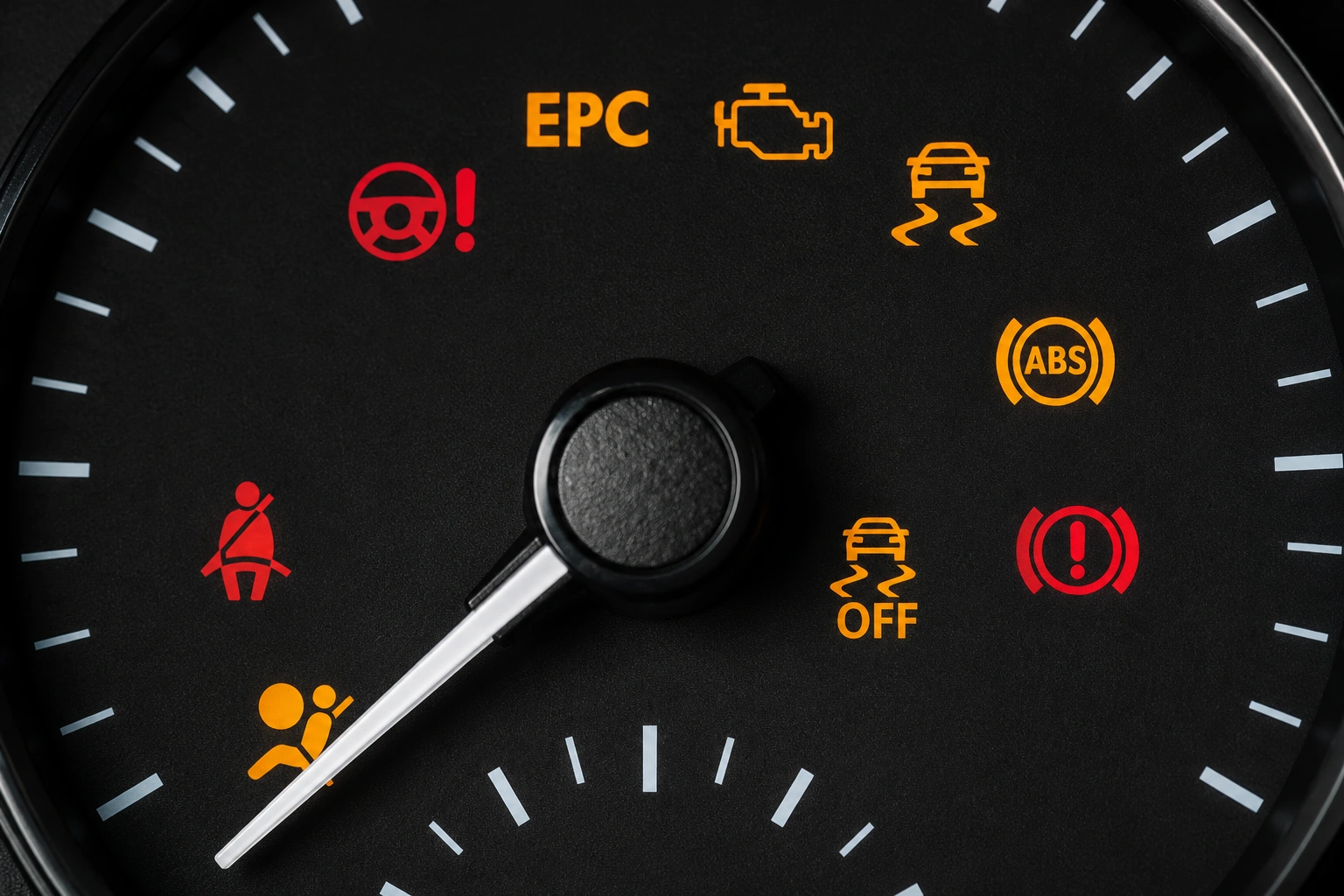
A harsh or new engagement is different. Pay attention to whether the vehicle moves abruptly, whether the shift is delayed, whether it happens in Reverse as well as Drive, and whether the engine RPM changes unusually. A normal characteristic should not progressively worsen or appear with slipping, warning lights, fluid leaks, loud noises, or loss of power.
Worn engine or transmission mounts
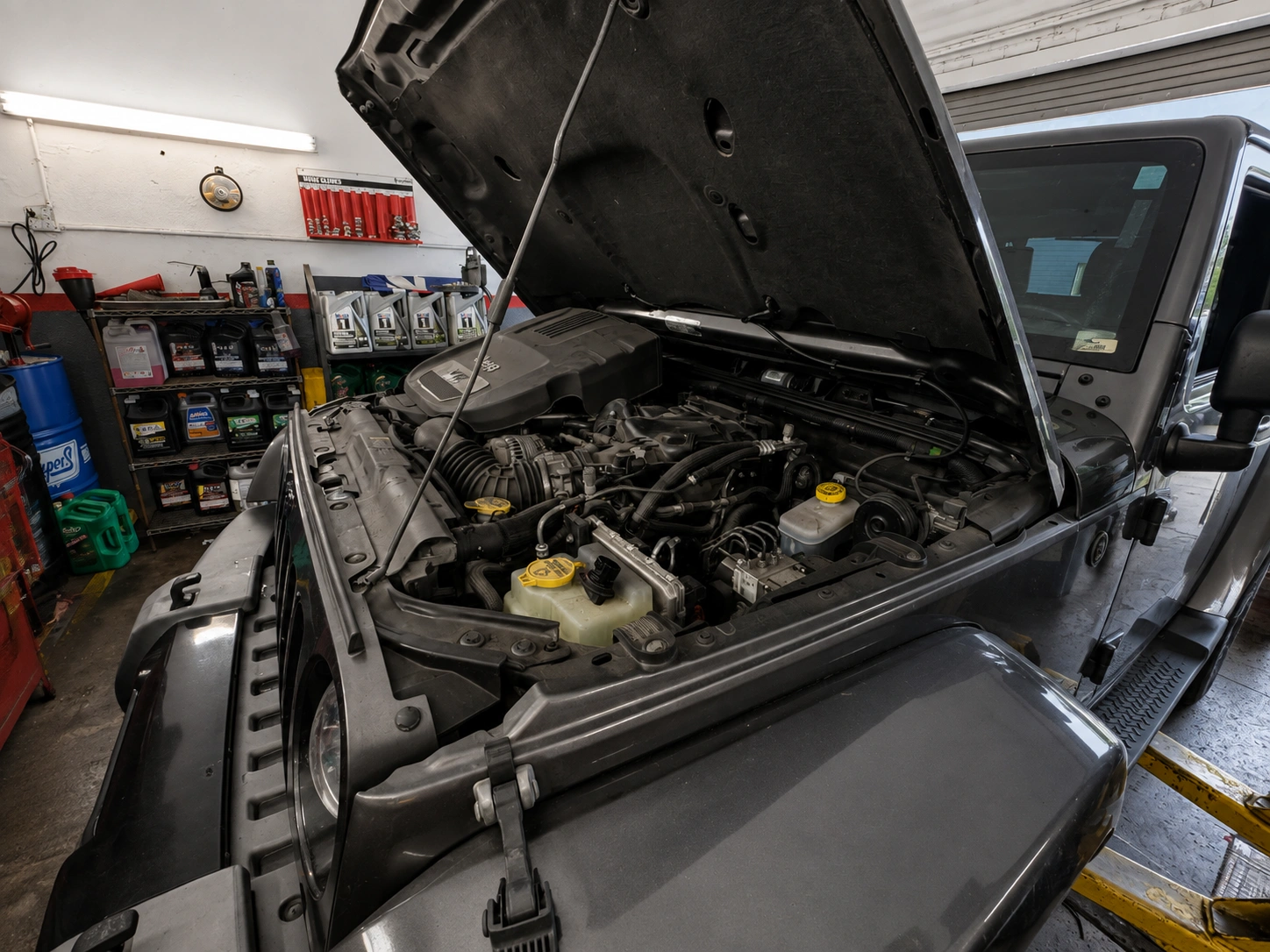
Engine mounts and transmission mounts hold the powertrain in position while isolating normal vibration. When a mount’s rubber, hydraulic section, bracket, or fasteners deteriorate, the engine or transmission may move more than intended as torque changes during gear engagement. That movement can feel like a jerk or lurch even when the transmission itself is applying Drive normally.
Mount-related symptoms may include a clunk when selecting Drive or Reverse, excessive vibration at idle, a visible sag or fluid leak from a hydraulic mount, or a thump during acceleration and deceleration. Similar symptoms can come from driveline joints, exhaust contact, or transmission faults, so a mount should not be condemned by sensation alone.
Do not rev the engine in Park or Neutral as a DIY mount test, and do not place hands near moving parts. Safe mount diagnosis requires proper vehicle support, controlled procedures, and awareness of the vehicle’s movement.
Transmission fluid level, condition, and specification
Transmission fluid helps lubricate components, carry heat away, and provide hydraulic control in transmissions that use fluid pressure to apply clutches and bands. A low level can result from a leak and may contribute to delayed, slipping, or harsh engagement. Incorrect fluid type, an incorrect level, contamination, or overheating can also affect operation.
Do not assume that all transmission fluid is bright red. Fluid color varies by manufacturer and product, and appearance alone cannot determine whether the fluid is serviceable. Some transmissions do not have a conventional dipstick and require a specific temperature, level-plug, scan-tool, or manufacturer procedure. Use only the fluid specification listed for the vehicle.
A fluid change or exchange is not a universal fix. It may be appropriate when the fluid level or service condition is part of the confirmed problem, but it cannot repair worn clutch packs, a damaged valve body, a failed solenoid, a mount, linkage, or internal mechanical damage. A technician should diagnose the cause before recommending a drain-and-fill or fluid exchange.
Engine idle and performance problems
If the engine idles too high, runs unevenly, misfires, or responds poorly to load, selecting Drive can feel harsh. Possible causes include a vacuum or intake leak, dirty or malfunctioning throttle system, ignition problem, fuel-delivery fault, sensor issue, or electronic idle-control problem. The transmission may be functioning normally while the engine creates an abrupt change in torque.
Clues include a rough idle in Park, a fluctuating tachometer, a check-engine light, hesitation, poor acceleration, or stalling when shifting into gear. A scan for diagnostic trouble codes and a check of engine operating data can help separate an engine-performance fault from a transmission problem.
Transmission engagement, solenoids, and valve-body problems
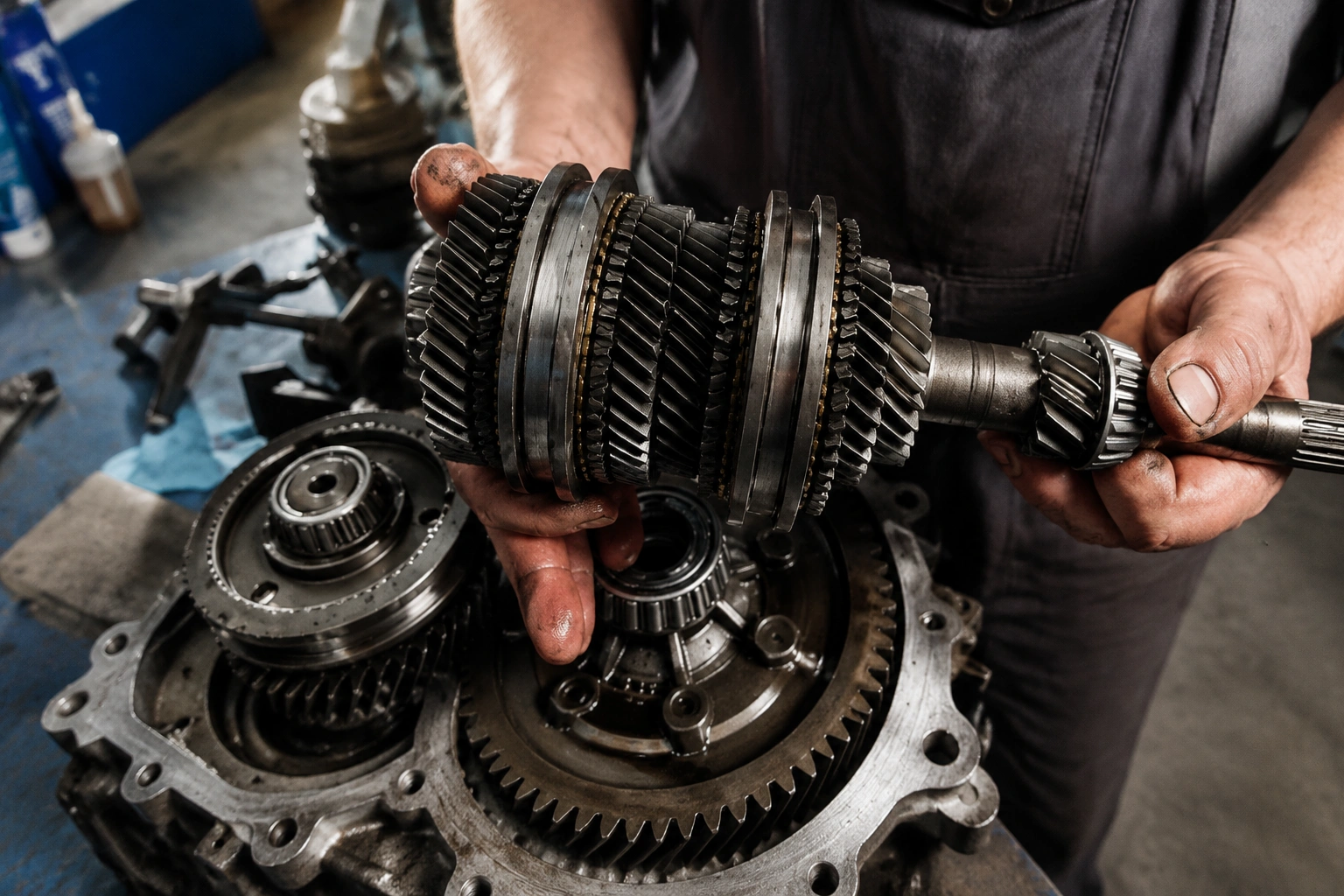
Automatic transmissions use hydraulic circuits, valves, solenoids, sensors, and control modules to apply the correct gear elements. A sticking solenoid, valve-body issue, incorrect pressure, software or sensor fault, worn clutch pack, or other internal problem can cause delayed engagement, a harsh shift, slipping, or a bump when selecting Drive.
If the vehicle takes several seconds to engage and then slams into gear, avoid repeatedly shifting between Park, Reverse, Neutral, and Drive. The behavior can worsen wear or create a movement hazard. A technician may need to scan the transmission module, inspect fluid and leaks, check pressure or commanded operation, and compare the symptom with manufacturer specifications.
Parking on a hill and driveline load
The way a vehicle is parked can influence how it comes out of Park. If the parking pawl carries the vehicle’s weight on a slope, the shift lever may feel tight and the vehicle may move with a noticeable release when Drive or Reverse is selected. This is different from a transmission that harshly engages on level ground, but it can still be unsettling.
Use the parking brake as described in the owner’s manual, especially on an incline, and avoid forcing the gear selector. If the vehicle repeatedly binds in Park, clunks when releasing from a slope, or jerks on level ground as well, ask a technician to inspect the parking, brake, linkage, and drivetrain systems.
What to observe before visiting a repair shop
Note whether the jerk happens only from Park to Drive or also from Park to Reverse, Neutral to Drive, or Reverse to Drive. Record whether the engine is cold or warm, whether the vehicle is level or on an incline, whether the brake is firmly applied, and whether the symptom occurs with the A/C on or off. Also note any delay, slip, clunk, warning light, fluid spot, or unusual engine behavior.
With the vehicle parked safely, look for fresh fluid under the transmission area, but do not crawl underneath an unsupported car. Check the owner’s manual before attempting any fluid-level inspection. Never insert hands near a running engine, belt, fan, driveshaft, or other moving component, and do not test a suspected transmission fault by repeatedly slamming the selector through the gears.
When should you stop driving?
Avoid continued driving if the vehicle surges strongly, will not remain in gear, slips, takes a long time to engage and then bangs into gear, leaks fluid, shows a transmission or check-engine warning, or becomes difficult to control. If the vehicle cannot select Drive or Reverse, moves unexpectedly, or produces a severe noise, arrange a tow or professional roadside assistance.
A mild, occasional bump without other symptoms may not require emergency towing, but it should be inspected if it is new, worsening, or accompanied by a delay or warning. Keep the brake applied and do not use the accelerator to force engagement.
How a technician diagnoses a hard shift from Park to Drive
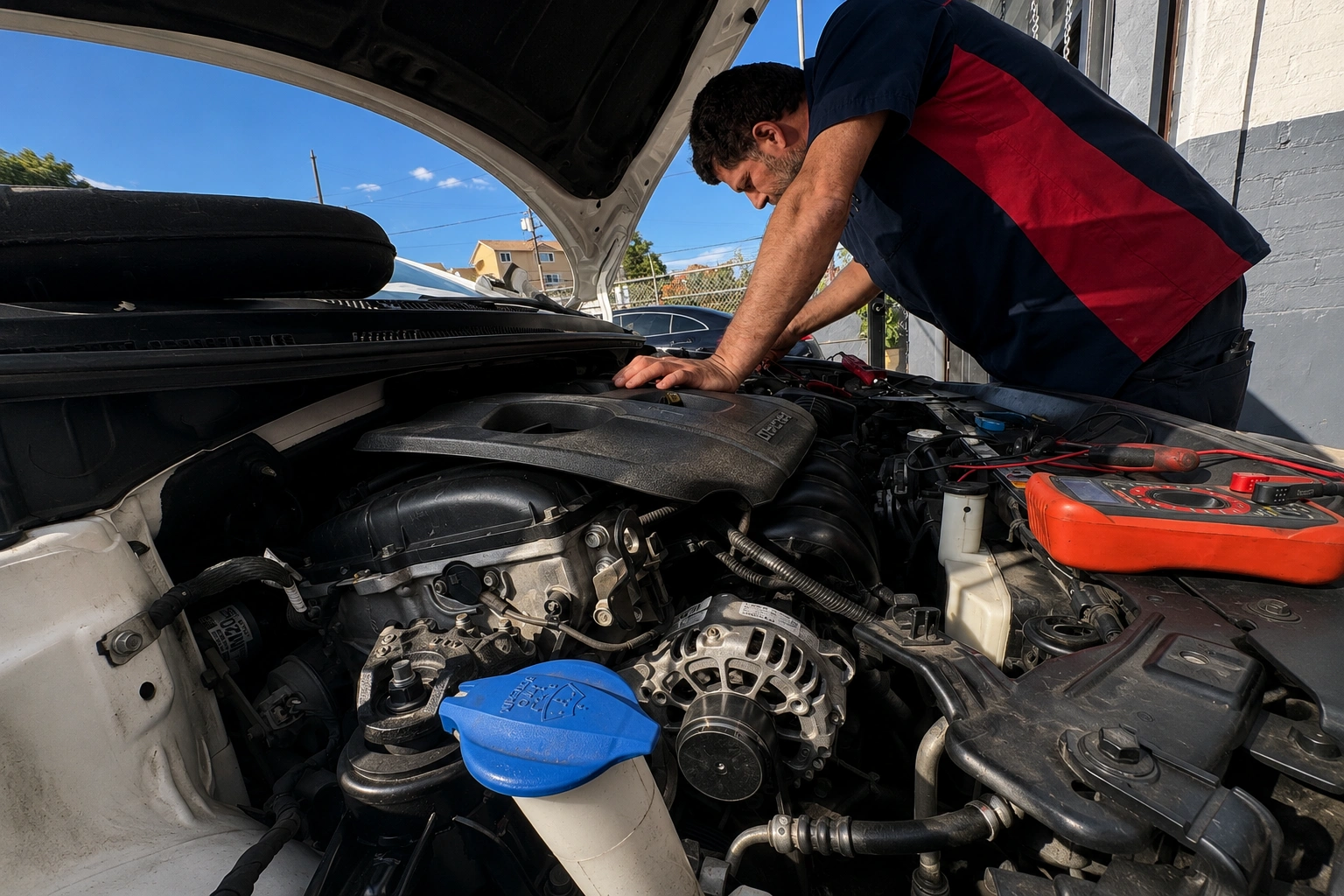
Diagnosis begins with the exact engagement conditions and a controlled inspection. The technician may scan engine and transmission modules, check for stored or pending trouble codes, evaluate engine idle and misfire data, inspect mounts and brackets, look for leaks, verify fluid specification and level, and road-test the vehicle when safe.
Transmission testing may include checking engagement delay, shift timing, hydraulic pressure, solenoid commands, range-sensor data, linkage adjustment, and internal wear indicators. The shop may also inspect brakes, axles, driveshafts, differential components, and driveline slack because the sensation of a shift jerk can come from outside the transmission.
The repair could involve a mount, leak repair, fluid service, linkage adjustment, engine-performance repair, software or sensor diagnosis, solenoid or valve-body work, or internal transmission repair. An itemized estimate should follow confirmed findings rather than assuming that a fluid flush or mount replacement is the answer.
For Los Angeles drivers, contact Speedway Tire & Service to ask about current transmission, engine, and drivetrain diagnostic availability. The shop’s auto repair services page provides additional service information. Confirm current capabilities before driving a vehicle that surges, slips, leaks, or will not engage reliably.
Transmission service and prevention tips
Follow the manufacturer’s maintenance schedule and use the specified transmission fluid and service procedure. Address leaks promptly, avoid towing or heavy loads beyond the vehicle’s rating, and do not ignore delayed engagement, slipping, warning lights, or new clunks. When parking on an incline, use the parking brake correctly to reduce unnecessary load on the parking mechanism.
Routine service cannot prevent every mount failure or internal transmission problem. It can, however, help identify leaks, fluid deterioration, engine-idle faults, and driveline wear before a harsh engagement becomes a breakdown or safety issue.
Frequently asked questions
Why does my car jerk when shifting from Park to Drive?
The cause may be a worn engine or transmission mount, a low or incorrect transmission-fluid level, unstable engine idle, a gear-selector or range-sensor issue, driveline slack, a parking-pawl load, or an internal transmission problem. A small bump can be normal, but a hard or worsening lurch should be diagnosed.
Can low transmission fluid cause a car to jerk into Drive?
It can contribute to delayed, slipping, or harsh engagement, particularly when the transmission level is low because of a leak. Do not assume fluid is the cause based on color or feel. Check it only according to the vehicle manufacturer’s procedure and correct specification, or have a technician inspect it.
How do engine mounts cause a shift jerk?
Worn mounts may allow the engine or transmission to move excessively when torque changes as Drive or Reverse engages. The movement can feel like a clunk or lurch. Similar symptoms may come from the transmission, driveline, engine idle, or other mounts, so the component should be inspected rather than guessed.
Is a rough shift from Park to Reverse related to the same problem?
Often, the same categories can be involved: mounts, engine idle, fluid, linkage, hydraulic control, or internal transmission components. The direction and conditions of the shift provide useful diagnostic clues, but a problem in both Drive and Reverse deserves a complete inspection.
Will a transmission-fluid flush fix a hard shift?
Not necessarily. A fluid service may be appropriate for a verified level, specification, or maintenance issue, but it will not repair worn internal parts, a valve body, solenoid, mount, linkage, or engine-performance fault. Diagnose the cause before selecting a service.
Is it safe to drive when a car jerks into Drive?
If the jerk is strong, worsening, delayed and followed by a slam, or accompanied by slipping, fluid leakage, warning lights, unexpected movement, or loss of a gear, avoid driving and arrange professional assistance. A mild occasional bump may be less urgent, but a new or changing symptom still warrants inspection.
Can parking on a hill make the car jerk when shifting out of Park?
Yes. The parking pawl can carry vehicle weight on an incline, creating binding or a noticeable release when the selector is moved. Using the parking brake correctly can reduce this load. Repeated harsh engagement on level ground or in multiple gears suggests another issue that should be diagnosed.
Conclusion
When a car jerks when shifting from park to drive, the sensation may come from a mount, transmission fluid or hydraulic issue, engine-idle problem, linkage, parking load, driveline slack, or internal transmission fault. A small bump can be normal on some vehicles, but a hard lurch, delayed engagement, slipping, leak, warning light, or unexpected movement is not something to ignore.
Keep the brake applied, do not use the accelerator to force a gear engagement, and avoid repeated testing. If the vehicle surges, loses Drive or Reverse, leaks fluid, or becomes difficult to control, stop driving and arrange professional assistance. A complete engine, transmission, mount, and drivetrain inspection can identify the cause and help prevent a minor shifting complaint from becoming a more expensive or unsafe failure.
Looking for an honest Auto Repair Shop in Los Angeles? Call Speedway Tire and Service Today
Whether you’re driving through LA traffic or cruising the freeways, your car deserves expert care. Located in Los Angeles, Speedway Tire and Service offers reliable oil changes, brake repairs, tire services, and more—all backed by experienced technicians and honest pricing.