BMW Coolant Leaks in LA Heat - Water Pump, Expansion Tank & Thermostat Housing
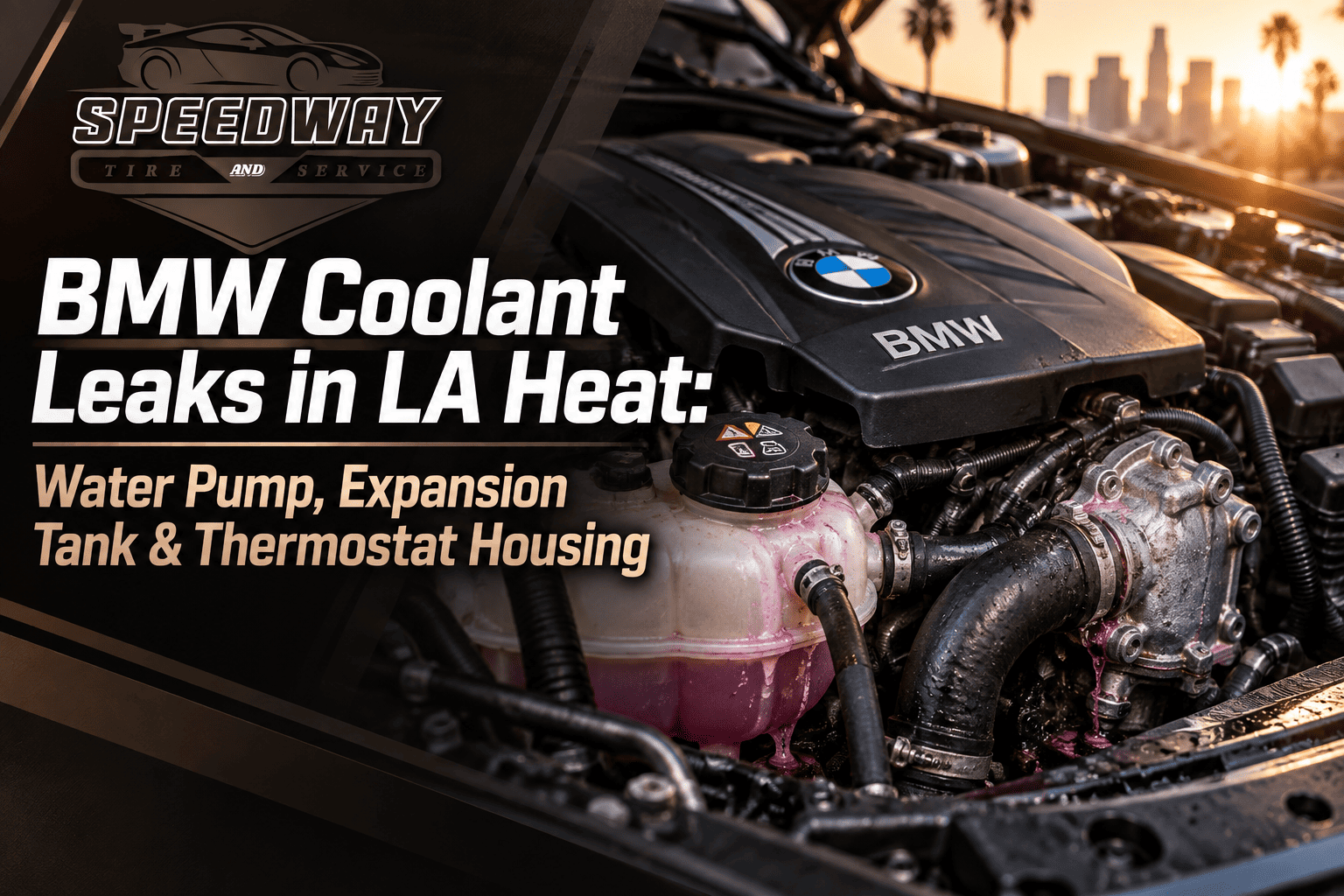
If your BMW is losing coolant, running warm, or leaving sweet-smelling drips on your driveway, you're dealing with one of the brand's most common issues—and in Los Angeles heat, a BMW coolant leak tends to show up sooner. The usual culprits are the electric water pump, a cracked plastic expansion tank, or a leaking thermostat housing. None of these are unusual on BMWs, but they matter, because a cooling-system problem can quickly become an overheating problem that risks the engine. The reliable move is to identify which part is leaking before topping off coolant and hoping—an inspection tells you what's actually failing.
Why do BMWs develop coolant leaks?
BMW cooling systems use a number of plastic and composite components—the expansion tank, thermostat housing, and parts of the water pump assembly among them. Over years of heat cycling, that plastic becomes brittle and can crack or warp, and gaskets and seals harden. The result is a slow coolant leak that often starts small and grows.
Many BMW engines also use an electric water pump rather than a belt-driven one. It's efficient, but it's a known wear item that can fail electrically or begin to seep over time. Because several cooling parts age on a similar timeline, it's common to see more than one develop an issue as the miles add up.
Since the symptom—low coolant or a warm-running engine—can come from any of these parts, the cause needs to be confirmed rather than guessed. A cooling-system inspection through engine and cooling-system diagnostics pinpoints whether it's the water pump, the expansion tank, the thermostat housing, or a hose before any part is replaced.
What are the common BMW coolant leak causes?
On many BMWs, a coolant leak usually traces to one of these:
- Electric water pump — a known wear item that can fail or seep.
- Expansion (coolant) tank — brittle plastic that cracks with age and heat.
- Thermostat housing — plastic housing and gasket that warp or leak.
- Coolant hoses and connections — harden and seep at the ends.
- Radiator — less common, but end tanks and seams can leak with age.
Because these share a similar aging timeline and produce the same symptoms, a proper inspection is the reliable way to confirm which one is leaking before replacing parts.
What signs point to a BMW coolant leak?
A few clues help you catch a cooling issue early:
- A low coolant warning or needing to top off the expansion tank repeatedly.
- The temperature gauge running warm or fluctuating, especially in traffic.
- A sweet smell or steam, and colorful drips (often blue/green) under the car.
- Residue or crust around the expansion tank, thermostat housing, or hoses.
- Heat that comes and goes from the vents, which can hint at low coolant.
If the temperature gauge climbs into the hot zone, don't keep driving—let the engine cool and have it checked, since overheating can cause serious engine damage.
Which part is leaking? Common causes at a glance
This table summarizes the usual BMW cooling-system culprits and what to do about each.
|
Likely cause |
Typical sign |
What to do next |
Why it matters |
|
Electric water pump |
Warm running, low coolant |
Diagnose pump |
Failure can overheat the engine |
|
Expansion tank |
Cracks, coolant drips |
Inspect/replace tank |
Brittle plastic loses coolant |
|
Thermostat housing |
Leak at housing, warm engine |
Inspect housing/gasket |
Warped plastic seeps coolant |
|
Coolant hoses |
Seep at hose ends |
Inspect connections |
Hardened hoses leak |
|
Radiator |
Drips at seams/tanks |
Inspect radiator |
End tanks crack with age |
Several of these look identical from the driver's seat, so the leak needs to be traced rather than assumed. Because a cooling failure can put the engine at risk, an accurate diagnosis through full-service auto repair helps you fix the right part the first time. Accurate diagnosis helps reduce unnecessary repairs and delays.
Why LA heat makes BMW coolant leaks worse
Local driving conditions in Echo Park, Silver Lake, and Downtown LA are hard on any cooling system, and they can bring a developing BMW coolant leak to the surface sooner.
LA heat raises under-hood temperatures and accelerates the aging of the plastic cooling components BMWs rely on, so an expansion tank or thermostat housing may crack earlier here than in a milder climate. Stop-and-go traffic on the 101 and surface streets means the engine runs hot at low speed, when there's less airflow through the radiator, putting extra stress on the water pump and hoses. The steep hills around Silver Lake and Echo Park add load and heat too. None of this creates a defect on its own, but it's why LA BMW owners often notice cooling issues before the mileage would suggest.
What can happen if you ignore a BMW coolant leak?
A small coolant leak rarely stays small, and the cooling system protects the engine. Ignoring it can lead to:
- Overheating, which can cause serious and expensive engine damage.
- A sudden failure if the water pump quits or a brittle tank cracks fully.
- A bigger repair as low coolant stresses other components.
- Being stranded if the car overheats in traffic.
- Cabin heat problems, since the heater depends on coolant flow.
Because the downside is engine damage, catching a BMW coolant leak early is both far safer and far cheaper than waiting.
What should you check before bringing your BMW in?
A few observations help the shop trace the leak faster. Before your visit, note:
- How often you're adding coolant and whether the low-coolant light has appeared.
- The temperature gauge — does it run warm, hot, or fluctuate?
- Where drips appear under the car, and their color.
- Any sweet smell or steam from under the hood.
- Visible residue around the expansion tank, hoses, or housing (engine cool only).
- Your model, year, and mileage, and any recent cooling work.
Important: never open the coolant cap while the engine is hot. If the gauge is in the hot zone, stop driving, let it cool, and call the shop.
How do you choose a trustworthy shop for BMW cooling repairs in LA?
Good auto service depends on clear inspection findings, honest recommendations, and matching the repair to the vehicle's needs. With a BMW coolant leak, you want a shop that traces the source rather than replacing parts on a hunch.
Practical things to look for in a shop near Silver Lake or Echo Park:
- A clear diagnostic process that pressure-tests and traces the cooling system.
- Transparent communication and a written estimate before work begins.
- Experience with European cooling systems and their plastic components.
- Quality parts and the correct coolant specification for your BMW.
- Honest guidance on what to fix now versus what can wait, and when a dealer or specialist is the better call.
- The option to call first and confirm whether it's safe to drive in.
For deeper BMW-specific electronics or drivetrain work, a marque specialist or dealer may be the right choice—but common cooling leaks, hoses, and general maintenance are routine work. If you're not sure where your issue falls, you can contact the shop to talk it through first.
How does Speedway Tire & Service help?
Speedway Tire & Service is a local tire and auto repair shop in Los Angeles, on West Sunset Boulevard, serving drivers in Echo Park, Silver Lake, Downtown LA, Chinatown, Lincoln Heights, and nearby neighborhoods.
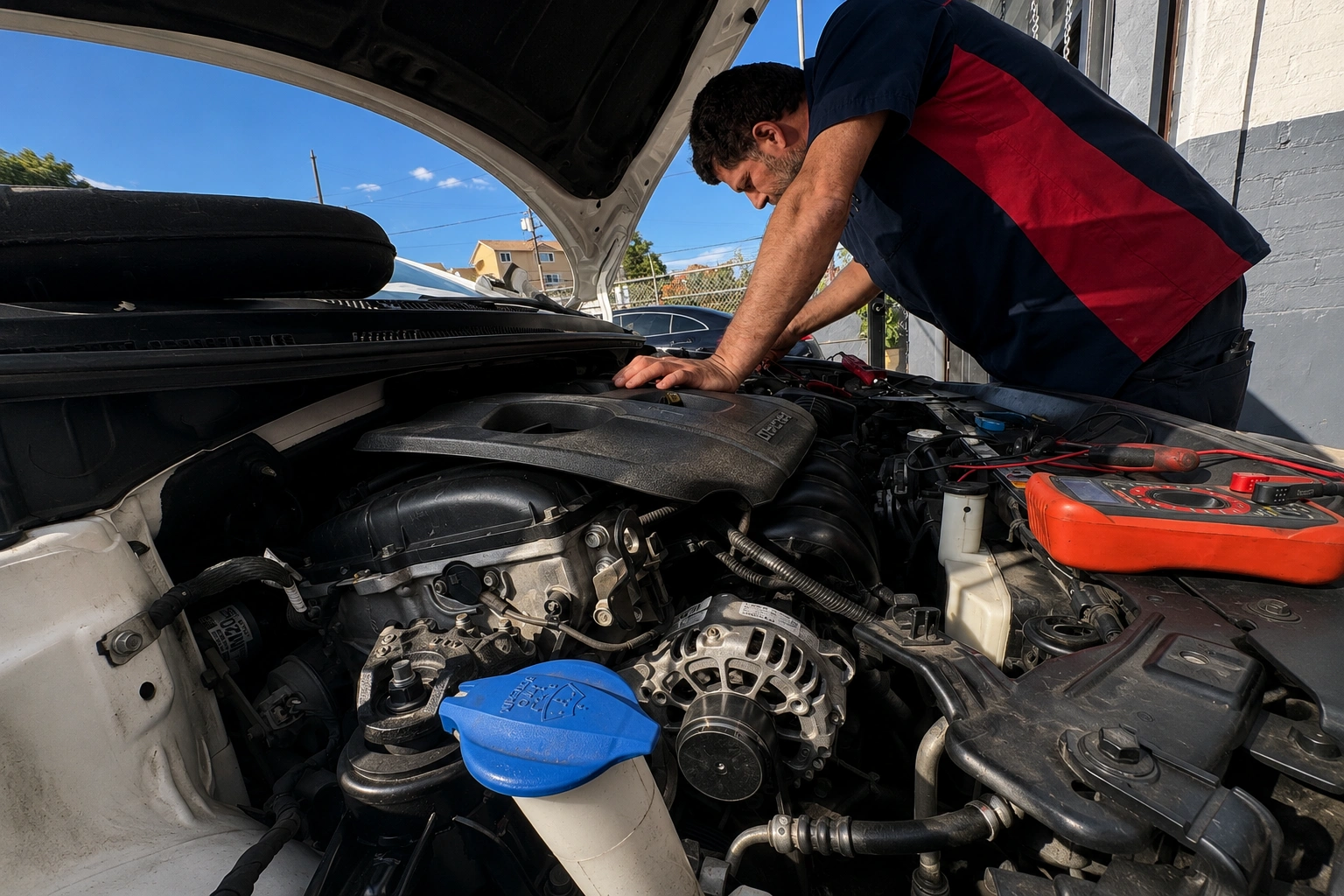
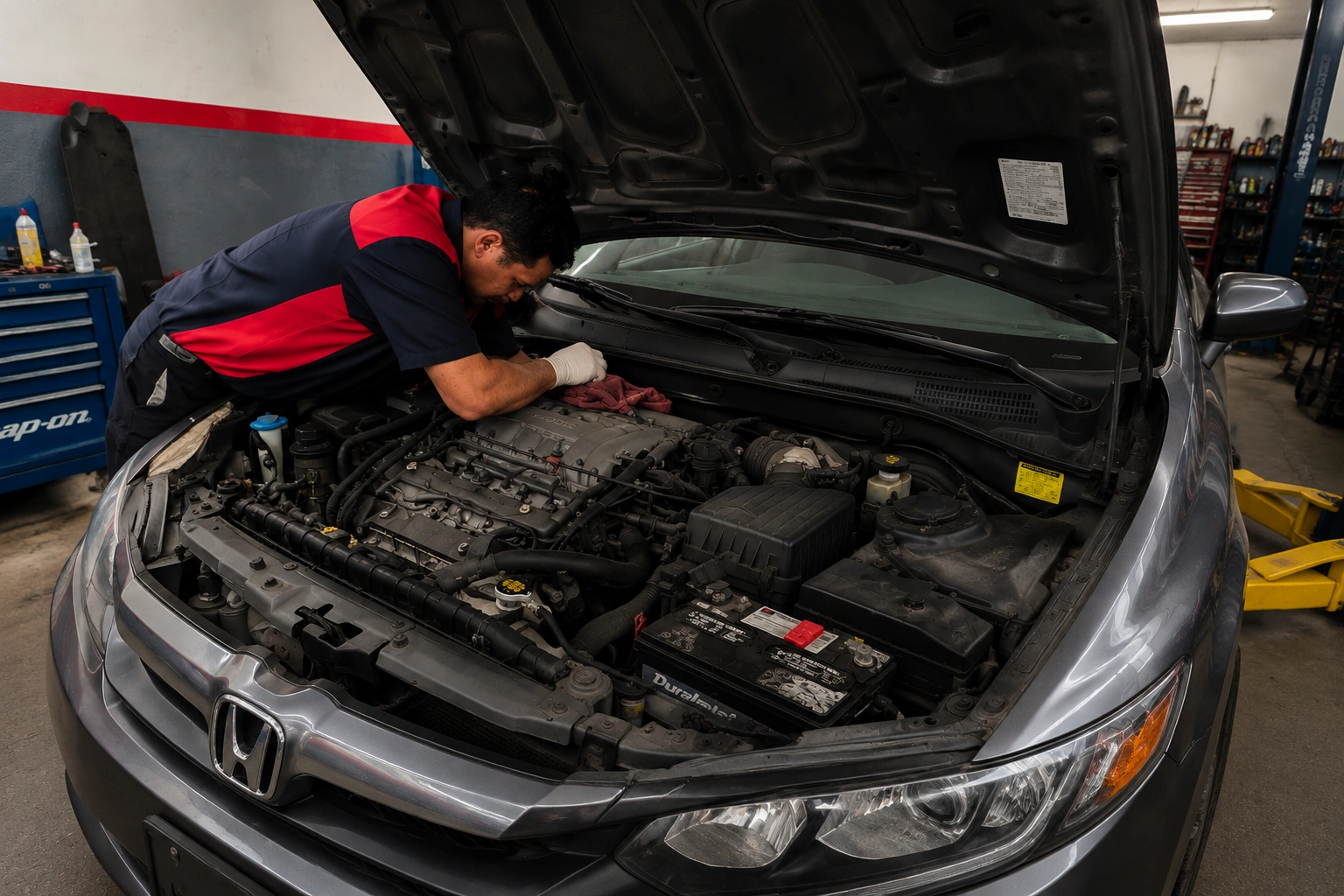
When a BMW is leaking coolant or running warm, the team can inspect the cooling system—water pump, expansion tank, thermostat housing, hoses, and radiator—to confirm the source before recommending a repair, and explain the findings in plain language. It's handled as part of the shop's engine and cooling-system service, with the work matched to what the inspection actually finds. For deep BMW-specific electronics, the team will tell you honestly when a specialist is the better fit.
Repair scope, timing, and cost are confirmed after the vehicle is reviewed, and the recommended work is shared with you before anything is approved. Timing may vary depending on parts availability, shop workload, and the complexity of the issue, so calling first—especially if the car is running hot—is a good first step.
Steps to get service from Speedway Tire & Service
- Call the shop at (213) 250-4254 or review the services page for what's offered.
- Describe the coolant loss, the temperature gauge behavior, and any drips or smells.
- Confirm whether it's safe to drive in, and the right inspection.
- Bring the BMW in so the cooling system can be traced.
- Review the recommended work and estimate before approving it.
- Complete the repair and follow any after-service advice.
Frequently Asked Questions about BMW coolant leaks
What are the most common BMW coolant leak causes?
On many BMWs, coolant leaks trace to the electric water pump, a cracked plastic expansion tank, or a leaking thermostat housing, with hoses and the radiator as other possibilities. These plastic and composite parts become brittle with age and heat, so they crack or seep over time. Because they produce the same symptoms—low coolant or a warm-running engine—an inspection is the reliable way to confirm which part is leaking before replacing anything.
Why does my BMW keep losing coolant with no obvious puddle?
Coolant can escape as vapor or seep slowly onto hot parts where it burns off, leaving little or no puddle, which is common with a small expansion tank crack or a weeping thermostat housing. You may notice a sweet smell, occasional steam, or crusty residue near the leak instead. A pressure test helps the shop find a slow or hidden leak, so it's worth having the cooling system inspected rather than simply topping off coolant repeatedly.
Is it safe to drive my BMW with a coolant leak?
It depends on the temperature gauge. If coolant is low but the gauge reads normal, short, careful driving to a shop may be reasonable while you keep an eye on it. But if the gauge climbs toward hot, you see steam, or the low-coolant warning is on, stop driving, let the engine cool, and have it checked, because overheating can cause serious engine damage. When unsure, call first and describe the symptoms.
Does LA heat really make BMW cooling problems worse?
It contributes. LA heat raises under-hood temperatures and speeds up the aging of the plastic cooling components BMWs use, so an expansion tank or thermostat housing may crack sooner than in a cooler climate. Stop-and-go traffic and the hills around Silver Lake and Echo Park add heat and load at low speeds, when airflow through the radiator is limited. These conditions don't cause a defect, but they often surface a developing coolant leak earlier.
Can I just add coolant instead of repairing the leak?
Topping off coolant is a short-term stopgap, not a fix. The leak will continue, the level will keep dropping, and you risk running low enough to overheat—which can damage the engine. It also masks which part is failing. The better approach is to have the source traced and repaired, then refill with the correct coolant. If you must add coolant to reach a shop, do it only when the engine is cool and monitor the gauge closely.
Do I need a BMW dealer, or can a local shop fix a coolant leak?
Common cooling repairs—water pump, expansion tank, thermostat housing, and hoses—are routine work a qualified local shop can handle with the correct parts and coolant, often more conveniently than a dealer. Deep BMW-specific electronics or drivetrain work may be better suited to a marque specialist or dealer. A trustworthy shop will diagnose the cooling issue, handle what's in scope, and tell you honestly if something belongs with a specialist.
Call Speedway Tire & Service Today
If your BMW has a coolant leak or is running warm in LA traffic, the reliable next step is tracing the source before it becomes an overheating problem. For drivers in Echo Park, Silver Lake, Downtown LA, or nearby neighborhoods, call Speedway Tire & Service at (213) 250-4254, or contact the shop to describe the symptoms and next steps. And if the temperature gauge is running hot, let the engine cool and call before driving. Catching a coolant leak early protects your engine and your wallet.
Looking for an honest Auto Repair Shop in Los Angeles? Call Speedway Tire and Service Today
Whether you’re driving through LA traffic or cruising the freeways, your car deserves expert care. Located in Los Angeles, Speedway Tire and Service offers reliable oil changes, brake repairs, tire services, and more—all backed by experienced technicians and honest pricing.