White Smoke From the Exhaust - Condensation, Coolant Leak, or Head Gasket?
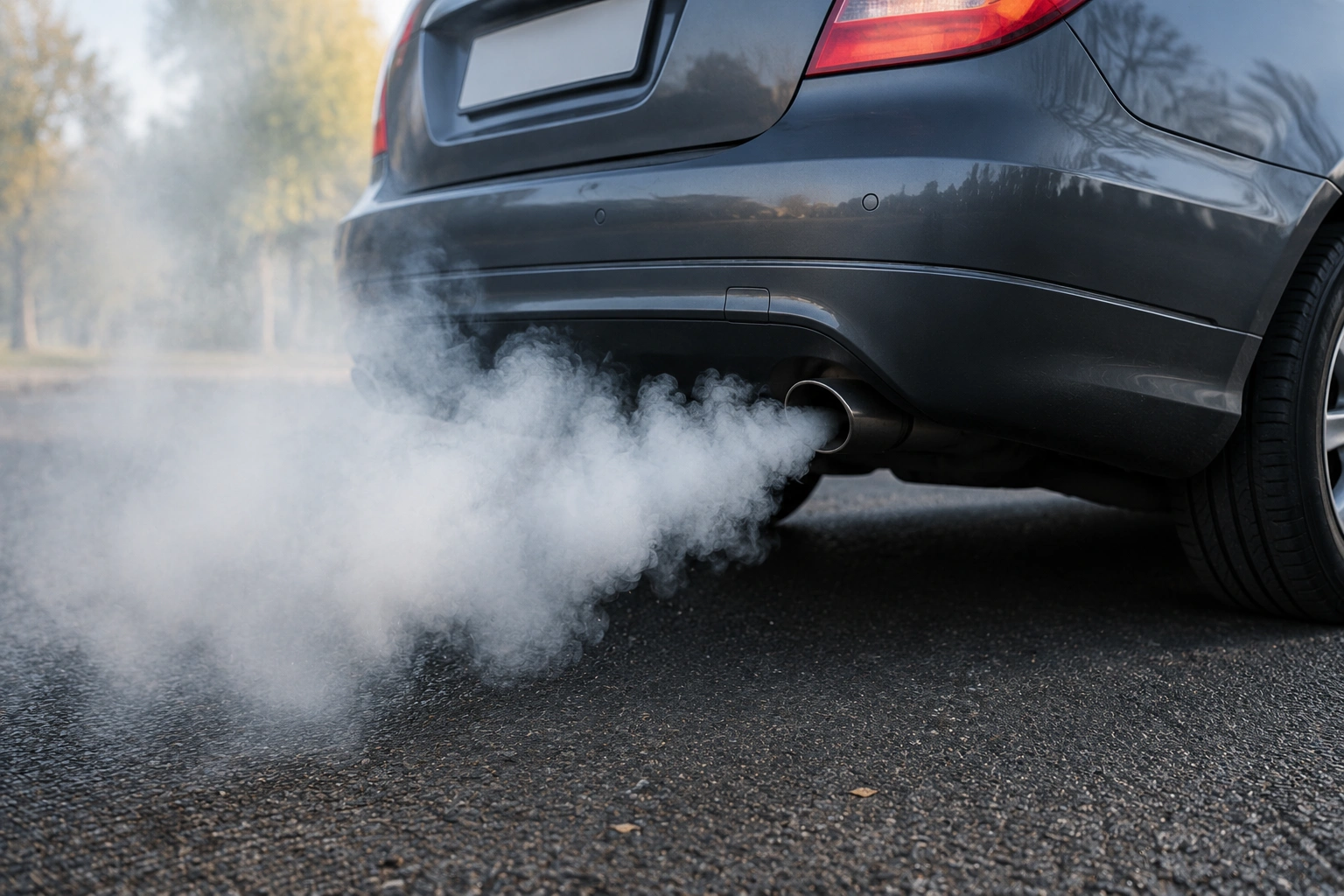
Seeing white smoke from exhaust can be alarming, but the appearance, thickness, smell, and duration of the smoke matter. A thin cloud that appears during a cold start and fades as the exhaust warms is often water vapor from normal condensation. Thick white smoke that continues after warm-up, smells sweet, or appears alongside coolant loss and overheating may indicate that coolant is entering the combustion chamber.
The smoke color alone cannot identify the failed part. A head gasket, cylinder-head or engine-block crack, intake-manifold sealing problem, or another cooling-system fault can produce similar symptoms. If the smoke persists or the engine is running poorly, stop treating it as a harmless startup effect and arrange a professional inspection. Los Angeles drivers can use the timing and related symptoms to decide how urgently the vehicle should be checked.
What does white smoke from a car exhaust mean?
Thin white vapor during a cold start is commonly caused by moisture that has condensed inside the exhaust system. It should gradually become less noticeable as the engine and exhaust reach operating temperature. Persistent, dense white smoke may mean that coolant is being burned in the engine, especially when it has a sweet odor or is accompanied by a dropping coolant level, overheating, rough running, or a misfire.
A continuous stream after warm-up is more concerning than a brief startup cloud. However, the same visual symptom can have different causes depending on the engine, weather, fuel type, and vehicle design. Firestone’s exhaust-color guidance similarly distinguishes light white startup vapor from thick white smoke that may indicate coolant entering the combustion chamber because of a head-gasket or related engine-sealing problem.
Normal condensation versus a possible engine problem
Water vapor is a normal byproduct of combustion. When the exhaust system is cold, moisture can condense inside the pipes and muffler. As the system heats up, that moisture exits as visible vapor. Cool temperatures, overnight parking, humidity, and short trips can make the vapor more noticeable.
The pattern becomes more concerning when the smoke is thick, continues after the engine is fully warm, returns repeatedly under normal operating conditions, or is paired with other symptoms. Use the following comparison as a screening guide rather than a diagnosis.
|
What you observe |
More likely explanation |
Recommended response |
|
Thin white vapor only during cold start that fades as the exhaust warms |
Normal condensation and water vapor |
Monitor it, provided there are no warning signs or drivability problems. |
|
Thick white smoke that continues after warm-up |
Possible coolant entering the combustion chamber or another engine-sealing problem |
Avoid unnecessary driving and arrange an engine inspection. |
|
White smoke with a sweet smell, falling coolant level, or overheating |
Possible coolant leak or internal coolant intrusion |
Stop when safe; do not continue driving an overheating vehicle. |
|
White smoke with rough running, misfire, or a flashing check-engine light |
Possible coolant-related misfire or another serious engine fault |
Turn off the engine when safe and arrange towing or professional assistance. |
|
Smoke from under the hood rather than the tailpipe |
Coolant or oil contacting hot engine components, or another under-hood issue |
Stop safely, keep away from hot components, and request an inspection. |
Common causes of persistent white exhaust smoke
1. Coolant entering the combustion chamber
Thick white exhaust can occur when engine coolant reaches a cylinder and is vaporized during combustion. Coolant may enter through a failed head gasket, a cracked cylinder head, a cracked engine block, or a damaged intake-manifold gasket on engines where the manifold seals coolant passages.
The engine may consume coolant without leaving an obvious puddle. Other clues can include a sweet smell at the tailpipe, repeated coolant loss, a misfire during startup, rough idle, poor performance, bubbles or pressure in the cooling system, or overheating. These signs can overlap with other problems, so they should be confirmed with testing rather than used to declare a head gasket failure.
2. Blown or failing head gasket
The head gasket seals the joint between the engine block and cylinder head. It helps keep combustion pressure, engine oil, and coolant in their proper passages. If the gasket fails, combustion gases may enter the cooling system, coolant may enter a cylinder, or oil and coolant may mix.
Possible head-gasket symptoms include persistent white exhaust smoke, unexplained coolant loss, engine overheating, a misfire, reduced power, bubbling in the coolant reservoir, or oil that appears unusually creamy or milky. No single symptom proves the gasket has failed. For example, contaminated-looking oil can have more than one cause, and not every head-gasket failure sends coolant through the exhaust.
Driving with a serious coolant or head-gasket problem can worsen overheating and may damage other engine components. If the temperature gauge rises or a warning light appears, stop as soon as conditions allow and do not open a hot radiator cap or coolant reservoir.
3. Cracked cylinder head or engine block
A crack in the cylinder head or engine block can create a path for coolant to enter a cylinder or mix with engine oil. Cracks may follow severe overheating, freezing damage, corrosion, or a pre-existing casting problem. Because the repair can be extensive, a shop should verify the source with appropriate tests before recommending replacement or major engine work.
4. Intake-manifold gasket or related sealing fault
On some engines, the intake manifold seals coolant passages. A failed gasket or damaged manifold can allow coolant to reach the intake or combustion chamber and may create white exhaust, rough running, or coolant loss. This cause is vehicle-specific and should be evaluated according to the engine’s design.
5. A condition that only looks like white smoke
Steam from a hot exhaust, smoke from an under-hood fluid leak, dust, or smoke from a nearby vehicle can be mistaken for white tailpipe smoke. The location matters: exhaust smoke exits from the tailpipe, while coolant or oil contacting a hot engine may produce vapor from under the hood. Blue-gray smoke more often points toward oil consumption, and black smoke can indicate an overly rich fuel mixture, but color is only an initial clue.
Why does white smoke appear on startup?
A small amount of white vapor on startup is often normal because moisture accumulates in a cold exhaust system. It may be more visible on cool mornings or after the vehicle sits overnight. The important question is whether the vapor fades as the exhaust warms and whether the engine behaves normally.
Do not use a fixed number of minutes as the only test. Warm-up time varies with outside temperature, engine size, exhaust design, driving conditions, and whether the vehicle is idling or moving. If the cloud remains dense after normal driving or appears every time the engine is warm, have it checked.
Safe checks you can make before calling a shop
Observe the smoke from a safe distance and note whether it comes from the tailpipe or under the hood. Record when it occurs, how long it lasts, whether it changes with acceleration, and whether the engine is misfiring or losing power. Check the coolant level only when the engine is completely cool and according to the owner’s manual. Do not remove a radiator cap or coolant-reservoir cap from a hot, pressurized system.
Look for warning lights, a rising temperature gauge, visible coolant leaks, or a strong sweet odor. Do not place your face near the exhaust, touch unknown fluids, or run the engine in an enclosed garage. If the smoke is heavy, the engine is overheating, the check-engine light is flashing, or the car is running badly, turn it off when safe and arrange professional assistance rather than continuing to test it on the road.
How a technician diagnoses white exhaust smoke
A professional diagnosis should begin by confirming the symptom and checking the vehicle’s service history, coolant level, oil condition, engine temperature, and fault codes. Depending on the findings, the technician may perform a cooling-system pressure test, inspect for external leaks, test the coolant for combustion gases, compare cylinder compression, perform a cylinder leak-down test, inspect the spark plugs, and check whether coolant is entering a cylinder.
These tests answer different questions. A cooling-system pressure test looks for pressure loss and external or internal leakage. A combustion-gas or block test looks for exhaust gases entering the cooling system. Compression and leak-down tests help evaluate cylinder sealing, but results must be interpreted with the engine design and other evidence. A scan tool can identify misfire or temperature-related codes, but a code alone does not prove a head-gasket failure.
The correct test sequence varies by make, model, engine, and symptoms. A qualified technician should explain the findings and distinguish confirmed damage from possible causes before major repairs are authorized.
Can you drive a car that is producing white smoke?
If the smoke is only a light startup vapor that fades and the vehicle has no warning signs, normal driving may be reasonable. If white smoke from exhaust continues after warm-up, smells sweet, or accompanies coolant loss, overheating, rough running, or warning lights, avoid driving until the cause is evaluated.
Continuing to drive an overheating vehicle can turn a smaller cooling-system or sealing problem into more serious engine damage. If the temperature gauge enters the hot zone, steam is visible, the engine loses power, or a warning light flashes, stop in a safe location, switch off the engine, and arrange towing or roadside assistance.
When to visit an auto repair shop in Los Angeles
Schedule an inspection if white exhaust smoke returns repeatedly, lasts beyond warm-up, or appears together with a sweet smell, coolant loss, rough idle, reduced power, or an unexplained misfire. Ask the technician to check both the cooling system and engine sealing rather than replacing parts based only on the smoke color.
For Los Angeles drivers, contact Speedway Tire & Service to discuss the symptoms and ask about current engine diagnostic availability. The shop’s auto repair services page provides additional information about engine and vehicle service. Verify the shop’s current capabilities and appointment requirements before bringing in a vehicle that may be overheating or unsafe to drive.
Preventive maintenance that may reduce engine-cooling problems
Follow the vehicle manufacturer’s schedule for coolant inspection and replacement, use the specified coolant type, and address overheating promptly. Do not ignore a low-coolant warning, recurring coolant loss, a temperature-gauge change, or a check-engine light. Keep records of cooling-system repairs and mention any recent overheating event to the technician.
Preventive maintenance cannot guarantee that a head gasket, cylinder head, or engine block will never fail. It can, however, help identify cooling-system problems before prolonged overheating creates additional damage.
Frequently asked questions
Is white smoke from exhaust normal on startup?
Thin white vapor that appears when the exhaust is cold and fades as the system warms is often normal condensation. Persistent or thick smoke after warm-up is more concerning, especially when it has a sweet smell or occurs with coolant loss, overheating, or rough running.
Does white smoke always mean a blown head gasket?
No. White exhaust can be normal condensation, or it may result from coolant entering the combustion chamber through a head gasket, cylinder head, engine block, intake-manifold gasket, or another sealing fault. Testing is needed to identify the cause.
What does white smoke with a sweet smell mean?
A sweet smell may indicate that coolant is being burned in the engine, but smell alone is not conclusive. Check for related signs such as falling coolant level, overheating, misfire, or milky oil, and arrange an inspection rather than continuing to drive if the smoke persists.
Can low coolant cause white smoke from the tailpipe?
Low coolant by itself does not automatically create tailpipe smoke. It may indicate an external leak or an internal leak that allows coolant into the combustion chamber. If the level keeps dropping or the engine overheats, the cooling system should be diagnosed promptly.
Can I drive if the smoke disappears after a few minutes?
If the smoke is a thin startup vapor that fades as the engine warms and there are no other symptoms, it may be normal. If the smoke is dense, returns after the engine is warm, or is accompanied by coolant loss, rough running, a warning light, or overheating, do not rely on temporary improvement; have the vehicle inspected.
What tests confirm a head-gasket problem?
No single test is correct for every vehicle. A technician may combine a cooling-system pressure test, combustion-gas test, compression test, leak-down test, coolant and oil inspection, spark-plug inspection, and scan-tool data. The results should be interpreted together with the vehicle’s symptoms and specifications.
Conclusion
White smoke from exhaust can be harmless water vapor during a cold start, but thick smoke that continues after warm-up may indicate coolant entering the combustion chamber. A failing head gasket is one possibility, along with a cracked cylinder head or engine block, an intake-manifold sealing problem, or another cooling-system fault.
Pay attention to duration, thickness, odor, coolant level, engine temperature, and drivability. If the smoke persists or the engine is overheating, stop driving when safe and arrange a professional diagnosis. Early testing can help identify the source and prevent a cooling-system problem from becoming more severe engine damage.
Looking for an honest Auto Repair Shop in Los Angeles? Call Speedway Tire and Service Today
Whether you’re driving through LA traffic or cruising the freeways, your car deserves expert care. Located in Los Angeles, Speedway Tire and Service offers reliable oil changes, brake repairs, tire services, and more—all backed by experienced technicians and honest pricing.