Radiator vs. Coolant Leak: How to Spot the Difference (And When to Stop Driving)
A wet spot under your car can be annoying… until it becomes a coolant loss problem that triggers overheating in traffic.
In Los Angeles, that risk is higher than most drivers think—because long idle time, steep streets, and stop-and-go heat can push a “small drip” into a “steam-from-the-hood” situation fast.
This guide explains radiator vs coolant leak symptoms, how to tell what you’re seeing, and the exact moments you should stop driving to avoid engine damage.
Quick Answer (Fast Checklist)
Radiator leak is more likely when:
-
You see wetness at the radiator seams/tanks (front of the car)
-
Leaks get worse after driving and cooling down
-
The puddle appears more toward the front center of the vehicle
General coolant leak is more likely when:
-
Leak is near hose connections, thermostat housing, or water pump area
-
You smell sweet coolant after shutting off the engine
-
The puddle location changes depending on where the coolant is dripping from
Stop driving immediately if:
-
Temperature gauge rises above normal or enters the red zone
-
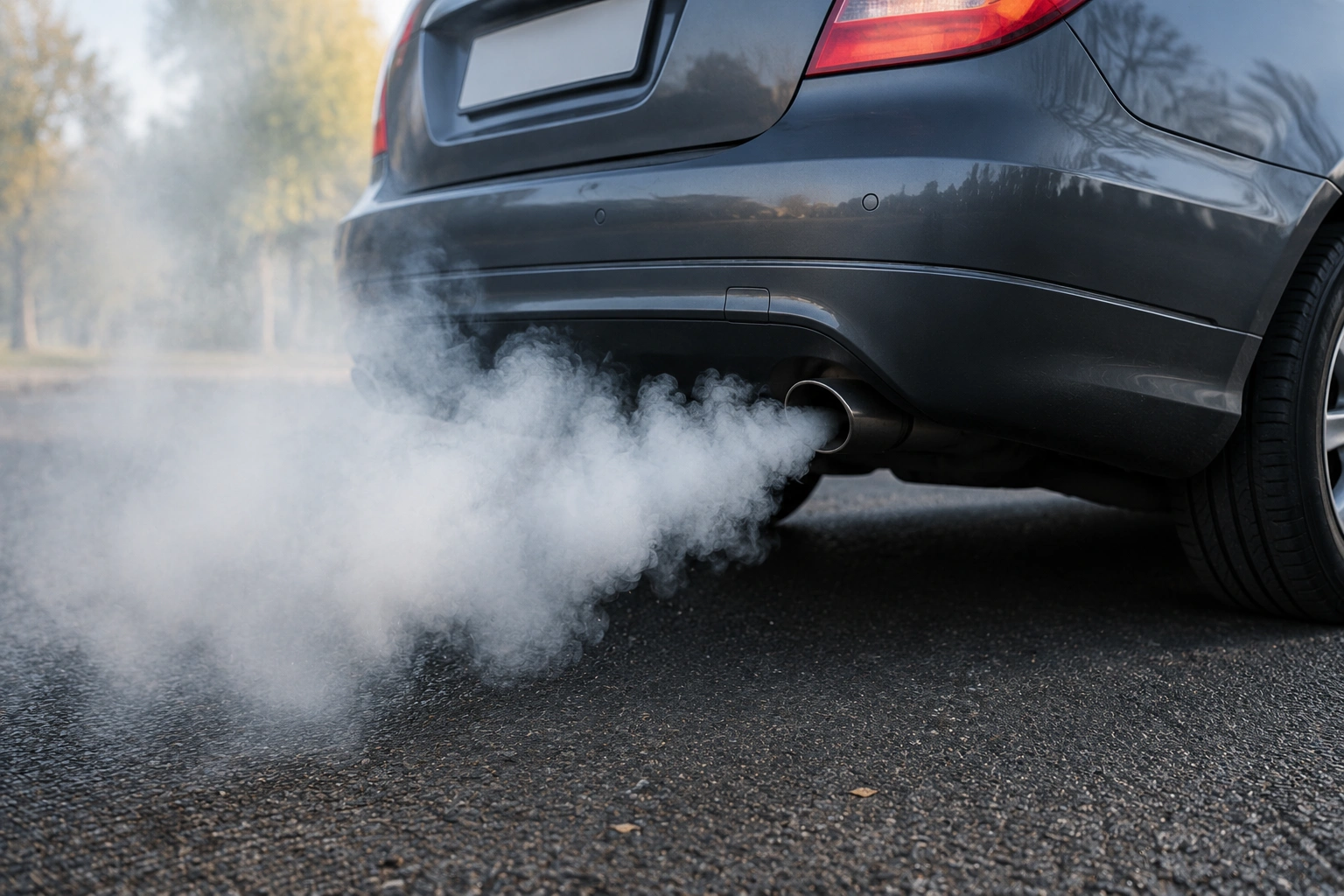
Steam is coming from the hood
-
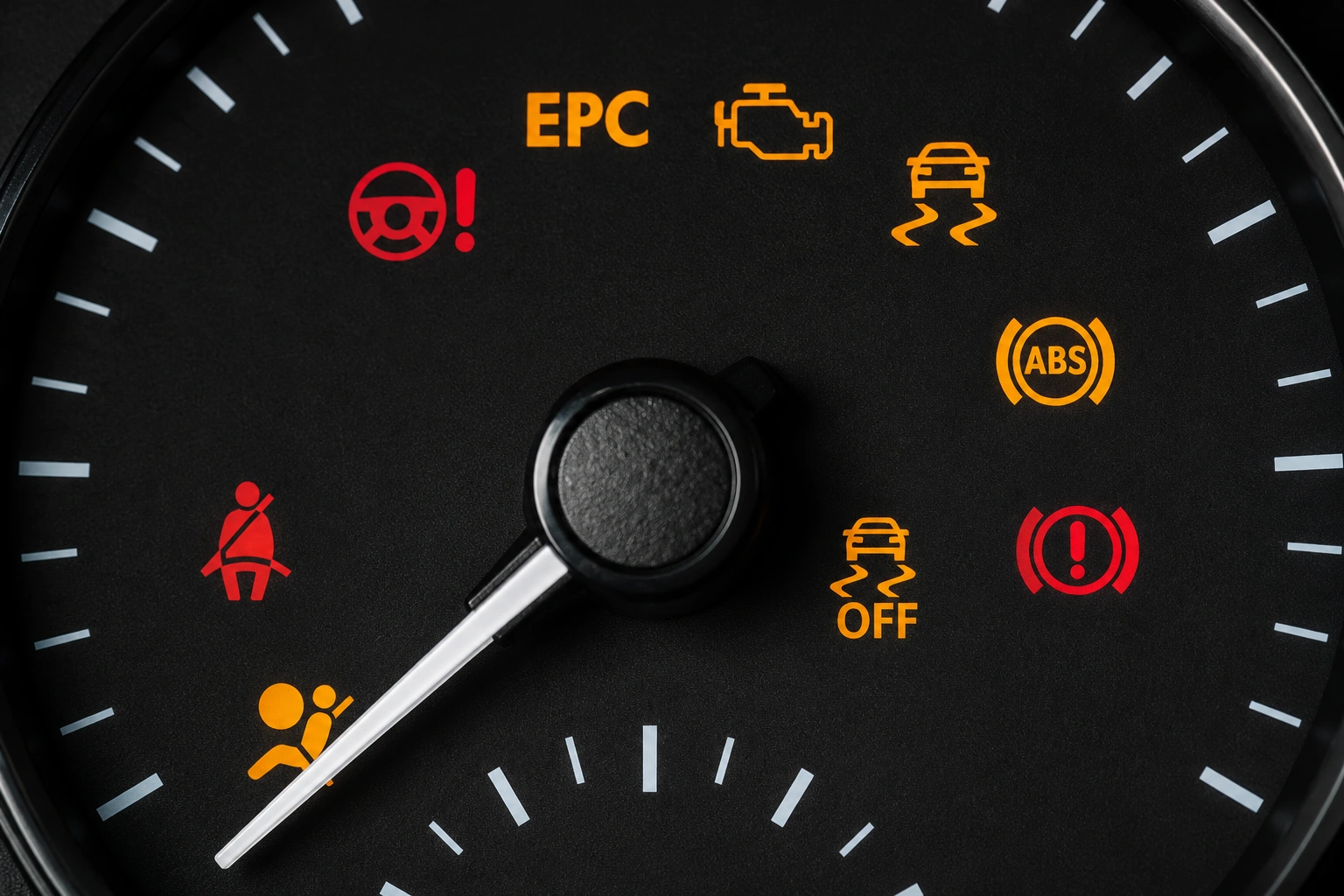
“Engine temperature” warning light appears
-
Heater blows cold air while the engine is hot (can indicate low coolant)
First: What coolant looks (and smells) like
Coolant typically has:
-
A sweet smell
-
A color like green, orange, pink, yellow, or blue (depends on vehicle/coolant type)
-
A watery feel but slightly slick
Important: Don’t rely on color alone. Dirt + road dust can make coolant look darker or muddy on pavement.
Radiator leak vs. coolant leak: what’s the real difference?
A radiator leak is a type of coolant leak—but it comes from a specific component: the radiator (usually at the front of the vehicle behind the grille).
A coolant leak can come from several places:
-
Radiator
-
Upper/lower radiator hoses
-
Heater hoses
-
Thermostat housing
-
Water pump
-
Reservoir/overflow tank
-
Heater core (inside the cabin)
-
Freeze plugs (less common)
So the key is identifying where the coolant is escaping.
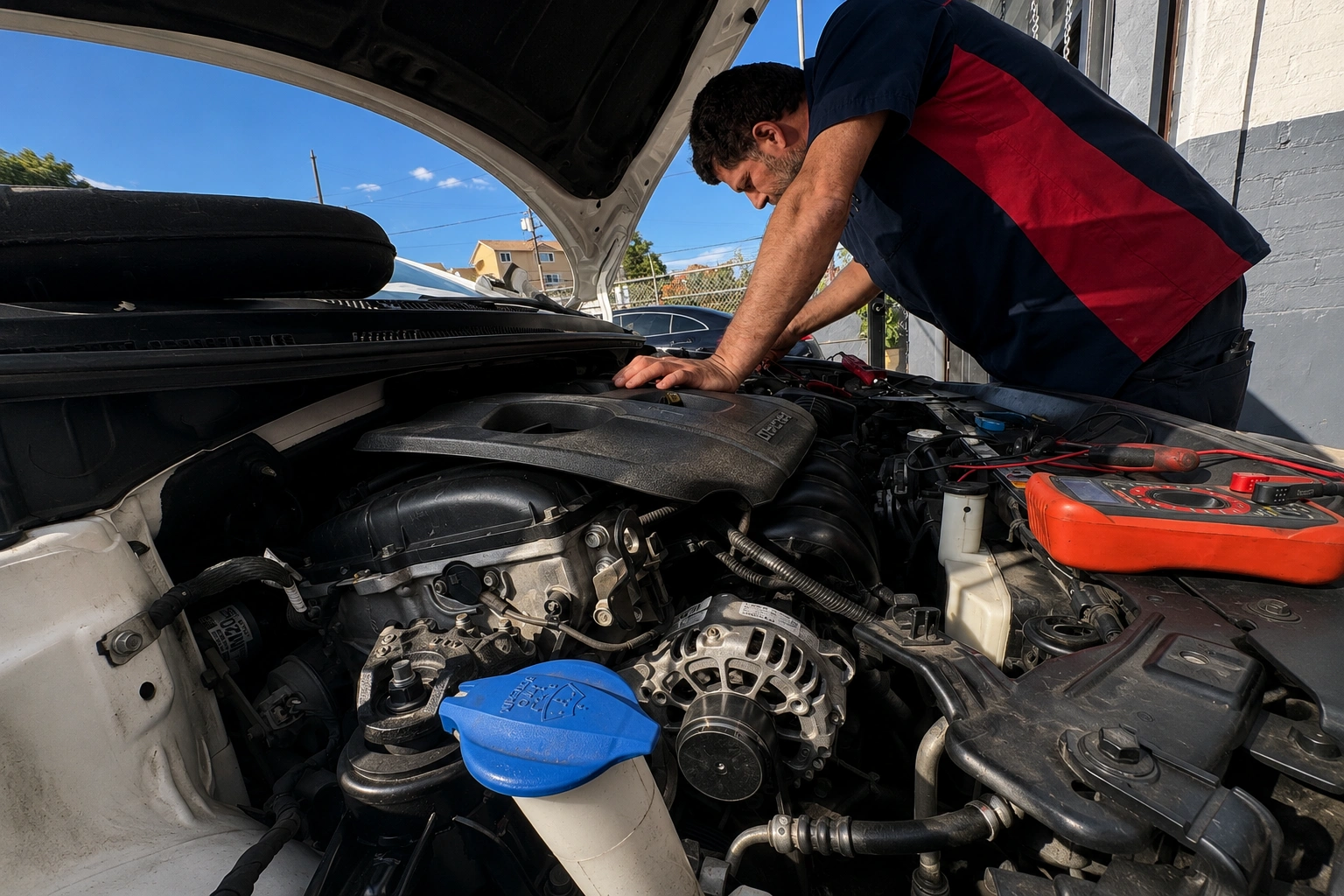
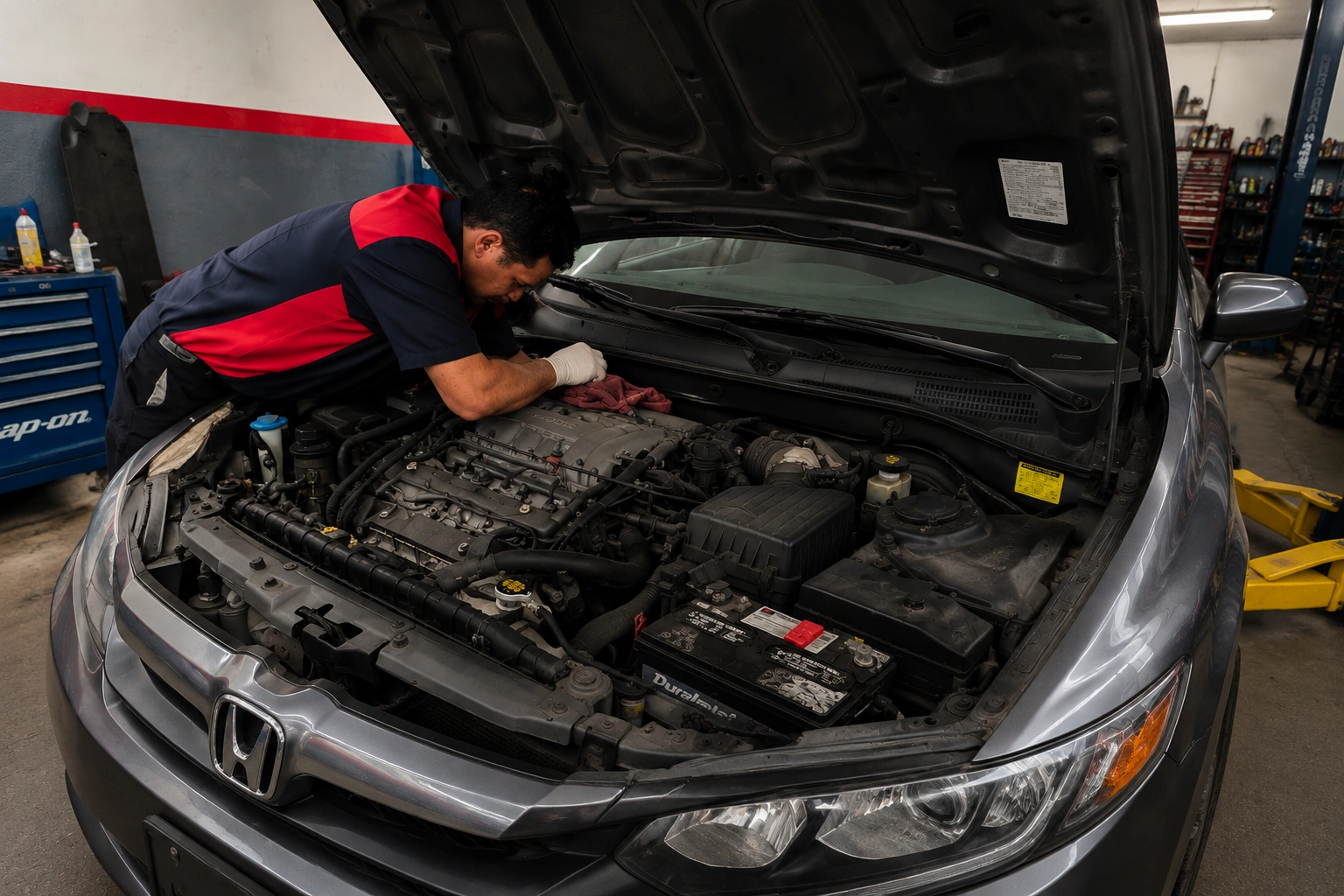
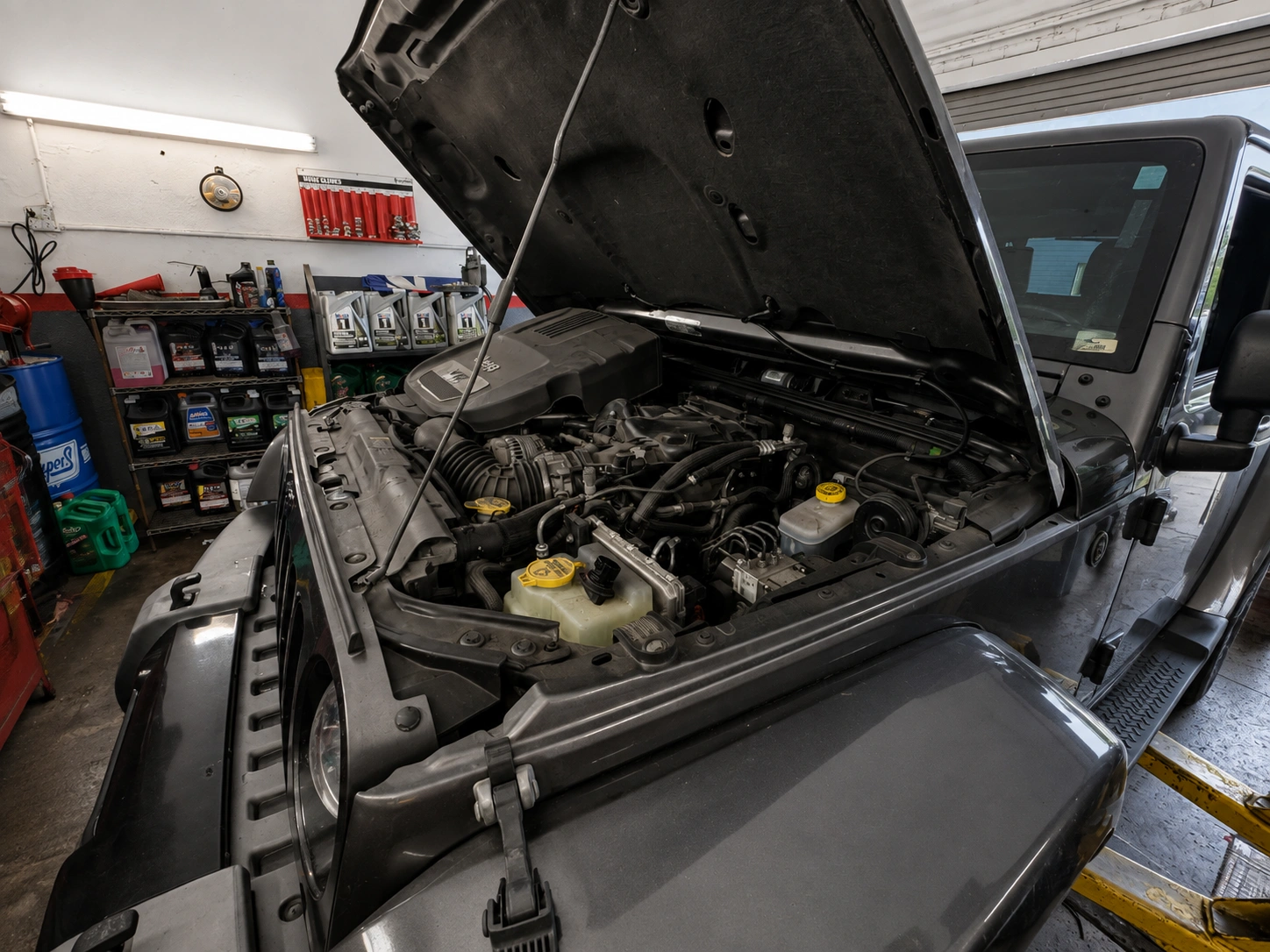
If you want a mechanic to pinpoint it quickly with proper testing, start with a full inspection through our complete auto repair services or go straight to engine diagnostics when overheating or warning lights are involved.
7 practical ways to tell a radiator leak from other coolant leaks
1) Where is the puddle forming?
Use the car’s front-to-back layout as your first clue.
-
Front center (near grille/radiator area): often radiator, radiator cap/neck, or lower hose
-
Front driver/passenger side: could be hoses, thermostat housing, water pump area
-
Near the firewall (middle-ish, closer to cabin): heater hoses or heater core lines
-
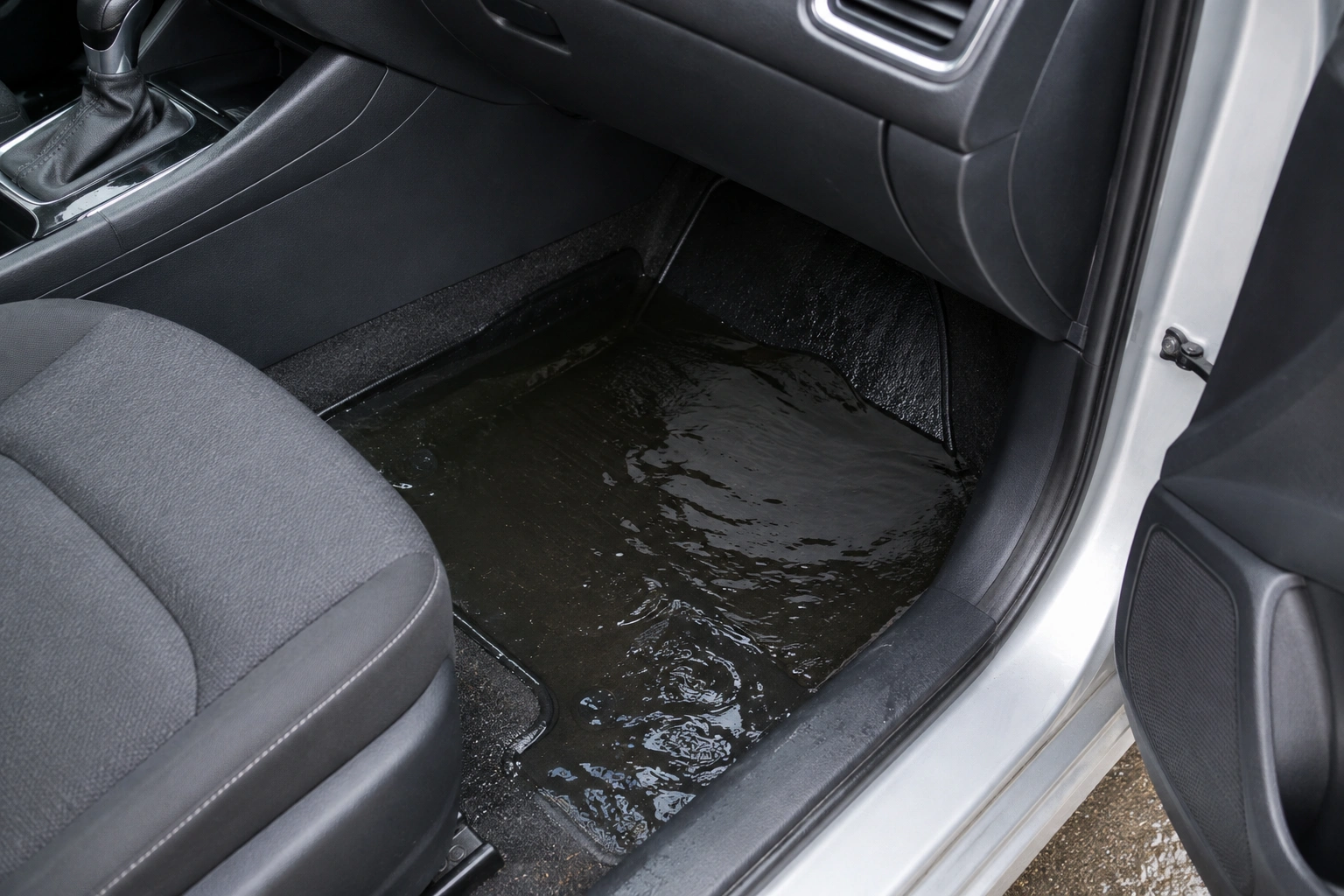
Inside the cabin (passenger floor damp): strong heater core leak clue
Tip: Put a piece of cardboard under the car overnight to locate the drip point more accurately.
2) Look for wet radiator seams or crusty “white/green residue”
Radiators commonly leak at:
-
The plastic end tanks (where plastic meets metal core)
-
Seams/crimps
-
Corners
-
The drain plug area
If you see crusty residue on the radiator edges, that’s often dried coolant—classic radiator leak evidence.
3) Check hose connections and clamps (simple but revealing)
Non-radiator coolant leaks often come from:
-
Hose ends at fittings
-
Loose clamps
-
Small cracks in hoses
Feel hoses only when the engine is cool. A hose that feels swollen, soft, or cracked near the ends is a red flag.
4) Watch the leak pattern: “only after driving” vs “all the time”
-
Leaks after driving and during cooldown: common for radiator seams and pressure-related leaks
-
Constant drips regardless of temperature: can be a cracked reservoir, loose hose, or a persistent pump/connection leak
Radiator leaks often worsen under heat/pressure and show up right after you park.
5) Listen for fan behavior and watch the temperature gauge in traffic
This isn’t “leak location” proof—but it helps identify risk level.
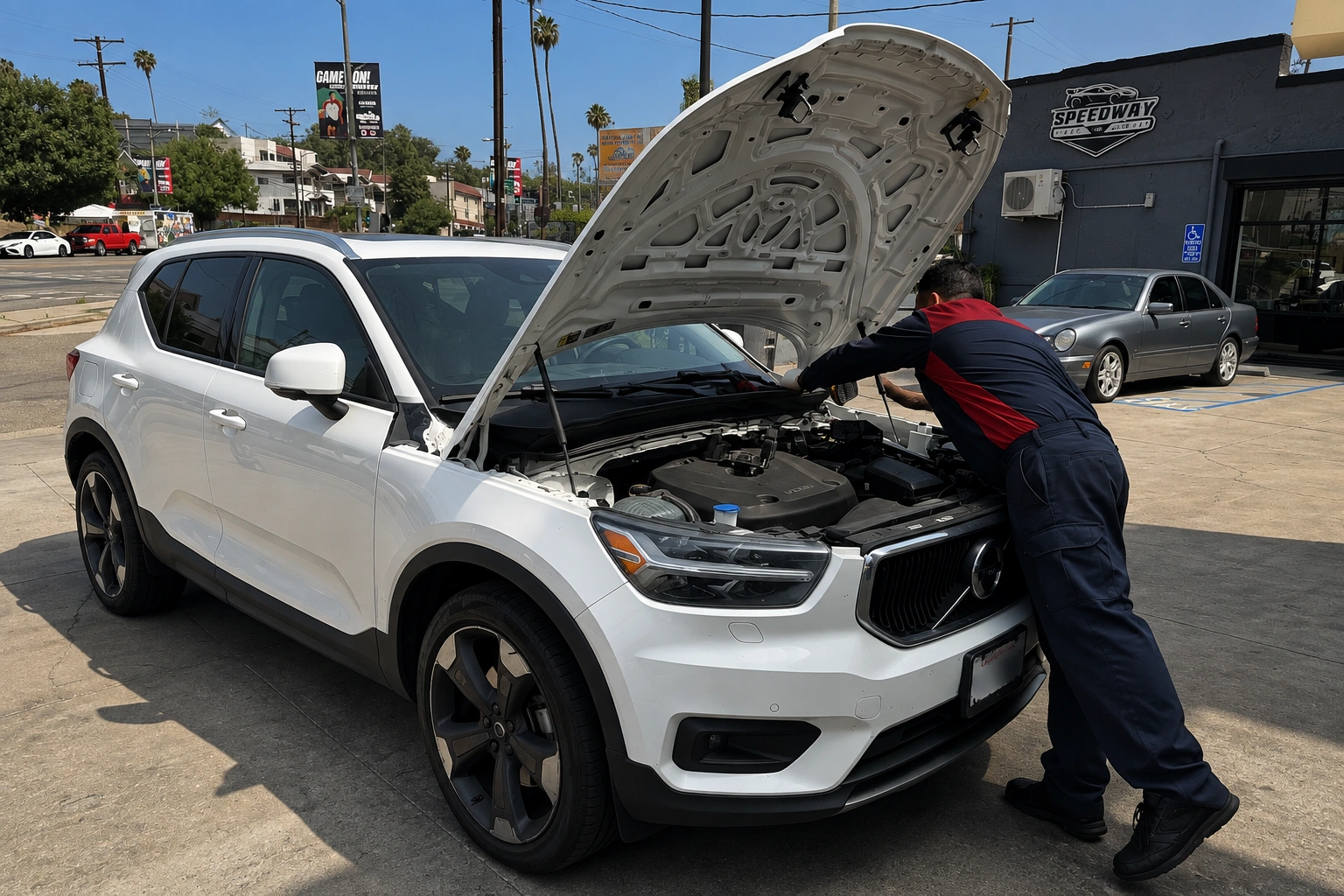
If the car runs hot mainly at idle or slow speeds, you might also have cooling fan issues. A small coolant leak + weak fan can escalate quickly in LA traffic.
If your temp gauge rises beyond normal, treat it as urgent and schedule an inspection via the contact page.
6) Check for coolant smell in the cabin or foggy windows
A heater core leak can mimic “mystery coolant loss.”
Signs include:
-
Sweet smell inside the car
-
Foggy windshield when heater is on
-
Damp passenger floor area
This usually isn’t a radiator problem—it’s a coolant leak in the heater circuit.
7) Don’t ignore the reservoir level trend
Even if you don’t see a puddle:
-
Falling reservoir level = coolant is leaving the system somewhere
-
Some leaks burn off on hot surfaces and evaporate
-
A pressure test is the fastest way to reveal the source
If you’re already thinking about coolant health and prevention, this internal guide on why a coolant flush matters before hot LA weather is a good companion read (and it helps build topical authority for your site).
When to stop driving (no exceptions)
Stop and shut off the engine if you notice any of the following:
-
Temperature gauge climbing above normal rapidly
-
Gauge entering the red zone
-
Steam from hood
-
Coolant visibly pouring out (not a slow drip)
-
Warning message/light for engine temperature
-
Heater suddenly blowing cold air while engine is hot
-
You hear knocking or pinging (engine stress)
Driving even a few minutes while overheating can risk head gasket damage, warped components, and major repair bills.
“Can I drive it to the shop if it’s leaking coolant?”
Sometimes—but only under safe conditions.
You may be able to drive a short distance if:
-
Temperature stays normal
-
Leak is very slow
-
Reservoir is topped to the correct level (engine cold)
-
You avoid traffic and hills as much as possible
You should not attempt to drive if:
-
The gauge rises above normal
-
You see steam
-
Coolant is dumping quickly
-
You’ve already overheated once during this trip
If you’re unsure, it’s smarter (and often cheaper) to arrange help rather than risking engine damage—use contact Speedway Tire & Service to get guidance quickly.
What NOT to do (common mistakes that make it worse)
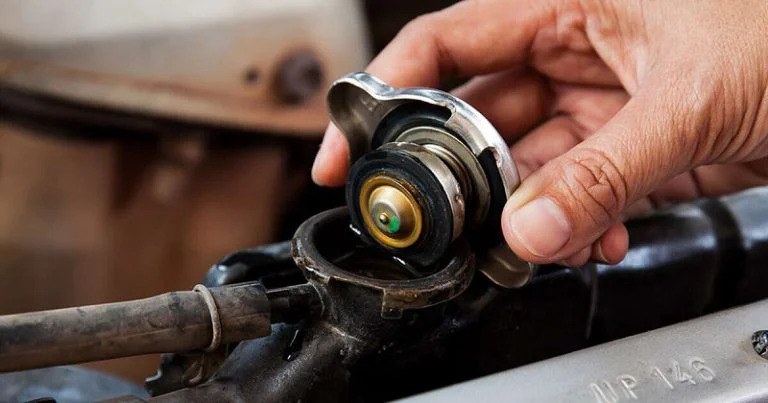
Don’t open the radiator cap when hot
Hot coolant is pressurized and can cause serious burns.
Don’t use stop-leak as a “solution”
Stop-leak can clog small passages (radiator/heater core), turning a small leak into a bigger cooling-system problem.
Don’t mix random coolant types
Different coolants can react poorly together. If you’re topping off, use the correct type recommended for your vehicle whenever possible.
The most common causes we see around Echo Park / Silver Lake
For LA-area driving, these are frequent offenders:
-
Aging radiator seams and end tanks
-
Weak radiator caps (pressure loss)
-
Heat-cycled hoses and clamps
-
Water pump seepage after high-mile city driving
-
Reservoir cracks from repeated heat exposure
And if a coolant leak has already caused overheating, it’s wise to pair the inspection with engine diagnostics so you’re not guessing.
Final takeaway
A radiator vs coolant leak diagnosis comes down to two things: where the coolant is escaping and how quickly the system is losing pressure/volume. The sooner you identify it, the easier (and cheaper) it is to fix—especially before LA traffic turns it into an overheating event.
If you want a fast, accurate answer, book a cooling-system inspection through our auto repair services and we’ll pinpoint the source the right way.
Looking for an honest Auto Repair Shop in Los Angeles? Call Speedway Tire and Service Today
Whether you’re driving through LA traffic or cruising the freeways, your car deserves expert care. Located in Los Angeles, Speedway Tire and Service offers reliable oil changes, brake repairs, tire services, and more—all backed by experienced technicians and honest pricing.