Water on the Passenger Floor? AC Drain, Heater Core, Sunroof, or Windshield Leak
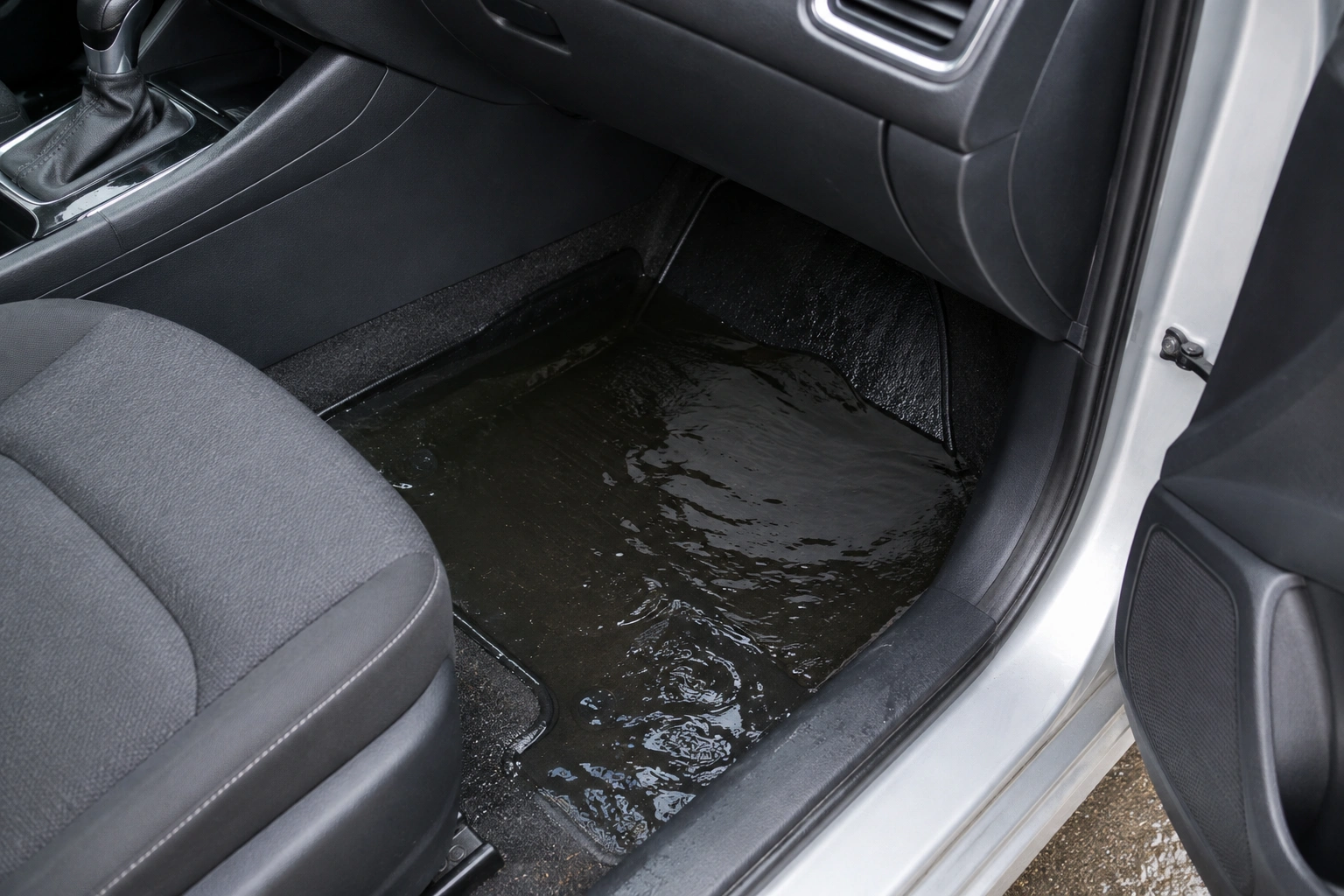
If you searched for “water on passenger floor car” after finding moisture inside your vehicle, do not assume it is only rainwater or harmless A/C condensation. Water on the passenger floor in your car usually means moisture is entering through a drain, seal, or body opening—or that the fluid is actually engine coolant from a leaking heater core. The timing, smell, appearance, and location of the moisture can help narrow down the cause.
This problem is common after heavy rain, car washing, or extended A/C use. In Los Angeles, seasonal rain, road debris, dust, and temperature changes can expose weak seals or clog drains on older vehicles. Finding the source early helps protect the carpet, padding, electrical components, and interior from persistent dampness and odor.
What causes water on the passenger floor in a car?
For the search query “water on passenger floor car,” the most common causes are a clogged A/C evaporator drain, a leaking heater core, blocked sunroof drains, failed door or windshield seals, or water entering through the cowl and body seams. If the moisture appears after using the A/C on a dry day and is clear and odorless, an evaporator-drain problem is possible. If it appears after rain, inspect the sunroof, windshield, door seals, cowl area, and body seams. If it has a sweet smell, feels oily, or appears with foggy windows or engine overheating, it may be coolant from a heater-core leak rather than plain water.
A small, clear drip under the vehicle after A/C use is normally different from water pooling inside the passenger compartment. Firestone explains that the evaporator creates condensation that should exit through a drain, while water inside the cabin can point to a clogged drain, failed seals, evaporator damage, windshield or sunroof problems, or body corrosion. Toyota similarly distinguishes normal water dripping underneath a vehicle after A/C operation from a leak that enters the cabin.
Normal A/C condensation versus an interior leak
Your car’s A/C removes humidity from the air as it cools the cabin. That moisture collects near the evaporator and should flow through an evaporator drain tube to the ground. Seeing a small puddle of clear, odorless water under the front of the vehicle after using the A/C can therefore be normal.
Water on the passenger-side carpet is not the normal path for that condensation. If the evaporator drain is clogged, disconnected, cracked, or poorly positioned, water can back up and enter the HVAC housing or spill into the cabin. The exact location of the drain and the repair procedure vary by vehicle.
|
What you notice |
More likely possibilities |
What to do |
|
Clear, odorless moisture after using the A/C on a dry day |
Clogged or displaced evaporator drain; HVAC case or seal issue |
Stop using the A/C if the leak is worsening and arrange an inspection. |
|
Moisture appears after rain or a car wash |
Sunroof drain, windshield seal, door seal, cowl, or body seam |
Dry the interior and inspect the likely entry points; seek leak testing if the source is not obvious. |
|
Sweet-smelling or oily fluid, foggy windows, or low coolant |
Heater-core or cooling-system leak |
Avoid treating it as ordinary water; have the cooling system checked promptly. |
|
Wet carpet with musty odor or staining |
Moisture has remained in the carpet or padding |
Remove surface moisture, ventilate, and repair the source before odor or interior damage worsens. |
The table is a starting point, not a diagnosis. Some vehicles route water along the carpet or insulation, so the wettest spot may be away from the original entry point.
Common causes of water on the passenger floor
1. Clogged or disconnected A/C evaporator drain
A blocked evaporator drain is one of the most common explanations for water on the passenger floor after using the A/C. The air conditioner naturally produces condensation. Under normal conditions, that moisture leaves the vehicle through a drain tube. Dirt, biological growth, debris, or a displaced drain connection can prevent the water from exiting.
When the drain cannot flow, condensation may collect inside the HVAC housing and eventually spill onto the passenger-side carpet or floor mat. You may notice the problem after a long drive with the A/C running, even when the weather is dry. A damp or musty smell may develop if water remains inside the HVAC case or under the carpet.
Firestone notes that a clogged evaporator drain can allow condensation to back up into the cabin and may affect nearby blower or A/C electrical components if moisture remains in the housing. Clearing the drain may be straightforward on some vehicles, but access and the correct cleaning method differ. Do not force a wire, drain cleaner, or high-pressure air into an unknown opening, because that can damage the drain or HVAC components.
2. Leaking heater core
The heater core is a small heat exchanger that uses hot engine coolant to warm air for the cabin. If it or its hoses leak, coolant can travel into the passenger-side footwell. This is a more urgent possibility because a cooling-system leak can reduce the coolant level and contribute to engine overheating.
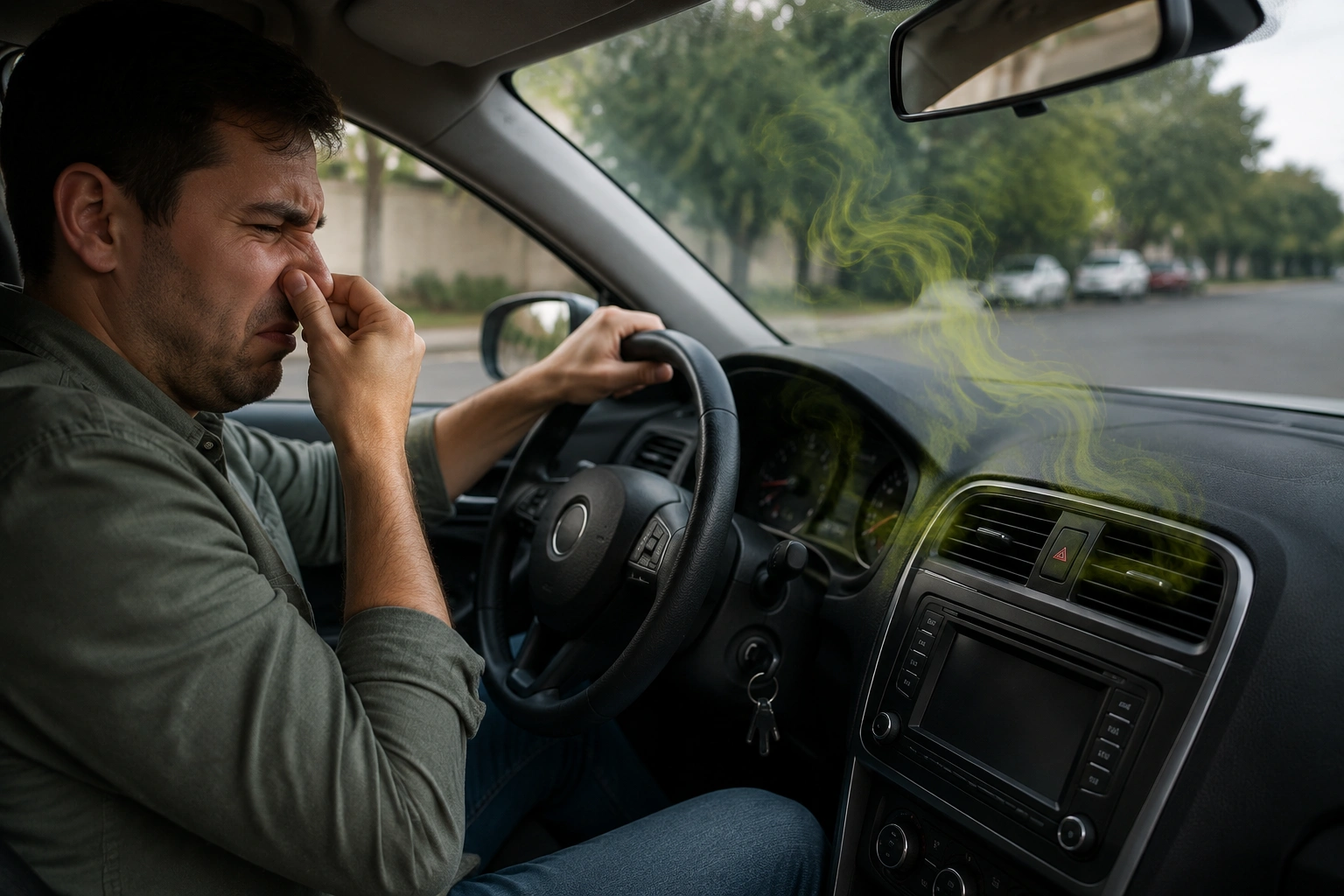
A heater-core leak may cause a sweet or syrup-like odor, greasy fogging on the inside of the windshield, damp carpet, loss of coolant, or a rising temperature gauge. The fluid may have a color, but coolant colors vary by product and vehicle, so color alone is not a reliable identification method. Never taste an unknown fluid, and avoid unnecessary skin contact.
If the engine temperature rises, a coolant warning appears, steam is visible, or the leak is substantial, stop driving when it is safe and follow the vehicle manufacturer’s overheating guidance. A technician can pressure-test the cooling system and determine whether the heater core, hose connections, or another cooling-system component is leaking.
3. Blocked or disconnected sunroof drains
Sunroofs commonly use drain channels and tubes to carry rainwater away from the roof opening. When a drain becomes blocked or a tube disconnects, water may run behind the headliner, down a pillar, or along the dashboard before reaching the passenger-side carpet. The leak may appear only after rain or a car wash.
Possible clues include water stains around the headliner or A-pillar, damp trim, moisture near the glove box, or wet carpet after the vehicle has been parked in a storm. A sunroof seal can contribute to water entry, but the drain system should also be checked because a seal is not always designed to keep every drop outside the drain channel.
Avoid pushing a rigid object deeply into a sunroof drain. The tube can disconnect or become damaged, allowing water to enter the cabin more easily. A professional can test the drain path and inspect the roof, trim, and connection points without creating a new leak.
4. Windshield, door, or weatherstrip leak
A deteriorated windshield seal can allow rainwater to enter near the glass and travel behind the dashboard or along the passenger-side A-pillar. Door weatherstripping, damaged door membranes, or a misaligned door can create a similar symptom. Water may appear near the front passenger footwell even when the original entry point is higher up.
Look for water stains, damp trim, wind noise, loose weatherstripping, or a problem that occurs after rain or washing the vehicle. A windshield that was recently replaced deserves special attention if the leak began afterward. Windshield resealing or replacement should be handled by a qualified glass professional, because the windshield contributes to vehicle safety systems on many modern vehicles.
5. Cowl, HVAC case, or body-seam intrusion
Leaves and debris can collect in the cowl area below the windshield and restrict drains. Water may then overflow into the HVAC intake or behind the glove box. Body-panel corrosion, collision damage, missing plugs, and failed seams can also create less obvious paths into the cabin.
These leaks can be difficult to reproduce by looking only at the floor. A shop may use a controlled water test, inspect the cowl and HVAC housing, remove trim, or trace the path of the moisture from the highest damp point downward.
Why does the passenger floor get wet after rain?
When the passenger floor is wet after rain, the likely source is outside the A/C system. Sunroof drains, windshield seals, door seals, cowl drains, roof seams, and body-panel openings should be considered. Water can travel behind trim and under carpeting, so the visible puddle may not be directly below the leak.
A wet floor after washing the car suggests a similar group of causes, although the direction and pressure of the water can reveal a weak door seal or windshield edge. If the vehicle recently had glass, body, roof, or interior work, mention that history to the technician because it may help narrow the inspection.
How to identify the source safely
Start by recording when the moisture appears. Does it follow A/C use on a hot, dry day, or does it occur only after rain or washing? Does the fluid have an unusual smell? Is the carpet wet near the glove box, A-pillar, door sill, center console, or transmission tunnel? These observations are often more useful than guessing from the color alone.
With the vehicle parked safely and the engine off, remove the floor mat and blot the moisture with a clean towel. Look for visible water trails, stains, or loose trim without pulling panels apart. If you inspect an unknown fluid, avoid direct contact and never taste it. If you suspect coolant, oil, brake fluid, or another automotive fluid, arrange professional service rather than relying on a home identification test.
Do not work near a hot engine, cooling fan, electrical connector, or pressurized cooling system. Do not open the coolant reservoir or radiator cap while the engine is hot. If the carpet is soaked, remove removable mats, ventilate the cabin, and use fans to dry the interior while arranging a repair. Drying the surface without fixing the source will not prevent the leak from returning.
Can water on the passenger floor damage the car?
Yes. Persistent moisture can soak carpet padding, create musty odors, encourage mold or mildew growth, stain upholstery, corrode metal, and damage electrical components located beneath the carpet or seats. The risk depends on the amount of water, how long it remains, the vehicle design, and the surrounding temperature and humidity.
If the carpet feels dry on top but remains damp underneath, the padding may still hold moisture. A professional may need to lift the carpet, inspect wiring and modules, clean affected areas, and confirm that the interior is fully dry after the leak is repaired.
When to visit an auto repair shop in Los Angeles
Arrange an inspection when water on the passenger floor in your car keeps returning, the source is not obvious, the carpet remains damp, or a musty smell persists. Professional leak testing is especially appropriate after rain, a windshield replacement, a collision repair, or repeated A/C use.
Seek prompt service if you notice coolant odor, foggy windows, a falling coolant level, a rising engine temperature, warning lights, steam, or fluid that is not clear and odorless. For Los Angeles drivers, contact Speedway Tire & Service to discuss the timing and symptoms. The shop’s auto repair services page provides additional information about vehicle diagnostics and related repairs.
A technician may inspect the evaporator drain, HVAC case, heater core, cooling system, cowl drains, sunroof drains, windshield and door seals, body seams, and the condition of the carpet and underlayment. The final repair depends on where the moisture is entering and whether any interior or electrical components have been affected.
Frequently asked questions
What is the most common cause of water on the passenger floor after using the A/C?
A clogged or disconnected evaporator drain is a common possibility. The A/C creates condensation that should drain outside the vehicle. If the drain is blocked or displaced, water can back up into the HVAC housing and reach the passenger-side carpet. Other causes, including a leaking HVAC case or evaporator issue, are also possible.
How can I tell whether the fluid is water or coolant?
Clear, odorless moisture is more consistent with water, while coolant may have a sweet smell or oily feel. Coolant color varies, so it is not a reliable test by itself. Do not taste an unknown fluid or handle it unnecessarily. A technician can identify the fluid and pressure-test the cooling system safely.
Is water under the car after using the A/C normal?
A small amount of clear, odorless condensation dripping under the vehicle after A/C use is often normal. Water pooling inside the cabin is different and should be investigated, particularly if it returns or is accompanied by odor, stains, or electrical problems.
Why is my passenger floor wet only after rain?
Rain-related moisture commonly points to a sunroof drain, windshield seal, door weatherstrip, cowl drain, body seam, or other exterior water-entry point. Because water can travel behind trim and under carpet, the wet spot may not show the exact location of the leak.
Can I clear the A/C drain myself?
Some vehicles provide simple access to the drain, but the location and safe cleaning method vary. Avoid rigid wires, household drain cleaners, or high-pressure air. If the drain is inaccessible, the leak returns, or you are unsure which tube is involved, professional diagnosis is the safer option.
How long can I leave wet carpet in my car?
Do not leave it wet longer than necessary. Moisture trapped in carpet padding can produce odor, support mold or mildew growth, and affect wiring or modules. Remove surface water, ventilate the cabin, and arrange a source diagnosis and thorough drying as soon as practical.
Conclusion
Finding water on the passenger floor in your car is a symptom, not a diagnosis. The phrase “water on passenger floor car” describes a problem whose source needs to be identified. A clogged A/C evaporator drain is a common possibility when the moisture appears after using the air conditioner, while rain-related leaks more often involve the sunroof, windshield, door seals, cowl, or body seams. A sweet-smelling fluid, foggy glass, low coolant, or overheating raises concern for a heater-core or other cooling-system leak.
Dry the interior, avoid contact with unknown fluids, and do not ignore recurring moisture. If the source is unclear or the carpet remains damp, a professional inspection can trace the leak, protect the vehicle’s electrical and interior components, and help prevent a small water intrusion from becoming a more expensive repair.
Looking for an honest Auto Repair Shop in Los Angeles? Call Speedway Tire and Service Today
Whether you’re driving through LA traffic or cruising the freeways, your car deserves expert care. Located in Los Angeles, Speedway Tire and Service offers reliable oil changes, brake repairs, tire services, and more—all backed by experienced technicians and honest pricing.