Tire Rotation Schedule for Los Angeles Stop-and-Go Wear in Silver Lake
If you drive in Silver Lake, Echo Park, or anywhere in Los Angeles, you know the pattern. Stoplights, rush-hour backups, quick acceleration from red lights, steep streets, and long periods of idling create conditions that can accelerate tire wear.
Uneven wear reduces tread life and can affect handling, braking, wet-weather traction, comfort, and fuel efficiency. A consistent tire rotation schedule helps distribute wear, but rotation should be combined with pressure, alignment, balance, and tire-condition checks.
How Often Should You Rotate Tires in Los Angeles
Many vehicles are rotated every 5,000 to 7,500 miles, but the correct interval depends on the vehicle manufacturer, tire type, drivetrain, wear pattern, and driving conditions. For many Silver Lake commuters, this may be approximately every six months.
Front tires often wear faster because they handle steering and much of the braking. Front-wheel-drive vehicles also send engine power through the front tires. Regular rotation can help distribute these forces more evenly.
Follow the manufacturer’s rotation pattern and interval. A professional tire inspection and rotation service can measure tread depth and identify wear before rotation.
Why Stop-and-Go Driving Accelerates Tire Wear
Frequent braking and acceleration create repeated load changes. Low-speed turns, curb contact, potholes, rough pavement, and long periods of heat can also affect tread wear and tire condition.
Common patterns include:
- Faster front-tire wear.
- Inner-edge or outer-edge wear from alignment problems.
- Feathering from incorrect toe angles.
- Cupping from balance or suspension concerns.
- Shoulder wear from underinflation or cornering loads.
- Vibration from uneven tread or wheel imbalance.
Directional Tires and Rotation Patterns
Directional tires have tread patterns designed to rotate in one direction. They can typically be moved from front to back on the same side, but they should not be crossed to the opposite side unless the tire is removed and remounted correctly.
Some vehicles use asymmetric, staggered, or different-size front and rear tires. Always check the sidewall markings and vehicle specifications before rotating.
Do AWD Vehicles Need More Frequent Rotation
All-wheel-drive systems can be sensitive to differences in tire circumference. Uneven tread depth may place additional stress on the drivetrain, so AWD owners should follow the vehicle manufacturer’s schedule carefully.
Check all four tires for tread depth, pressure, damage, and wear pattern. Replacing only one tire may not be appropriate for every AWD vehicle.
What Happens If You Skip Tire Rotation
Skipping rotation can allow the front and rear tires to develop different wear rates. Potential consequences include:
- Premature replacement.
- Steering-wheel vibration.
- Vehicle pulling or wandering.
- Reduced wet-road traction.
- Increased road noise.
- Shorter tread life.
- More difficult handling in emergency maneuvers.
If vibration appears at freeway speed, read this guide to wheel balancing and tire rotation because rotation may not correct an imbalance or damaged wheel.
Why Tire Pressure Matters
Pressure affects the tire’s contact patch, heat, rolling resistance, handling, and wear pattern. Underinflation can increase shoulder wear and heat, while overinflation can reduce contact in the center of the tread.
Check pressure when the tires are cold and follow the vehicle manufacturer’s recommended PSI. This guide to nitrogen versus air in tires explains why consistent pressure checks matter more for most drivers than the type of gas used.
Alignment and Suspension Affect Rotation Results
Rotation cannot correct a bent wheel, worn suspension component, or incorrect alignment. If tires continue to wear unevenly after rotation, inspect the vehicle’s wheel angles and front-end components.
A professional wheel alignment inspection can evaluate toe, camber, caster, steering-wheel position, and other applicable angles.
Silver Lake potholes and rough roads can also affect suspension parts. Review these ball-joint warning signs when uneven wear occurs with clunking, wandering, or steering vibration.
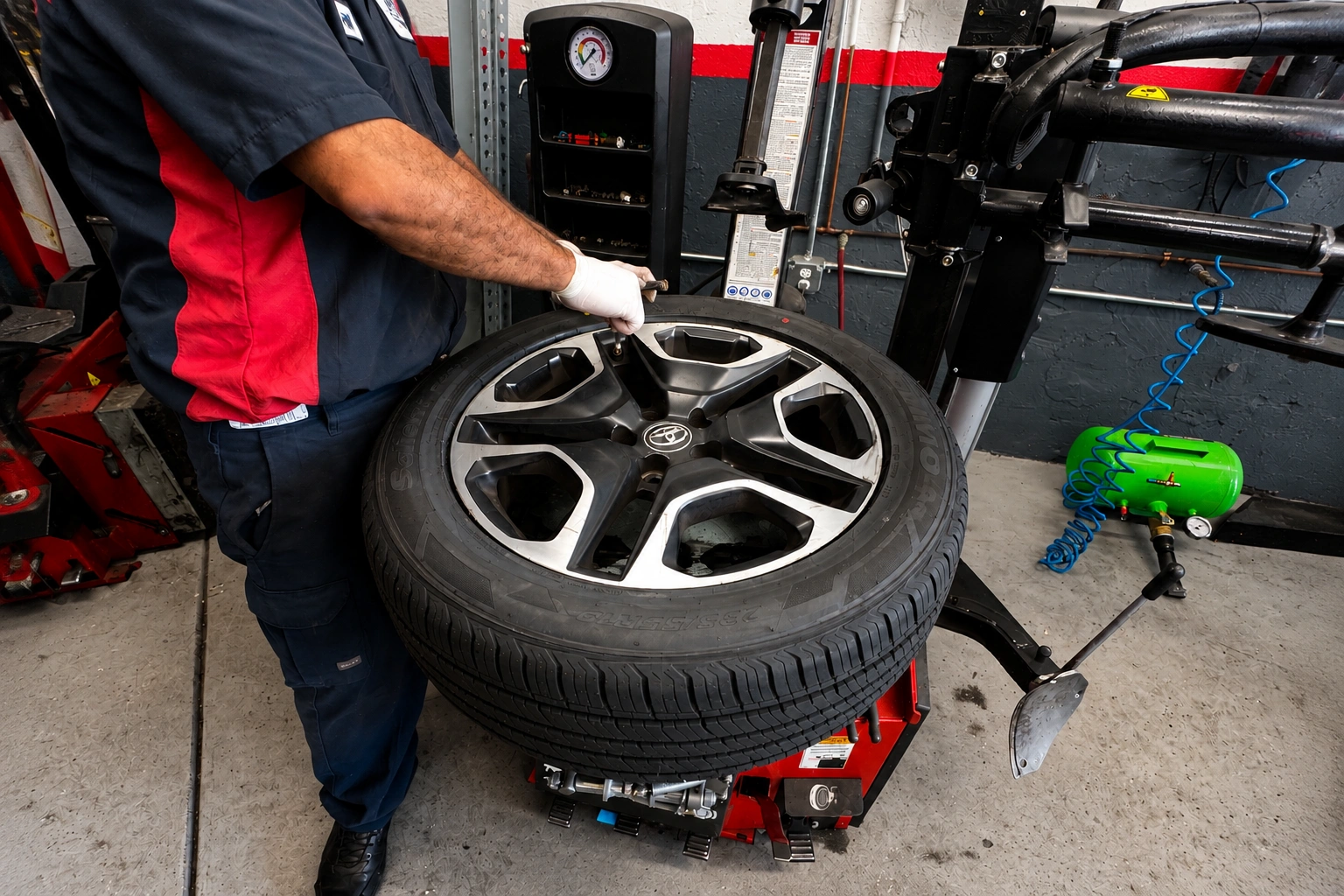
How a Professional Tire Rotation Works
- Check the vehicle’s recommended rotation pattern.
- Inspect tread depth, pressure, sidewalls, and damage.
- Identify directional, staggered, or different-size tires.
- Move tires according to the approved pattern.
- Set cold pressure to the vehicle specification.
- Check wheel balance and fastener torque.
- Record wear patterns and recommend additional service if needed.
Do not rotate a tire that has severe damage, unsafe tread, a structural problem, or a repair condition that requires replacement.
Rainy-Season Tire Preparation
Tire condition becomes especially important when rain mixes with oil and debris on Los Angeles roads. Rotation helps manage wear, but tread depth, pressure, alignment, and speed control are also essential.
Review these recommendations for the best tires for LA rainy-season driving before wet weather arrives.
Frequently Asked Questions
How often should I rotate my tires?
Many vehicles use a 5,000 to 7,500-mile interval, but follow the manufacturer’s schedule and adjust for tire type, drivetrain, wear pattern, and driving conditions.
Does tire rotation fix vibration?
Rotation can help prevent uneven wear, but it may not fix an existing vibration caused by imbalance, a bent wheel, tire damage, alignment, or suspension wear.
Can directional tires be rotated?
Usually they can move front-to-back on the same side, but they should not be crossed unless removed and remounted correctly. Confirm the tire and vehicle requirements.
Do AWD tires need to match?
Many AWD systems require closely matched tire size and tread circumference. Follow the manufacturer’s instructions and inspect all four tires together.
Should I rotate tires at every oil change?
It may be convenient if the mileage matches the recommended interval, but do not rotate more frequently or less frequently without considering the tire pattern and manufacturer guidance.
Build a Tire Maintenance Plan for Silver Lake
For many Silver Lake, Echo Park, and Downtown LA drivers, rotating tires every 5,000 to 7,500 miles is a useful general starting point. The best schedule is based on measured tread wear, tire type, vehicle drivetrain, pressure, alignment, and driving conditions.
Need a tire-wear inspection? Speedway Tire & Service can measure tread depth, check pressure and alignment, identify uneven wear, and recommend the right rotation pattern.
Visit Us: 1165 West Sunset Blvd, Los Angeles, CA 90012
Call Now: (213) 250-4254
Looking for an Honest Auto Repair Shop in Los Angeles? Call Speedway Tire and Service Today
Whether you are driving through LA traffic or cruising the freeways, your car deserves expert care. Located in Los Angeles, Speedway Tire and Service offers reliable oil changes, brake repairs, tire services, and more, backed by experienced technicians and honest pricing.
Looking for an honest Auto Repair Shop in Los Angeles? Call Speedway Tire and Service Today
Whether you’re driving through LA traffic or cruising the freeways, your car deserves expert care. Located in Los Angeles, Speedway Tire and Service offers reliable oil changes, brake repairs, tire services, and more—all backed by experienced technicians and honest pricing.