Wheel Balancing vs. Tire Rotation and What Solves Vibration on Downtown LA Freeways?
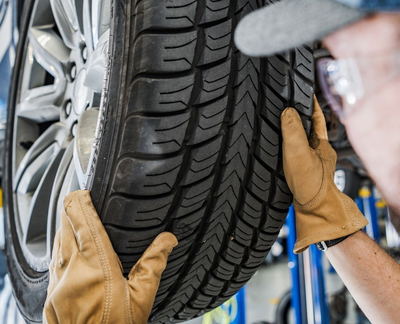
If your car shakes at 55 mph while merging onto the 110 or cruising the 101 through Downtown LA, the problem is not necessarily an old-car feeling. Vibration often points to a tire, wheel, balance, alignment, or suspension concern that deserves professional attention.
The key question is whether the vehicle needs wheel balancing or tire rotation. Both services support tire health, but they solve different problems. In most cases, increasing vibration at freeway speed points first to wheel balance rather than rotation.
What Tire Rotation Does
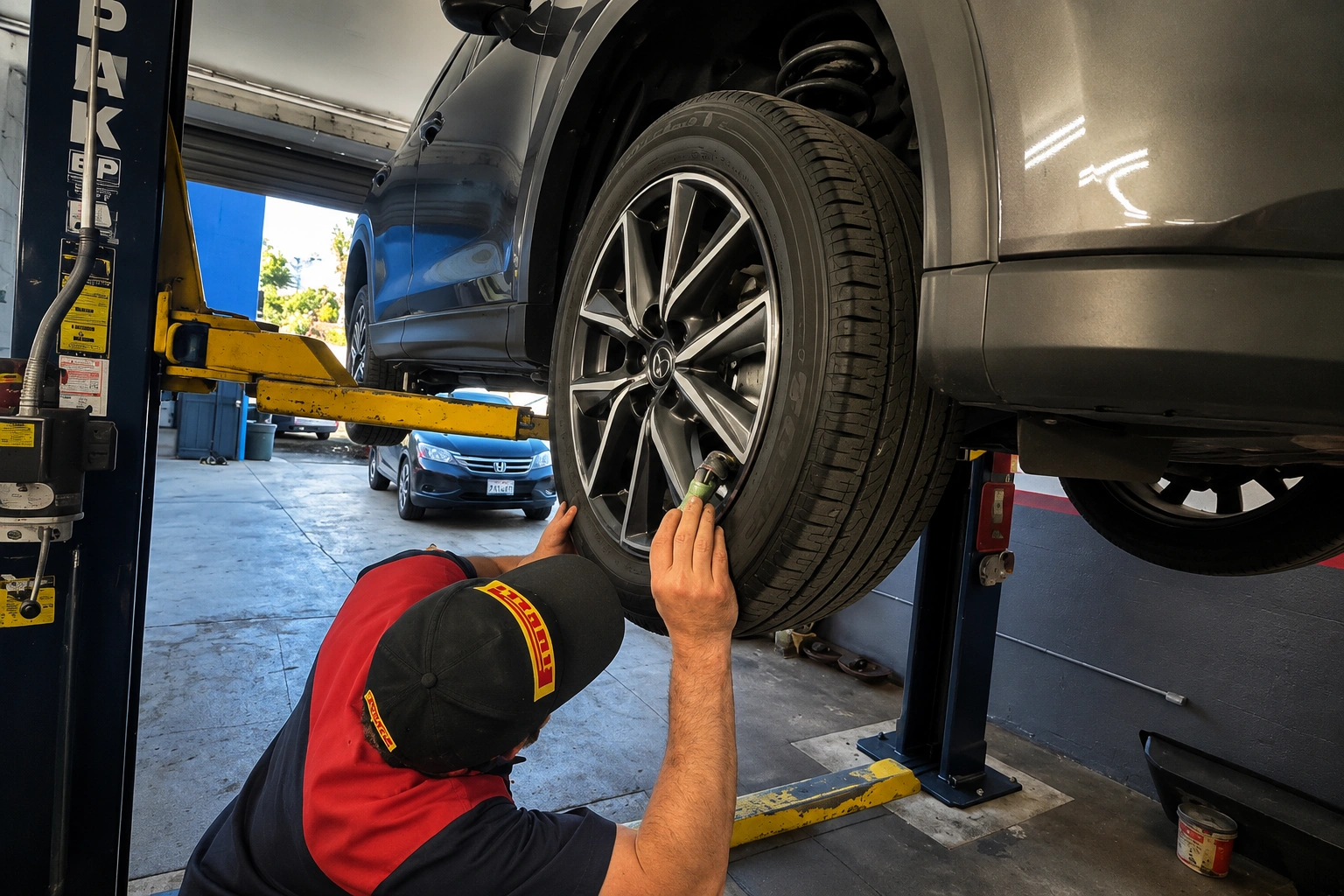
Tire rotation moves tires from one position to another according to the vehicle's drivetrain, tire design, and wear pattern. Front-wheel-drive vehicles often wear front tires faster, while rear-wheel-drive vehicles may place more wear on the rear tires.
What Rotation Helps With
- Uneven tread wear
- More even distribution of tire wear
- Longer usable tread life
- Consistent handling and traction
What Rotation Does Not Fix
- Steering-wheel shake caused by imbalance
- Seat or floor vibration at highway speed
- A bent wheel or damaged tire
- Alignment or suspension problems
Rotation intervals commonly fall around 5,000 to 7,500 miles, but the vehicle and tire manufacturer's recommendation should control. Speedway's tire rotation and inspection service can evaluate tread condition and wear before rotating the tires.
What Wheel Balancing Does
Wheel balancing corrects weight differences in the tire-and-wheel assembly. Even a small imbalance can create noticeable shaking as the assembly spins faster.
How Balancing Works
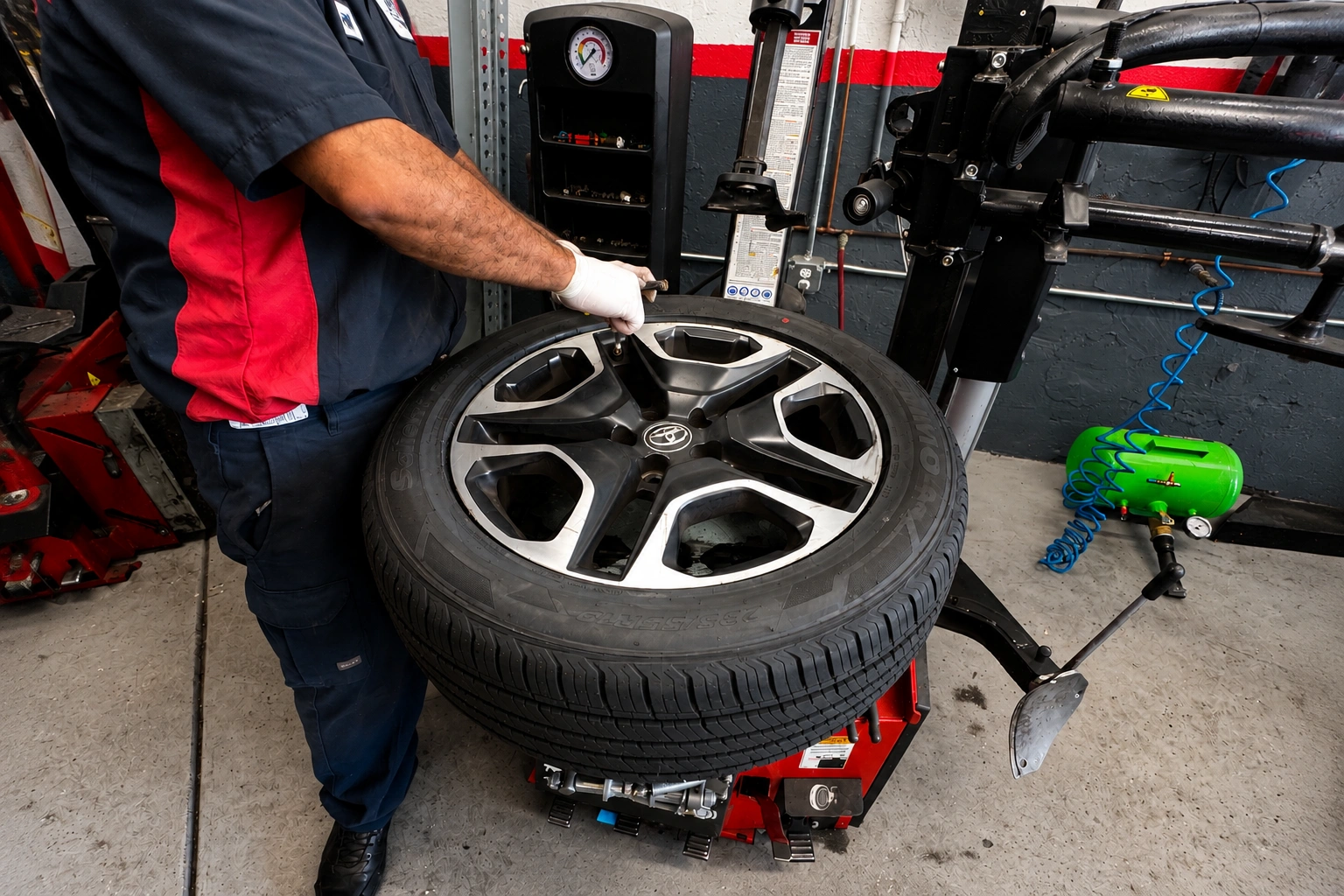
- The tire and wheel are mounted on a balancing machine.
- The assembly is spun to identify heavy and light spots.
- Appropriate weights are installed to counterbalance the assembly.
- The assembly is checked again to verify the result.
What Balancing Can Improve
- Steering-wheel vibration from a front wheel
- Seat or body vibration from a rear wheel
- Uneven cupping or scalloped tread wear
- Ride comfort at freeway speed
Balancing is especially important after new tire installation, when a wheel weight is lost, or after a pothole or curb impact.
Which Service Solves Freeway Vibration
When shaking increases with speed, particularly between approximately 50 and 70 mph, wheel balancing is usually the first service to investigate. Rotation distributes wear but does not correct a weight imbalance.
Vibration can also come from a bent wheel, damaged tire, separated belt, loose lug nuts, worn suspension, or alignment problem. A complete inspection should identify the actual source rather than assuming every vibration is a balance issue.
Common Causes of Vibration in Downtown LA
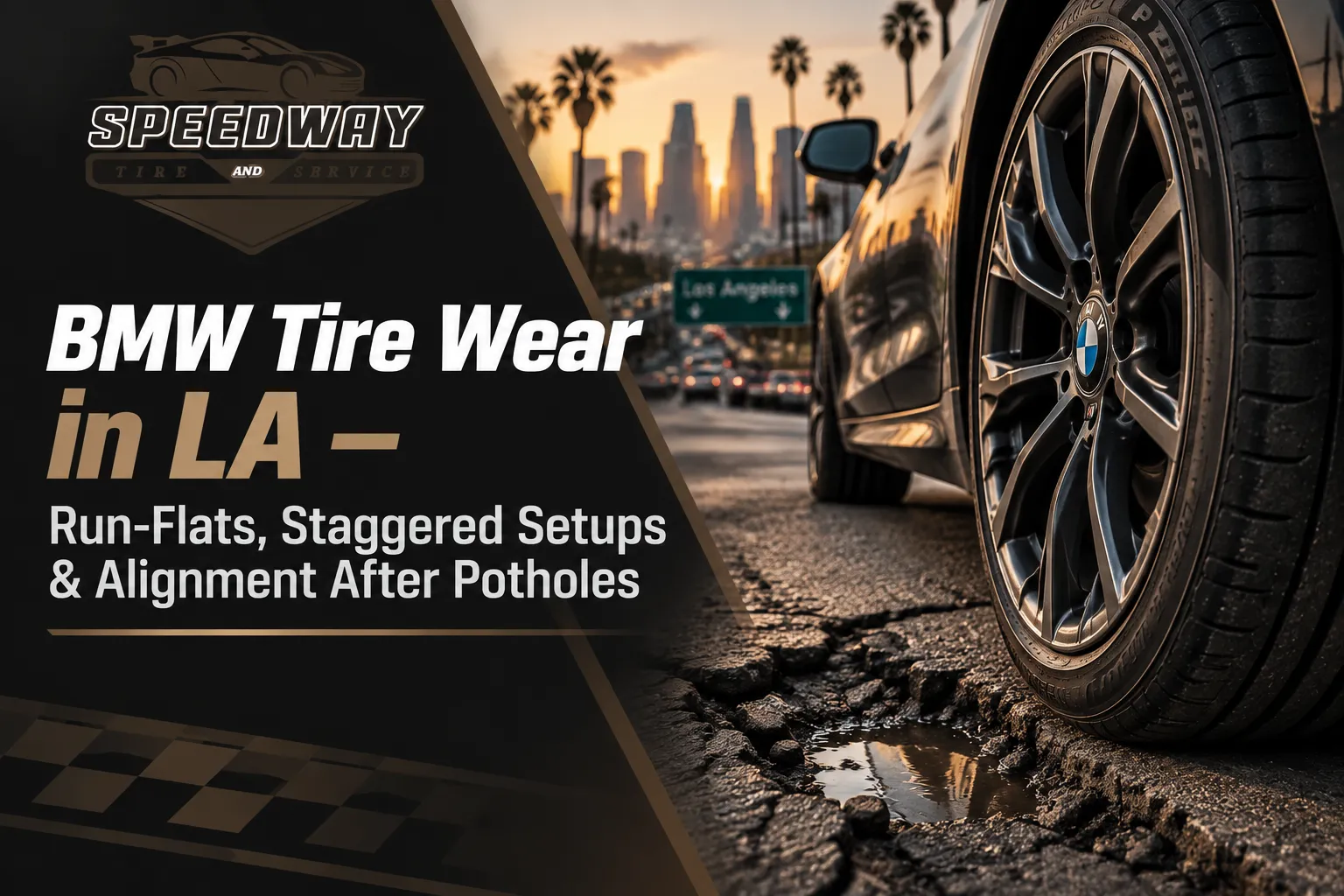
Potholes on busy streets, cracked pavement, curb impacts, installing new tires without balancing, and losing a wheel weight can all create vibration. A tire that has developed an internal defect may also shake even when the balance measurement appears normal.
If vibration begins after a major pothole, read this guide to checking tires, rims, and suspension after an impact.
When You Need Both Services
Many vehicles benefit from both rotation and balancing over their service life. Rotate at the recommended interval to manage tread wear. Balance after new tire installation or whenever vibration develops. After a major pothole, check balance, wheel condition, alignment, and suspension together.
If vibration occurs with uneven wear, the vehicle may need rotation, balancing, and alignment. Speedway's wheel alignment and related tire service can measure wheel angles and help identify pulling or geometry changes.
Pressure and Maintenance Support Ride Quality
Correct tire pressure does not replace balancing, but it supports predictable handling and even wear. Check pressure when tires are cold using the manufacturer's door-jamb recommendation. Do not use the maximum pressure printed on the tire sidewall as the default vehicle setting.
For more guidance on tire pressure and temperature-related readings, read this guide to summer tire-pressure myths.
When to Schedule an Inspection
Schedule service when vibration appears at a particular speed, becomes worse over time, begins after a pothole or curb strike, occurs with uneven tread wear, or is accompanied by pulling, air loss, clunking, or steering looseness.
Stop and seek immediate inspection if vibration is severe, a tire has a bulge, a wheel is visibly bent or cracked, lug nuts are loose, or the vehicle no longer feels stable.
Why Choose Speedway Tire and Service
Speedway Tire and Service helps Downtown LA drivers distinguish between balance, rotation, alignment, tire, and suspension problems. We inspect tire condition, tread patterns, wheel damage, pressure, balance, and related components before recommending service.
We serve Downtown LA, Silver Lake, Echo Park, and surrounding communities from 1165 West Sunset Blvd.
Call (213) 250-4254 to schedule a vibration diagnosis.
About Speedway Tire and Service
Speedway Tire and Service provides honest tire maintenance and automotive repair for Los Angeles drivers. Our technicians handle tire rotation, balancing, wheel alignment, tire replacement, brakes, batteries, oil changes, suspension, and general vehicle service.
Looking for an Honest Auto Repair Shop in Los Angeles?
Whether you are driving through LA traffic or cruising the freeways, your car deserves expert care. Located in Los Angeles, Speedway Tire and Service offers reliable oil changes, brake repairs, tire services, and more, backed by experienced technicians and honest pricing.
Looking for an honest Auto Repair Shop in Los Angeles? Call Speedway Tire and Service Today
Whether you’re driving through LA traffic or cruising the freeways, your car deserves expert care. Located in Los Angeles, Speedway Tire and Service offers reliable oil changes, brake repairs, tire services, and more—all backed by experienced technicians and honest pricing.