Key Fob Won't Start Your Push-Button Car? Try This Before Calling a Tow (LA)
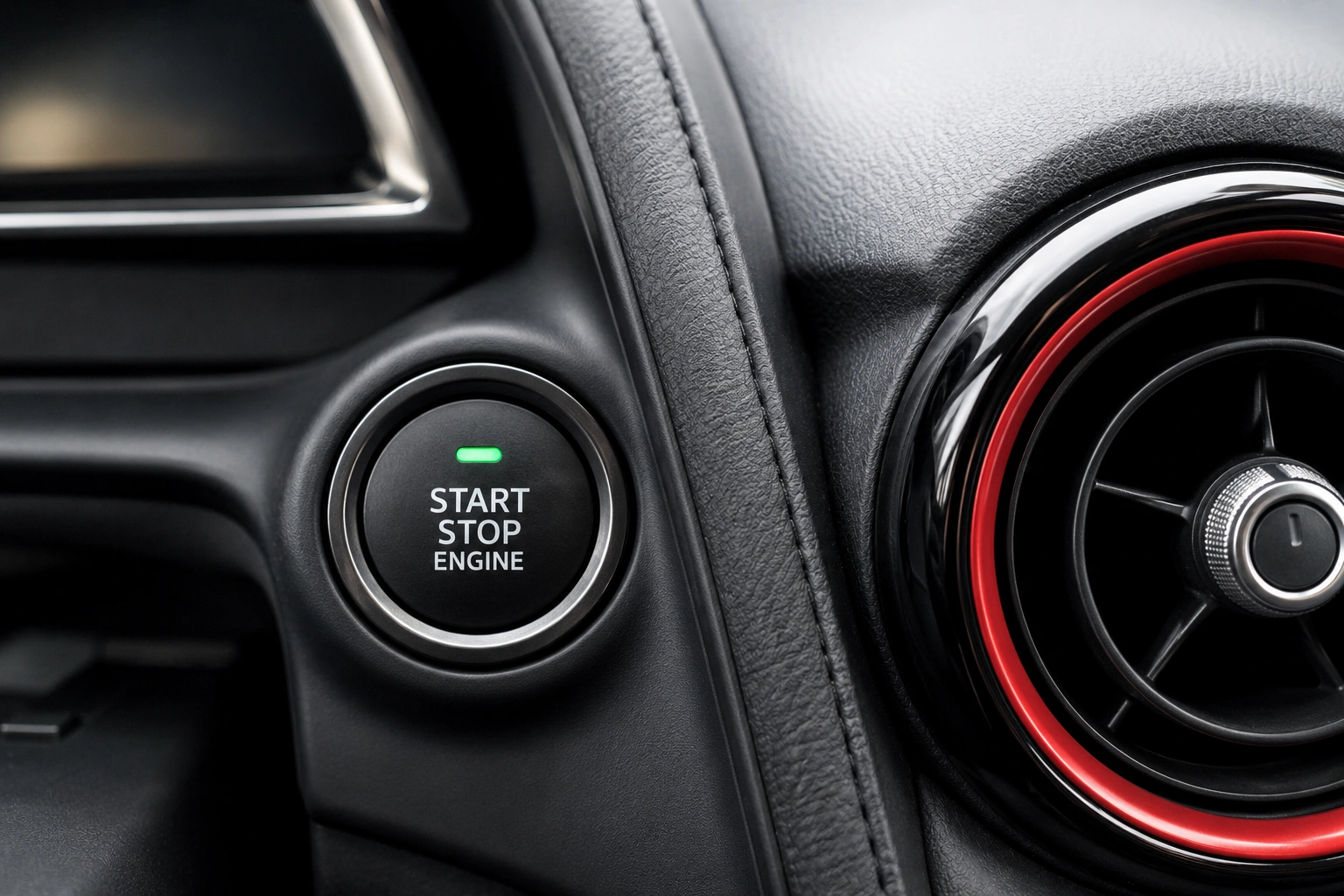
When your key fob won't start your car, a dead fob battery is the most common reason—and many push-button vehicles have a built-in backup that lets you start the car anyway. Often you can hold the fob against a marked spot on the steering column or start button and press the brake to start. A weak car battery, a worn fob, or a system fault can also be the cause. Before you call a tow, it's worth trying the backup start, because the fix may be as simple as a fresh fob battery. If it still won't start, a quick diagnosis points to what's really wrong.
Why does a key fob fail to start a push-button car?
In a push-button car, the fob communicates wirelessly with the vehicle to confirm it's authorized before the engine will start. If that signal is weak or missing—most often because the small coin battery inside the fob is dead—the car may not detect the fob and won't start normally.
But a dead fob isn't the only possibility. The car's own battery may be too weak to power the start system, the fob itself may be worn or damaged, or there may be a fault in the vehicle's electronics. Because a no-start can come from the fob, the car's battery, or the system, the cause needs to be confirmed rather than assumed.
Many push-button cars include a backup method for a dead fob, and a weak vehicle battery is one of the most common underlying issues. If the car's battery is the problem, battery testing and replacement is the place to start.
Quick Answer - What to try before calling a tow
If your push-button car won't start with the fob, try these first:
- Press the brake firmly (or clutch on a manual) while pushing the start button—many cars require this.
- Hold the fob directly against the start button or the marked spot on the steering column, then try again; many vehicles have a backup that reads the fob this way.
- Check your owner's manual for the model-specific backup start procedure.
- Try the spare fob if you have one—if it works, the first fob's battery is likely dead.
If none of these work, the issue may be the car's battery or the start system, and a diagnosis is the next step rather than an immediate tow.
How do you know if it's the fob or the car battery?
Telling the two apart saves time and money. This table shows the common signs.
|
Likely cause |
Typical signs |
What to try / do |
Why it matters |
|
Dead fob battery |
Weak range, intermittent unlock, no detect |
Use backup start; replace fob battery |
Cheap, quick fix |
|
Weak car battery |
Dim lights, slow crank, clicking, dash flicker |
Test the battery |
May need charge or replacement |
|
Worn/damaged fob |
Spare fob works, buttons fail |
Inspect/replace fob |
Fob hardware has failed |
|
Start system fault |
Backup start fails, warning messages |
Diagnose the system |
Electrical or sensor issue |
A helpful clue: if the dashboard lights are dim, the doors were sluggish to unlock, or you hear a clicking when you press start, the car's battery is a likely suspect. Accurate diagnosis helps reduce unnecessary repairs and delays.
What signs point to the real cause?
A few observations help separate a fob issue from a vehicle issue:
- Shrinking fob range — having to stand closer to unlock often means a weak fob battery.
- Dim interior or dash lights — points toward the car's battery.
- A clicking sound when pressing start — often a low vehicle battery.
- The spare fob works — the first fob is the problem.
- Warning messages on the dash — can indicate a system or electrical fault.
Matching the signs to the likely cause helps the shop confirm it quickly.
What causes this in Los Angeles driving conditions?
Both fob batteries and car batteries are affected by how and where you drive in Echo Park, Silver Lake, and Downtown LA.
LA heat is hard on the car's battery; high temperatures speed up the wear that reduces its ability to hold a charge, so a weak battery may leave too little power for the start system. Short trips around Silver Lake and Echo Park, plus stop-and-go traffic on the 101, may not fully recharge the battery between starts. Fob batteries simply wear out over time regardless of climate, and a fob that's been weak for a while often dies at an inconvenient moment—like a parking structure Downtown. None of this is unusual; it's everyday wear that LA conditions can bring to the surface sooner.
What can happen if you ignore the early warning signs?
A fob or battery rarely fails all at once—there are usually warnings. Ignoring them can lead to:
- Getting stranded when the fob or battery finally quits at a bad time.
- An unnecessary tow for what may be a simple fob-battery fix.
- Repeated no-starts if a weak car battery isn't addressed.
- Lockout inconvenience in a parking structure or away from home.
- A flat battery affecting other systems if it continues to weaken.
Acting on the early signs—shrinking fob range or slow starts—usually means a cheap fix instead of a roadside problem.
What should you check before bringing your car in?
A few notes help the shop pinpoint the cause faster. Before your visit, note:
- Whether the backup start (fob against the button/column) worked.
- If the spare fob starts the car.
- Dash and interior lights — are they dim or normal?
- Any clicking or no sound when you press start.
- The car battery's age, if known, and any recent slow starts.
- Whether the fob range has been shrinking lately.
- Any warning messages shown on the dashboard.
Sharing these details when you call helps match the right inspection to the symptom.
How do you choose a trustworthy auto repair shop in Los Angeles?
Good auto service depends on clear inspection findings, honest recommendations, and matching the repair to the vehicle's needs. With a no-start, you want a shop that checks the simple causes—fob and battery—before assuming a costly electrical repair.
Practical things to look for in a mechanic near Silver Lake or Echo Park:
- A clear diagnostic process that tests the battery and start system.
- Transparent communication about findings and cost before work begins.
- Recommendations that match the symptom instead of broad upsells.
- Quality parts and the correct battery for your vehicle.
- Local experience with LA heat and short-trip driving patterns.
- The option to call first and confirm timing and next steps.
A shop that starts with a battery test—before assuming an expensive electronics repair—helps you avoid paying for the wrong fix. If you'd like to describe the symptom and ask about next steps, you can contact the shop directly.
How does Speedway Tire & Service help?
Speedway Tire & Service is a local tire and auto repair shop in Los Angeles, on West Sunset Boulevard, serving drivers in Echo Park, Silver Lake, Downtown LA, Chinatown, Lincoln Heights, and nearby neighborhoods.
When a push-button car won't start, the team can test the vehicle's battery and charging system and check the start circuit to confirm whether the issue is the car's battery or something else, then explain the findings clearly. Battery concerns are handled through battery testing and replacement, and anything beyond that is covered by the shop's broader auto repair and maintenance services.
Repair scope, timing, and cost are confirmed after the vehicle is reviewed, and the recommended work is shared with you before anything is approved. Timing may vary depending on parts availability, shop workload, and the complexity of the issue, so calling first to confirm current availability is a good first step.
Steps to get service from Speedway Tire & Service
- Call the shop at (213) 250-4254 or review the services page for what's offered.
- Describe what happened, whether the backup start worked, and any dash warnings.
- Confirm the right inspection — battery test and start-system check.
- Bring the car in (or arrange service) so the cause can be identified.
- Review the recommended work and estimate before approving it.
- Complete the repair or battery replacement and follow any after-service advice.
Frequently Asked Questions about a key fob that won't start the car
My key fob won't start my car — what should I try first?
Start with the basics: press the brake firmly while pushing the start button, since many cars require it. Then hold the fob directly against the start button or the marked spot on the steering column and try again, because many push-button vehicles have a backup that reads the fob this way. Your owner's manual lists the exact procedure. If a spare fob works, the first fob's battery is likely dead—often a quick, inexpensive fix.
How do I know if it's the fob battery or the car battery?
Look at the clues. Shrinking fob range—needing to stand closer to unlock—points to a weak fob battery. Dim dash or interior lights, a clicking sound when you press start, or sluggish door locks point to the car's battery instead. If your spare fob starts the car normally, the original fob is the issue. If neither fob works and the car shows low-power signs, a battery test is the reliable way to confirm the cause.
Can I really start my car with a dead key fob?
Often, yes. Many push-button vehicles are designed so that holding the fob against the start button or a specific spot on the steering column lets the car detect it even when the fob battery is dead, then you start as usual with the brake pressed. The exact method varies by make and model, so the owner's manual is the best reference. This backup is meant to get you going before you arrange a fresh fob battery.
Does LA heat affect my fob or car battery?
It mainly affects the car's battery. High temperatures speed up the wear that reduces a battery's ability to hold a charge, so LA heat can leave a weak battery without enough power for the start system. Short trips and stop-and-go traffic may not fully recharge it between starts. Fob batteries wear out over time regardless of climate, but a weak one often dies at an inconvenient moment, like a Downtown parking structure.
Do I need a tow if my push-button car won't start?
Not always. Before calling a tow, try the backup start method and, if you have one, a spare fob, since a dead fob battery is a common and simple cause. If the backup start fails and the car shows low-power signs like dim lights or clicking, the vehicle battery may need testing, which a shop can handle. A diagnosis often costs far less than assuming the worst and towing right away.
Do I need an appointment to get this checked?
Calling first is the best approach. It lets the shop confirm current availability, advise whether to bring the car in right away, and explain what the battery and start-system check involves for your vehicle. Walk-in availability can change based on shop volume, so a quick phone call helps you avoid waiting and ensures time is set aside to confirm whether the fob, the car battery, or the start system is the real cause.
Call Speedway Tire & Service Today
If your key fob won't start your car, try the backup start and a spare fob first—then, if it still won't go, let a quick diagnosis find the real cause before you tow. For drivers in Echo Park, Silver Lake, Downtown LA, or nearby neighborhoods, call Speedway Tire & Service at (213) 250-4254, review the services page, or contact the shop to describe what happened and next steps. Confirming whether it's the fob, the battery, or the system helps you fix it without an unnecessary tow.
Looking for an honest Auto Repair Shop in Los Angeles? Call Speedway Tire and Service Today
Whether you’re driving through LA traffic or cruising the freeways, your car deserves expert care. Located in Los Angeles, Speedway Tire and Service offers reliable oil changes, brake repairs, tire services, and more—all backed by experienced technicians and honest pricing.